 Blaine Window
 Why Window Replacement Looks Different in Lynden
Lynden sits a short drive inland from our Blaine base, but the same weather patterns that wear down windows on the coast reach Lynden too — just with a slightly different mix. You get less direct salt spray than homes right on Semiahmoo Bay or Drayton Harbor, but you still get the driving rain off the Strait, the long grey stretches of moss season, and the freeze-thaw swings that come with a Whatcom County winter. Add in the farmland and open exposure around much of Lynden, and wind-driven rain can hit window assemblies harder than people expect for an "inland" town.
That combination is hard on windows in a specific way: it's not one dramatic failure, it's slow, cumulative moisture intrusion. Seals degrade, wood sashes swell and stick, aluminum frames corrode at the corners, and vinyl frames that were installed without proper flashing start letting water behind the trim. By the time you can see the damage — soft sills, bubbled paint, fogged glass — the problem has usually been building for a few seasons.
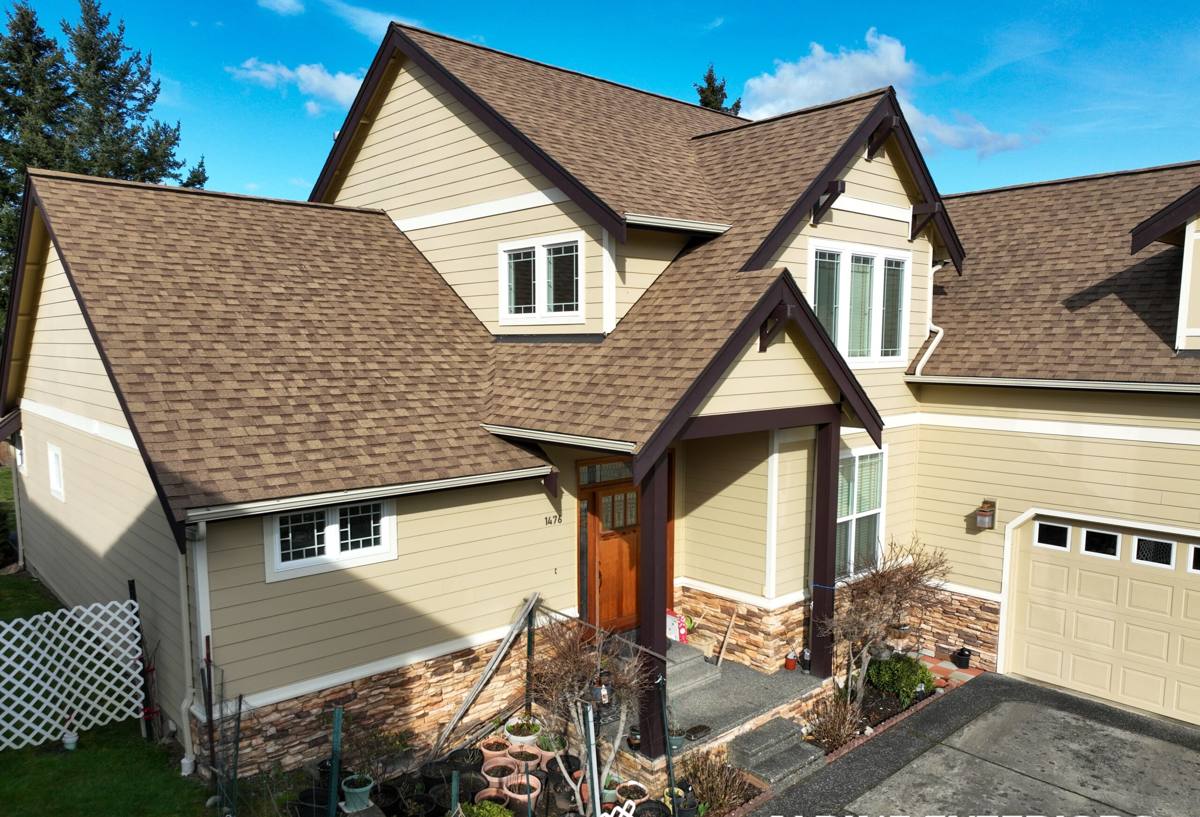
Signs It's Time to Replace, Not Repair
Not every drafty or stiff window needs full replacement. But in this climate, certain signs point to a window assembly that's past the point where caulk and weatherstripping will fix it.
- Fogging or a visible haze between panes of double-glazed glass (the seal has failed and moisture is trapped)
- Soft, spongy, or darkened wood at the sill or lower frame corners
- Windows that are hard to open, close, or lock — often a sign the frame has swollen or racked
- Visible daylight or a draft you can feel at the frame edge when it's windy
- Moss or black staining building up on the sill or exterior trim year after year, even after cleaning
- Noticeably colder rooms near the windows in winter, or condensation forming on the inside of the glass
One or two of these on an older window might just mean it needs attention. Several of them across multiple windows on the same wall — especially a wall that takes the brunt of the weather — usually means the assemblies are failing as a group, and it's more cost-effective to replace them together than to keep patching one at a time.
Materials and Glass That Hold Up in This Climate
Frame Material Trade-Offs
There's no single "best" window material — the right choice depends on the home, the wall's sun and rain exposure, and how much upkeep you want to take on. Here's how the common options actually perform under Whatcom County conditions:
| Material | Moisture Resistance | Maintenance | Notes for This Area |
|---|---|---|---|
| Vinyl | Good — won't rot or corrode | Low | Most cost-effective; quality varies a lot between manufacturers |
| Fiberglass | Very good — stable in wet/dry cycles | Low | Handles temperature and moisture swings with minimal expansion |
| Aluminum | Fair — prone to corrosion near coastal air | Moderate | We steer clients away from bare aluminum on exposed, weather-facing walls |
| Wood | Poor without diligent upkeep | High | Beautiful, but demands regular repainting/sealing to survive this rainfall |
| Wood-clad | Good on the exterior face | Low-moderate | Exterior clad shell protects the wood interior look from the weather |
For most Lynden homes, we lean toward vinyl or fiberglass frames on walls that take direct weather, and reserve wood or wood-clad for more sheltered elevations or interiors where the look matters more than raw weather resistance. This isn't about any one product being "bad" — it's about matching material to exposure so you're not fighting the climate every year.
Glass Packages for This Climate
Beyond the frame, the glass package matters just as much. Double-pane glass with a low-E coating and argon gas fill is the practical standard here — it cuts heat loss through a long heating season and reduces the interior condensation that shows up on cold, wet mornings. Homes on more exposed walls, or owners who want a quieter interior during storms, often step up to a triple-pane or upgraded spacer system. We'll walk through what's worth it for your specific walls rather than upselling a package your home doesn't need.
What a Correct Installation Involves
The window unit itself is only part of the job. In a climate with this much sustained rain, how the window is installed matters as much as what's installed — a premium window put in with sloppy flashing will leak long before a mid-grade window installed correctly.
Flashing and Moisture Management
Every opening needs a proper flashing sequence — sill pan, side flashing, and head flashing layered so water is always directed out and down, never trapped behind the trim. This is the step that gets skipped most often on rushed jobs, and it's the single biggest reason windows fail early in wet climates. We treat every opening as a water-management problem first and a window-fitting problem second.
Sealing and Insulation
Around the frame, we use appropriate low-expansion foam or backer rod and sealant to close air gaps without bowing the frame out of square. Exterior caulking has to be a compatible, weather-rated sealant applied to clean, dry surfaces — caulk over old failed caulk just traps moisture behind it. Interior air-sealing matters too, since gaps here contribute to both drafts and condensation on cold glass.
Our Process, Start to Finish
- On-site assessment — we look at each window's condition, the wall's weather exposure, and any signs of existing moisture damage before recommending anything
- Straightforward quote — options broken out by material and glass so you can see what's driving the cost
- Scheduling around the weather — we plan installs to minimize how long an opening sits exposed
- Removal and inspection — once the old window is out, we check the framing underneath for rot or damage that needs addressing before the new unit goes in
- Proper flashing, setting, and sealing — done in the sequence described above, not shortcuts
- Interior and exterior trim finish — matched to the rest of the home wherever practical
- Final walkthrough — every window operated and checked with you before we consider the job done
Why Hire a Crew That Already Works This Area
Whatcom County's mix of coastal exposure, farmland wind, and a long wet season isn't the same as what a crew coming from a drier region typically deals with. A contractor who works Blaine, Lynden, and the surrounding areas regularly already knows which walls and orientations take the worst weather, which older installation methods tend to fail first, and how to sequence a job so an opening isn't sitting exposed to rain any longer than it has to be. That's not something you can fully substitute with a generic install checklist — it comes from doing the work in this specific climate, season after season.
What Affects the Cost
Every home is different, but a few factors consistently move the price of a window replacement project up or down. We'll walk through these specifically for your home during the estimate rather than quoting a number sight unseen.
| Factor | Why It Matters |
|---|---|
| Number and size of openings | Larger and more numerous windows mean more material and labor |
| Frame material chosen | Vinyl, fiberglass, wood, and wood-clad carry different unit costs |
| Glass package | Double-pane low-E vs. triple-pane vs. upgraded spacer systems |
| Condition of existing framing | Hidden rot or damage found during removal adds repair work |
| Wall exposure | Highly weather-exposed walls may warrant a more robust flashing detail |
| Access and site conditions | Second-story or hard-to-reach windows take more time and equipment |
A Quick Checklist Before Your Estimate
A little prep helps us give you a more accurate picture on-site and helps you get more out of the visit.
- Note which rooms feel drafty or noticeably cold near the windows
- Check for visible fogging between panes on any windows
- Look at sills and lower frames for soft spots, staining, or moss buildup
- Think about which windows you'd prioritize first if you're not replacing all at once
- Have a rough sense of your budget range so we can tailor material and glass options to it
If you're seeing any of these signs on a Lynden-area home, it's worth getting a straight answer on what's actually going on before another wet season adds to the damage. We offer free, no-pressure estimates — we'll take a real look at your windows, explain what we find, and give you honest options with no obligation to move forward. Just fill out the form below to get started.