 Blaine Window
 Storm Damage Roof Repair for Lynden, Washington Homes
Lynden sits inland from the coast, but it still gets the full weight of Whatcom County's wet-season weather: long stretches of driving rain off the Pacific, wind events that come through the Nooksack Valley, and a moist maritime air mass that never really dries out between October and May. That combination is hard on roofs. It's not one dramatic storm that usually does the damage — it's the accumulation of wind-lifted shingles, water that finds its way under flashing, and moss that takes hold in shaded, north-facing sections and never lets go.
Storm damage roof repair in this area isn't the same job as it would be in a drier climate. A repair that looks fine in July can fail by January if it wasn't done with Whatcom County's rain volume and moss pressure in mind. This page walks through what local homes actually need, what a correct repair involves, and how we approach the work.
What Makes Storm Damage Different Here
Wind storms moving through Lynden and the surrounding valley tend to lift and crack shingles rather than tear the roof apart wholesale. That's actually the tricky part — a roof can take real damage in a storm and still look mostly intact from the ground. Meanwhile, the region's near-constant humidity and shaded tree cover on many Lynden lots keep roof surfaces damp longer than they would stay in a sunnier climate, which is exactly what moss and moisture need to start working into a weak spot.
Salt-laden air moving inland off the Strait of Georgia and Puget Sound also plays a role for homes throughout this part of Whatcom County, accelerating corrosion on exposed metal flashing, nails, and fasteners over time. A storm doesn't have to be severe to expose a roof that's already been quietly weakened by years of moisture and moss — it just has to find the spot that was already compromised.
Common Storm-Related Issues We See on Lynden Roofs
- Wind-lifted or creased shingles, especially along ridgelines and roof edges where uplift is strongest
- Cracked or displaced ridge caps after gusty wind events
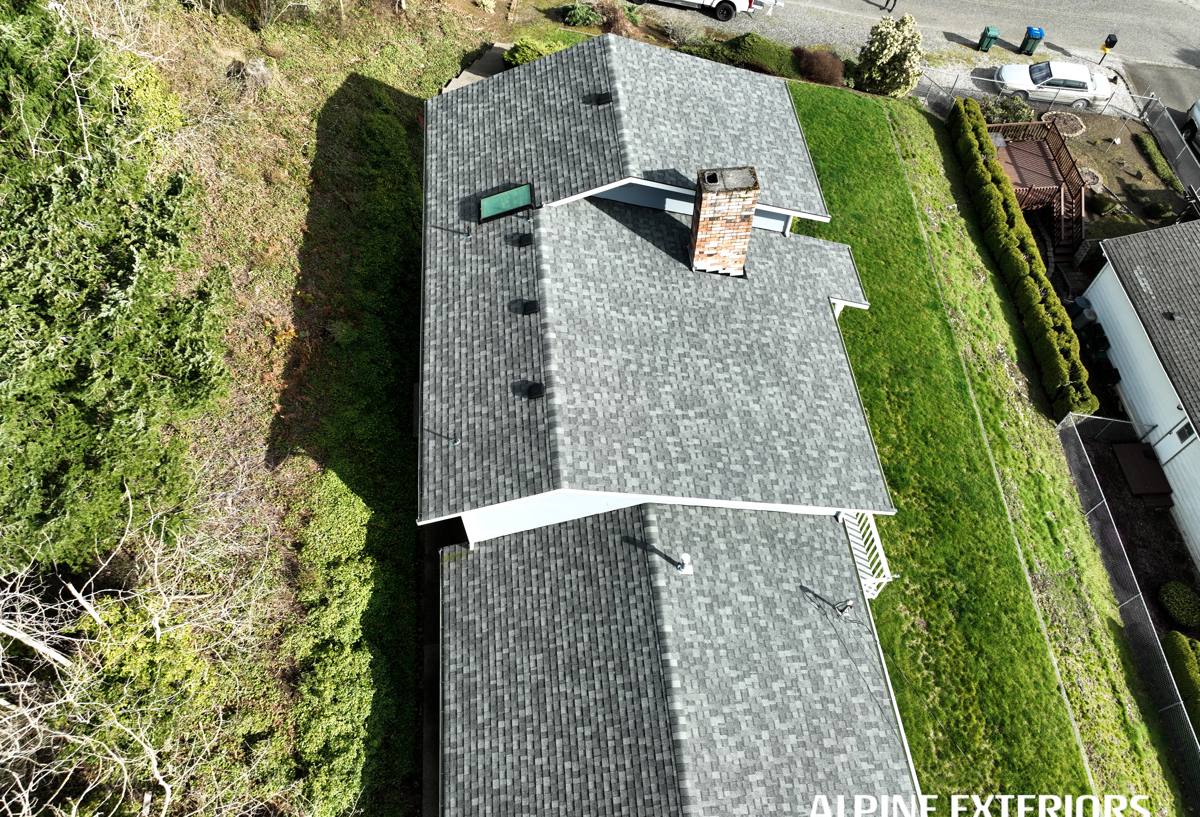
- Flashing pulled loose around chimneys, skylights, and roof-to-wall transitions
- Granule loss on shingles from wind-driven rain, leaving bare asphalt exposed to UV and moisture
- Moss colonies in shaded valleys and north-facing slopes holding water against the roof deck
- Clogged gutters and downspouts overflowing during heavy rain and backing water up under the eaves
- Soft or discolored ceiling spots inside the home that trace back to a roof leak, not a plumbing issue
What a Correct Storm Damage Repair Actually Involves
A lot of "storm damage repairs" are really just a patch over the visible problem. That approach tends to fail here faster than almost anywhere, because the underlying moisture keeps working even after the obvious damage is covered. A repair done right addresses both the storm damage and the conditions that let it become a problem in the first place.
Full Roof Inspection, Not Just a Spot Check
We look at the whole roof, not just the area the homeowner noticed damage. Wind and moisture problems are rarely isolated to one spot — if shingles lifted on one slope, it's worth checking whether fasteners are backing out elsewhere, and whether moss has already started undermining a different section that hasn't leaked yet.
Matching Materials, Not Just Covering the Gap
Shingle color and profile fade and change with age, and a mismatched patch stands out and can also perform differently than the surrounding roof. We try to source materials that match as closely as possible, and where an exact match isn't realistic, we'll be upfront about that before starting rather than surprising a homeowner with a visibly different patch.
Flashing and Underlayment Get Rebuilt, Not Reused
Flashing around chimneys, vents, skylights, and wall transitions is where the majority of leaks in this climate actually originate, even when the visible storm damage is somewhere else. If flashing was disturbed by wind or already showing corrosion from years of moist air, we replace it rather than re-bed the old piece. Underlayment in the repaired section gets replaced as well — reusing underlayment that's already absorbed moisture defeats the purpose of the repair.
Moss and Debris Removal as Part of the Job
If moss contributed to the damage, removing it and addressing the conditions that let it grow — usually shade, debris buildup, and standing moisture — is part of a proper repair, not a separate upsell. Moss that's left in place after a shingle repair will simply work its way back under the new material.
Repair or Replace? How We Help You Decide
Not every storm-damaged roof needs a full replacement, and not every roof that looks fine after a storm is actually sound. The right call depends on the roof's age, how widespread the damage is, and what condition the deck and underlayment are in once we can actually see them.
| Factor | Favors Repair | Favors Replacement |
|---|---|---|
| Roof age | Under roughly 12-15 years, materials still have useful life | Nearing or past typical shingle lifespan for the region |
| Extent of damage | Isolated to one slope or a small section | Multiple areas affected, or damage found in several inspections over time |
| Underlying deck condition | Deck is dry, solid, no rot | Deck shows soft spots, staining, or rot once opened up |
| Moss and moisture history | First significant moss issue, caught early | Recurring moss problems despite past treatment |
| Material availability | Close match to existing shingles is available | Existing material discontinued or too far gone to match well |
We'll always give you a straight answer about which category your roof falls into, and why — including when a repair is the honest recommendation even if a replacement would be the bigger job for us.
Our Process, Start to Finish
1. Inspection and Documentation
We start with a thorough look at the roof, documenting the damage clearly. If you're filing an insurance claim, this documentation is something you can hand directly to your adjuster.
2. Temporary Protection if Needed
If a roof is actively leaking or has an open section exposed after a storm, getting it covered and protected comes before anything else. Water sitting on an exposed deck for days while paperwork gets sorted out turns a repair into a much bigger problem.
3. A Clear, Written Scope
Before any work starts, you get a written explanation of what we found, what needs to happen, and why — not just a price. If we think a section can reasonably be repaired instead of replaced, we'll say so.
4. The Repair Itself
Damaged materials come off, the deck underneath gets checked, flashing and underlayment are rebuilt where needed, and new materials go in matched as closely as possible to the existing roof.
5. Cleanup and Final Walkthrough
Old materials, nails, and debris are cleared from the property, and we walk the finished work with you before calling the job done.
Storm Damage and Insurance Claims
Many storm-related roof repairs in Whatcom County go through homeowners insurance. We're not a public adjuster and won't promise a claim outcome, but clear documentation — photos, a written scope, and dates — makes the claims process smoother regardless of which carrier you're working with. If damage was caused by a specific, identifiable storm event, noting the approximate date matters, since insurers often look at local weather records to confirm timing.
One honest note: not every roof issue is a covered "storm damage" claim. Long-term moss damage or wear that built up over years is generally treated differently by insurers than sudden wind or impact damage. We'll tell you plainly which category your roof's damage looks like, rather than framing everything as storm-related to make a claim easier.
Preventing the Next Storm From Causing the Same Damage
A repair is a good time to address the conditions that let storm damage take hold in the first place. For most Lynden homes, that means dealing with moss and moisture management, not just the shingles themselves.
- Clear overhanging branches that keep sections of the roof shaded and slow to dry
- Clean gutters and downspouts before the fall rains arrive, so water has somewhere to go
- Address moss while it's still a thin colony, before it works into the shingle mat
- Check flashing and fasteners annually, since this is where small movement turns into a leak
- Have the roof inspected after any significant wind event, even if nothing looks obviously wrong from the ground
Why Local Experience Matters for This Kind of Repair
A contractor who works Whatcom County roofs regularly already knows which details matter here: how far moss tends to travel across a shaded slope in a single wet season, which flashing details tend to fail first under this area's wind patterns, and how the Nooksack Valley's damp air affects material choices differently than it would in a drier part of the state. That local pattern recognition is what separates a repair that holds up through the next few wet seasons from one that needs to be redone.
It also matters for response time. Storm damage that's actively letting water into a home doesn't wait for a convenient schedule, and a crew already working in and around Lynden can get eyes on a damaged roof faster than one coming from outside the area.
Get an Honest Look at Your Roof
If a recent storm left you with lifted shingles, a leak, or just a nagging feeling that something's not right up there, we're happy to take a look. We'll give you a straightforward assessment, a clear explanation of what's actually needed, and a free, no-pressure estimate — use the form below to get started.