 Blaine Window
 Why Bellingham Roofs Wear Differently Than Roofs Inland
A roof in Bellingham does a different job than a roof fifty miles inland. It sits close enough to the water to pick up salt-laden air off Puget Sound, it sees rain that comes in sideways more often than straight down, and it spends long stretches of the year shaded and damp enough for moss to take hold. None of that means a roof here fails faster by default — it means the materials, fastener choices, and installation details have to account for those conditions from the start. A roof that would perform fine in a dry, sunny climate can underperform here if it's installed without those factors in mind.
Salt Air and Corrosion
Homes closer to the water deal with airborne salt that settles on roofing metal — flashing, fasteners, vent caps, and gutter hardware. Over years, standard steel fasteners and cheaper flashing metals can corrode faster in this environment than they would inland. We spec corrosion-resistant fasteners and flashing on Bellingham jobs as a default, not an upgrade, because replacing a rusted-through flashing detail five years into a roof's life is a preventable failure.
Moss, Shade, and Trapped Moisture
Whatcom County's tree cover and long wet season give moss exactly what it needs: shade, moisture, and time. Moss on a roof isn't just cosmetic — it holds water against the shingle surface, works its way under shingle edges, and can lift granules and tabs over time. A roof designed with airflow and drainage in mind sheds that moisture instead of holding onto it. A roof installed without attention to ventilation and slope details gives moss a head start.
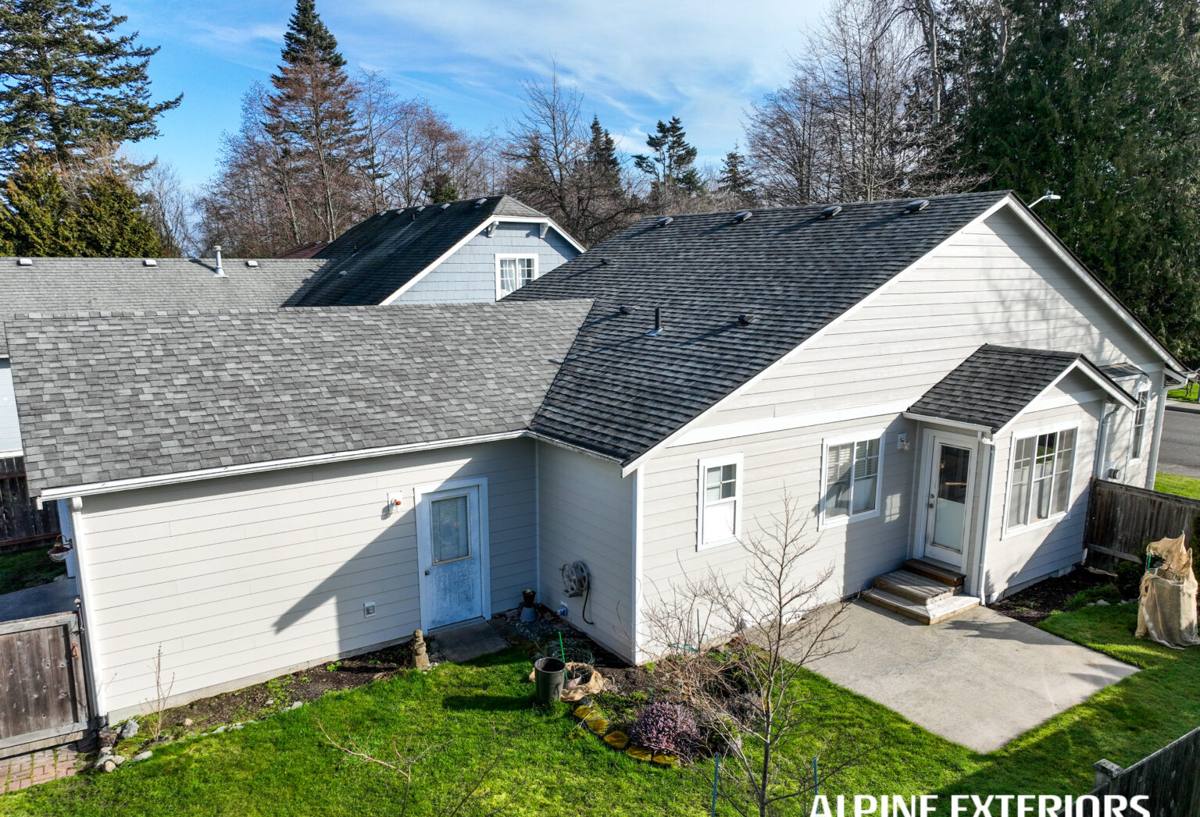
Signs a Bellingham Roof Needs Full Replacement, Not Another Repair
Not every roof problem calls for a full tear-off. But in this climate, certain signs mean patching is just delaying a bigger job — and often costing more in the long run once interior damage starts.
- Granule loss heavy enough that you're finding grit in gutters and downspouts every season
- Shingles that are cupping, curling, or cracking, especially on south- and west-facing slopes
- Moss or algae staining that keeps returning within a year of cleaning
- Soft spots or sagging when walked on, which usually points to deck damage underneath
- Daylight visible through the roof deck from inside the attic
- Repeated leaks around the same valley, chimney, or vent penetration despite past repairs
- A roof that's 20+ years old and has never had underlayment or flashing upgraded
If you're seeing two or more of these, it's worth having someone look at the whole system — deck, underlayment, and flashing — rather than just the shingles on top.
What a Correct New Roof Installation Actually Involves
A roof is only as good as what's underneath the shingles. In a climate with this much rain and moisture pressure, the layers most homeowners never see are the ones that determine whether the roof holds up.
Tear-Off and Deck Inspection
We remove the old roofing down to the deck rather than layering over it. That's the only way to actually see the sheathing condition — soft, delaminated, or water-stained decking gets replaced before anything new goes down. Roofing over hidden deck damage just buries the problem.
Underlayment and Water Barrier
Underlayment is the roof's backup plan if wind-driven rain gets under a shingle edge, which happens more often here than in calmer climates. We use synthetic underlayment across the field and self-adhered ice-and-water barrier at the eaves, valleys, and any roof-to-wall transitions — the spots where water concentrates and driving rain is most likely to find a way in.
Ventilation
Balanced intake and exhaust ventilation keeps the underside of the roof deck dry and close to outdoor temperature. That matters two ways here: it reduces condensation buildup in our damp winters, and it keeps the roof surface drying out faster after rain, which is one of the better long-term defenses against moss taking hold.
Flashing and Edge Details
Chimneys, skylights, sidewalls, and valleys are where the vast majority of roof leaks actually start — not the open field of shingles. Correctly stepped and counter-flashed details, with corrosion-resistant metal, are what keep those transitions dry through decades of coastal weather rather than just the first few years.
Choosing a Roofing Material for a Bellingham Home
There's no single "right" material for every house — it depends on your roof's slope, shade exposure, and how much you want to spend upfront versus over time. Here's how the common options compare for this specific climate.
| Material | Upfront Cost | How It Handles This Climate |
|---|---|---|
| Standard asphalt composition shingle | Budget-friendly | Solid performer when installed with good underlayment and ventilation; more prone to moss in heavy shade without regular upkeep |
| Architectural / dimensional shingle | Mid-range | Thicker profile sheds water better and often comes with algae-resistant granule options; good balance for shaded, rain-heavy roofs |
| Standing seam metal | Higher upfront investment | Sheds moss and moisture very effectively due to smooth, non-porous surface; strong long-term option for heavily shaded or moss-prone roofs |
For most Bellingham homes we install architectural asphalt shingle, since it holds up well against the local combination of rain and shade while staying within a reasonable budget. On heavily shaded roofs where moss has been a recurring, expensive problem, metal is worth a serious look — the cost difference is real, but so is the reduction in maintenance calls.
Our Installation Process, Start to Finish
- On-site inspection and estimate. We walk the roof, check the attic for ventilation and moisture signs, and give you an honest read on repair versus replacement.
- Material selection. We go over the trade-offs for your specific roof — slope, shade, and budget — rather than pushing one product for every house.
- Permitting. We handle the permit filing required for full roof replacements in Whatcom County so you're not chasing paperwork.
- Tear-off and deck inspection. Old roofing comes off, the deck gets inspected, and any damaged sheathing is replaced before we move forward.
- Underlayment, flashing, and ventilation install. This is where the roof's actual weather resistance gets built — done right, it's not a step to rush.
- Shingle or panel installation. Installed to manufacturer spec, which matters for both performance and keeping your material warranty valid.
- Final walkthrough and cleanup. We check the finished roof with you, clean the site of debris and nails, and go over care and maintenance basics.
Keeping Moss and Algae From Coming Back
A new roof buys you time against moss, but it doesn't make the underlying conditions — shade, moisture, debris — disappear. A few habits go a long way toward protecting the investment:
- Keep gutters and valleys clear of needles and leaf debris, which hold moisture against the roof
- Trim back overhanging branches where practical to reduce shade and let the roof dry faster
- Have moss physically removed rather than left to grow — don't power-wash shingles, which can strip granules
- Consider zinc or copper strips near the ridge on shade-heavy roofs, which help suppress regrowth over time
Why a Crew That Already Works Bellingham Matters
Roofing crews that mostly work drier, inland climates don't always default to coastal-grade fasteners, extended ice-and-water coverage, or ventilation sized for a wet climate — because they don't need to where they usually work. A crew that's already doing roofs across Whatcom County knows which details matter here and builds them in as standard practice, not an upsell. That local familiarity also means knowing which parts of a roof tend to fail first in this specific weather pattern, so inspections catch the right problems instead of generic ones.
Permits, Timelines, and What to Expect
Most full roof replacements in Whatcom County — whether the property falls inside city limits or in the unincorporated county — require a building permit, and inspections are typically tied to that permit process. We handle that filing as a standard part of the job rather than something you have to manage. Timeline-wise, a typical residential re-roof runs one to a few days of active work depending on size and complexity, though weather windows in this region can shift scheduling — we'll be upfront with you about that rather than promising a date we can't control. Any manufacturer material warranty and our workmanship coverage should be explained clearly in writing before work starts, not left as a verbal promise.
If your roof is showing its age or you're just not sure whether it needs repair or replacement, we're happy to take a look. The estimate is free, there's no pressure attached to it, and you'll get a straight answer about what your roof actually needs — you can request one using the form below.