 Blaine Window
 Sandy Point's Roof Challenges: Salt Air, Driving Rain, and Moss
Homes in Sandy Point sit close to the water, and that location shapes what a roof has to put up with year after year. Salt-laden air moves off the Strait of Georgia and settles on every exposed surface, accelerating the breakdown of metal flashing, fasteners, and the granule coating on asphalt shingles. Add in the driving, wind-blown rain that comes with winter storms off the water, and you have a roof that faces more lateral water pressure than a similar home fifteen miles inland in Blaine.
Then there's moss. Whatcom County's long, wet, mild winters give moss and algae months of ideal growing conditions on north-facing and shaded roof slopes. Left alone, moss doesn't just look bad — it holds moisture against the shingle surface, works its way under tabs, and lifts them over time. A roof built and maintained for these conditions holds up. One installed without them in mind tends to show problems years before it should.
What a Proper Asphalt Shingle Roof Actually Involves
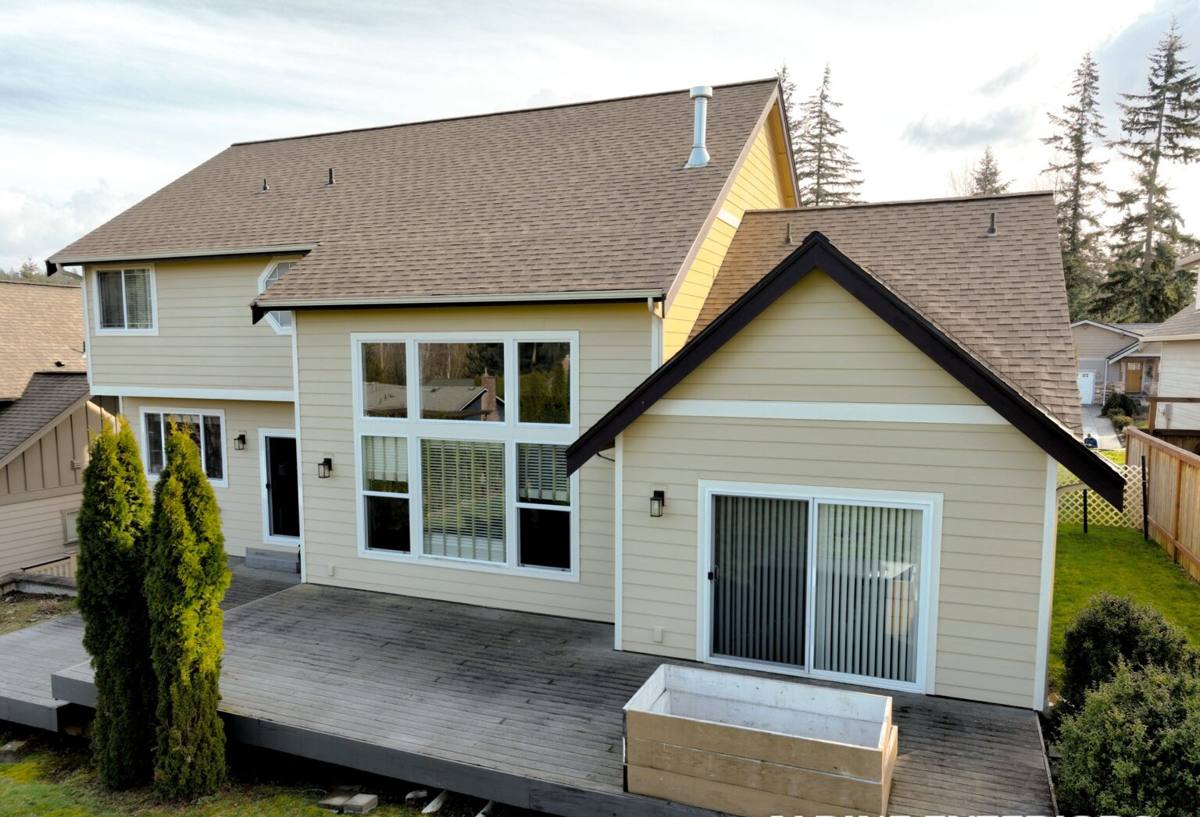
An asphalt shingle roof is more than the shingles themselves. The visible shingle layer is the last piece of a system that includes the roof deck, underlayment, flashing, and ventilation — and in a coastal climate, every one of those layers matters as much as the shingle brand you choose.
- Roof deck: The plywood or OSB sheathing underneath needs to be sound, dry, and properly fastened before anything goes on top of it.
- Underlayment: A synthetic or felt underlayment is the roof's backup waterproofing layer if wind or ice ever gets under a shingle edge.
- Ice and water barrier: Self-adhering membrane at eaves, valleys, and around penetrations — the areas most likely to see standing water or wind-driven rain.
- Flashing: Metal at chimneys, walls, valleys, and roof-to-wall transitions, sized and installed to shed water rather than rely on sealant alone.
- Ventilation: Intake and exhaust venting that lets the attic breathe, which controls moisture buildup and helps shingles last their full service life.
- Shingles: The weather-facing layer, chosen and nailed to the manufacturer's pattern for the wind exposure the home actually sees.
Skip or shortcut any one of these and the shingles on top will still look fine on installation day — the problems just show up two, five, or ten years later, usually as a leak that's harder to trace than it should be.
Warning Signs a Sandy Point Roof Needs Attention
Because of the salt air and moisture exposure, roofs in this area can show wear in ways that are easy to miss from the ground. Worth checking for, or having checked, at least once a year:
- Moss or algae streaking on shaded slopes, especially north- and east-facing sections
- Granules collecting in gutters or at downspout outlets
- Shingle edges curling, cupping, or lifting at the tabs
- Rust staining or gaps around chimney, vent, or wall flashing
- Soft spots or discoloration on interior ceilings after a heavy rain
- Nail heads becoming visible or backing out of the shingle surface
None of these mean the whole roof needs to come off immediately. But they're the kind of early signals that, caught in time, often mean a repair rather than a full replacement.
Choosing the Right Shingle for a Coastal Whatcom County Home
Not every asphalt shingle is built the same, and for a home exposed to salt air and moss pressure, that difference matters more than it does for a roof in a drier, more sheltered location.
| Shingle Type | Typical Lifespan | Best Suited For | Coastal Consideration |
|---|---|---|---|
| 3-tab shingles | 15-20 years | Budget-conscious projects, simpler rooflines | Lower wind rating; can be more vulnerable to lifting in exposed, gusty locations |
| Architectural (laminate) shingles | 25-30+ years | Most homes; better appearance and durability | Heavier, multi-layer construction handles wind-driven rain better |
| Algae-resistant shingles | Same as base shingle, with longer-lasting appearance | Shaded, north-facing, or tree-covered slopes | Copper-infused granules slow the moss and algae growth common in Whatcom County's wet winters |
| Impact/wind-rated shingles | 25-30+ years | Homes with direct exposure to open water or storm winds | Higher wind rating and sealant strip designed for sustained gusts |
For most Sandy Point homes, we lean toward architectural shingles with algae-resistant granules as the practical default — the added upfront cost is modest, and it addresses the two biggest local stressors, wind exposure and moss, at the same time. That said, the right choice depends on the roof's slope, shading, and how exposed the specific lot is, which is something worth walking through in person rather than guessing at from a brochure.
A Word on Warranties
Manufacturer warranties on shingles are worth understanding before you sign off on a product. Most are prorated after the first several years, and many require the full system — underlayment, starter strip, ventilation — to be installed to spec by a certified installer for the strongest coverage to apply. We'll walk you through what's actually covered, and for how long, before installation starts, not after.
Our Installation Process, Step by Step
- Inspection and estimate: We walk the roof, check the deck and ventilation, and give you a written scope and price before any work begins.
- Tear-off: Old shingles, underlayment, and any damaged flashing are removed down to the deck so we can see exactly what we're working with.
- Deck repair: Any soft, rotted, or delaminated sheathing gets replaced before new material goes down — no covering up existing problems.
- Ice and water barrier: Applied at eaves, valleys, and penetrations, which matters more here than in a drier inland climate.
- Underlayment and flashing: Installed to shed water at every transition, seam, and roof edge.
- Shingle installation: Laid to the manufacturer's nailing pattern and exposure specs, sized for the wind exposure of the home's location.
- Ventilation check: Intake and exhaust venting confirmed or upgraded so the attic can properly exchange air.
- Cleanup and walkthrough: Site cleared of debris and nails, and we go over the finished roof with you before we consider the job done.
Keeping Moss and Algae From Taking Over
Moss prevention isn't a one-time fix — it's an ongoing part of owning a roof in this part of Whatcom County. A few things make the biggest difference over the life of the roof:
- Algae-resistant shingles on shaded or north-facing slopes, where moss pressure is highest
- Keeping overhanging branches trimmed back to let sunlight and airflow reach the roof surface
- Clean gutters and valleys, since trapped debris holds moisture and gives moss a place to start
- Gentle, low-pressure moss removal rather than pressure washing, which can strip granules and shorten shingle life
- Zinc or copper strips at the ridge on roofs with persistent moss problems, which release trace metals that inhibit regrowth as rain runs down the slope
The goal isn't a moss-free roof forever — in this climate, that's not realistic without ongoing upkeep. The goal is keeping moss from getting established enough to lift shingles or trap moisture against the deck.
Homeowner Maintenance Checklist
A little attention twice a year goes a long way toward getting the full service life out of a shingle roof in a coastal location. Worth keeping on a simple annual routine:
- Visually check the roof from the ground each spring and fall for moss, missing shingles, or visible damage
- Clean gutters and downspouts before the fall rains and again after leaves drop
- Trim back tree limbs that overhang or touch the roofline
- Check attic ventilation isn't blocked by insulation or storage
- Look inside the attic after a heavy storm for any signs of water intrusion
- Have a professional inspection every few years, or after any major windstorm
Why a Sandy Point-Experienced Crew Makes a Difference
A roofing crew that regularly works in Sandy Point and the surrounding Blaine area already knows how the local conditions behave — which slopes tend to hold moss, how much wind exposure a given lot sees, and what flashing details hold up against salt air over time. That's not something you get from a general specification sheet; it comes from doing the work here repeatedly and seeing how different approaches actually perform after a few Pacific Northwest winters.
It also means fewer surprises during the job itself. Local crews know which suppliers stock the right underlayment and algae-resistant shingles for this climate, understand typical permitting requirements in Whatcom County, and can plan around the weather windows that actually exist here rather than working off a generic install schedule. When something needs a judgment call — how much ventilation a particular attic really needs, whether a valley needs extra membrane — that local experience is what keeps the decision grounded in how the roof will actually perform, not just how it looks on installation day.
If your roof is due for a look, whether that means a repair, a maintenance visit, or full replacement, we're happy to come out, walk the roof with you, and give you an honest, no-pressure estimate. Use the form below to get started.