 Blaine Window
 Windows Built for Cherry Point's Coastline
Cherry Point sits out on open water along the Strait of Georgia, which means homes here take weather straight off the Salish Sea with very little to break it up. That's a different exposure than a house tucked into town in Blaine or set back in the trees further inland. Wind carries salt spray onto siding and glass, rain comes in sideways during winter storms, and the moisture just doesn't dry out the way it would somewhere with more sun and less wind. Windows are usually the first thing on a house to show what that exposure is doing — fogged glass, stiff or swollen sashes, and finishes that wear faster than the manufacturer's brochure promised.
We've worked on homes up and down this stretch of Whatcom County, from in-town Blaine lots to rural properties out toward the water, and the pattern holds: whatever is facing the water ages faster than whatever is facing away from it. That's the starting point for any honest conversation about window work out here.
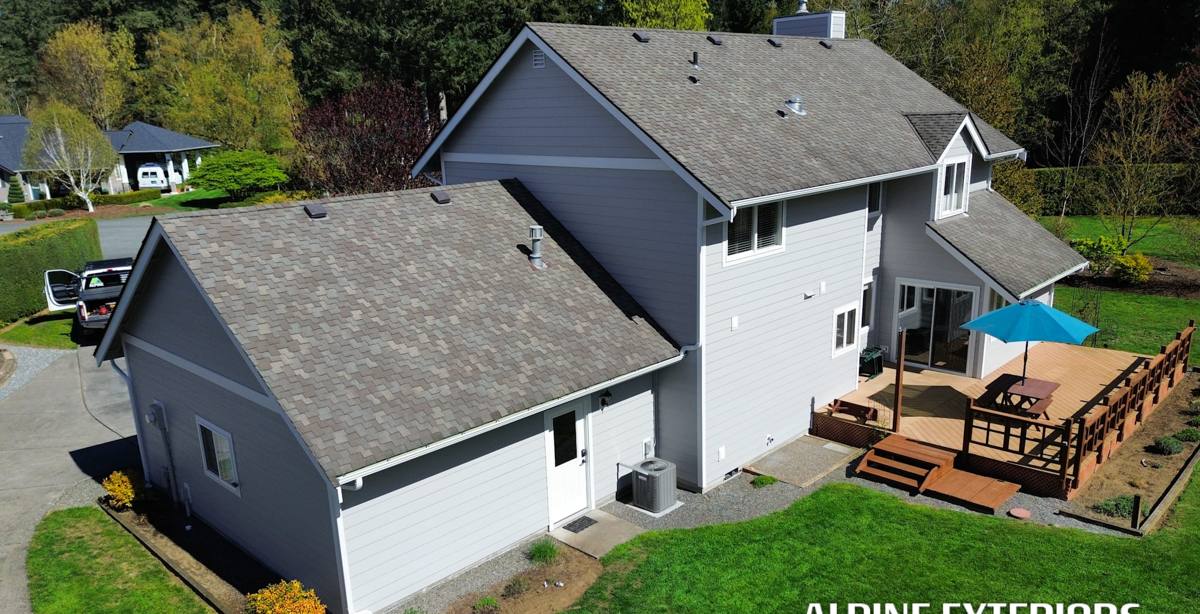
What Salt Air and Wind-Driven Rain Actually Do to a Window
Salt air is corrosive to metal hardware — hinges, locks, balance systems, and screen frames all wear faster near open water than they would a few miles inland. It doesn't happen overnight, but over ten or fifteen years it shows up as stiff cranks, locks that don't seat right, and corrosion staining around fasteners.
Wind-driven rain is a different problem. It's not just about how much rain falls, it's about the fact that a strong onshore wind can push water sideways and upward, testing seals and flashing details that a calmer climate would never stress. A window that would perform fine in a sheltered yard can leak on an exposed wall if it wasn't installed with that wind loading in mind. This is one of the biggest reasons window failures out here trace back to installation and flashing, not just the window unit itself.
Condensation and Fogged Glass
If you're seeing fog or a milky haze between the panes of a double-pane window, the seal has failed and the gas fill (or just the dead air space) has been compromised. That's a glass-unit problem, not a cleaning problem, and it's common in older dual-pane windows that have spent years cycling through damp winters and salt-laden air. It doesn't make the window dangerous, but it does mean it's no longer insulating the way it was designed to.
Choosing Materials for a Coastal Exposure
Every window material has trade-offs, and near the water those trade-offs shift compared to an inland install. We'll talk through your specific exposure — how directly a wall faces the water, how sheltered it is by trees or other structures, and what your maintenance appetite is — before recommending a product.
| Material | How it handles salt air & moisture | Maintenance |
|---|---|---|
| Vinyl | Won't corrode or rot; UV-stable finishes hold up well in this climate | Low — occasional cleaning |
| Fiberglass | Very stable dimensionally, resists moisture and salt exposure well | Low |
| Aluminum-clad wood | Exterior clad shell protects the wood, but hardware and seams need attention near open water | Moderate — inspect cladding seams and sills |
| Solid wood | Handsome, but wood is the most vulnerable to prolonged moisture and salt exposure without diligent upkeep | High — regular refinishing and sealant checks |
We're not going to tell you wood windows are a bad product — plenty of people love the look and are willing to keep up with the maintenance. What we will tell you honestly is that on a wall taking direct wind off the water, low-maintenance materials tend to make homeowners happier five and ten years down the road, simply because there's less upkeep riding on the weather cooperating.
Installation Details That Matter More Here Than Elsewhere
The window unit itself only does half the job — the other half is flashing, sealant, and how the window ties into the surrounding wall assembly. On an exposed property, we pay particular attention to:
- Proper flashing integration with the house wrap or weather-resistive barrier, so water is directed out and down, not trapped behind the siding
- Sill pan flashing under every window, which gives any water that does get past the primary seal a way to drain back out
- Sealant compatible with the window material and rated for sustained UV and moisture exposure, not just a generic caulk
- Correct shimming and fastening so the frame doesn't rack or bow under wind pressure over time
These details rarely get mentioned in a sales pitch, but they're the difference between a window that performs for 20-plus years on an exposed wall and one that starts leaking around year five.
Siding, Roofing, and Decks: The Rest of the Envelope
Windows don't fail in isolation — they're one piece of the exterior envelope, and out at Cherry Point the same conditions that wear on window hardware and seals are working on the rest of the house too.
Siding
Salt-laden wind and constant damp are hard on siding finishes and fastener hardware, and any gaps or failed caulking around trim and window openings become an entry point for water. When we're out doing window work, we're also looking at the siding condition immediately around the opening, because a window replacement is only as good as the wall it's set into.
Roofing
A long, damp moss season is one of the defining features of exterior maintenance in Whatcom County, and Cherry Point's exposure to sea moisture doesn't help. Moss holds moisture against roofing material and can work its way under shingles and shakes over time, and it tends to establish fastest on north-facing or shaded slopes. Roof condition also matters for windows directly below rooflines — poor drainage or clogged gutters can send water running down onto window heads and trim.
Decks
Decks facing the water get the same salt exposure as siding and windows, plus standing water and UV breakdown on horizontal surfaces. Fastener corrosion, checking and splitting on wood decking, and ledger board rot where the deck ties into the house are the issues we see most in this kind of exposure.
Because we handle all four trades, we can look at a Cherry Point property as one system rather than four separate projects — which matters when the same wind and moisture are affecting all of it at once.
Signs It's Time to Have Your Windows Looked At
- Fog or haze trapped between panes of glass
- Windows that are difficult to open, close, or lock
- Visible corrosion or staining on hardware, hinges, or fasteners
- Drafts or noticeable temperature difference near the window when it's windy outside
- Soft or discolored trim/sill wood around the window opening
- Water staining on interior walls below or beside a window
- Peeling or bubbling paint on window trim, especially on water-facing walls
Any one of these on its own might just mean a repair. Several at once, especially on a wall that takes direct wind off the Strait, usually means it's worth a full assessment rather than a patch.
Repair or Replace?
Not every window issue means a full replacement. Failed hardware, worn weatherstripping, and even a single failed glass unit can often be repaired or replaced individually without touching the whole window. Full replacement makes more sense when the frame itself has moisture damage, when multiple units in the same exposure are failing around the same time, or when you're already re-siding a wall and it makes sense to handle the windows in that opening at the same time. We'll give you our honest read on which category your situation falls into — we don't make more money steering you toward the more expensive option, and we'd rather you trust the recommendation.
Why a Local Crew Matters Out Here
Cherry Point isn't a big population center, and it doesn't get the attention that a bigger job site in Bellingham or Ferndale might from a crew based further away. Being based right here in Blaine means we know what this specific stretch of coastline does to a house, we're not driving hours to get to a callback, and we're going to be a phone call away if something needs a second look after the job's done. Whatcom County's exterior contractors aren't all interchangeable — the ones who work this shoreline regularly tend to build differently than crews who mostly work inland.
We also carry the same crew and the same standards across windows, siding, roofing, and decks, so you're not coordinating between four different companies with four different opinions about how the exterior of your house should work together.
What to Expect From Us
We start with a walk-through of the property, looking at window condition, surrounding siding and trim, and anything upstream — like roof drainage — that might be contributing to the problem. From there we'll give you a straightforward assessment: what needs attention now, what can wait, and what your material and budget options actually look like for your specific exposure. No pressure tactics, no inflated urgency — just what we'd tell a neighbor.
If you're noticing drafts, fogged glass, sticking sashes, or you're just due for an honest look at how your windows are holding up to the water and weather out at Cherry Point, we're happy to come take a look. Reach out for a free, no-pressure estimate using the form below.