 Blaine Window
 Exterior Work in Grandview: What the Climate Actually Does to a House
Grandview sits close enough to the water and to the open weather patterns that roll off Boundary Bay and the Strait of Georgia that homes here take a different kind of beating than houses further inland in Whatcom County. It's not one dramatic storm that causes problems — it's the steady combination of salt-laden air, wind-driven rain that finds every gap in a building envelope, and long stretches of gray, wet months that never quite let anything dry out completely. Add in the shade from mature trees common in this part of Blaine, and you get near-constant moss pressure on roofs and north-facing siding.
None of that is unique to any one house on any one street. It's a regional condition, and it shows up in predictable ways: window frames that swell or corrode faster than the manufacturer's spec sheet suggests, siding that holds moisture behind it instead of shedding it, roofs that stay damp under moss mats long after a storm has passed, and deck boards that cup or rot at the fastener points first. Understanding that pattern is most of what separates a repair that lasts from one that doesn't.
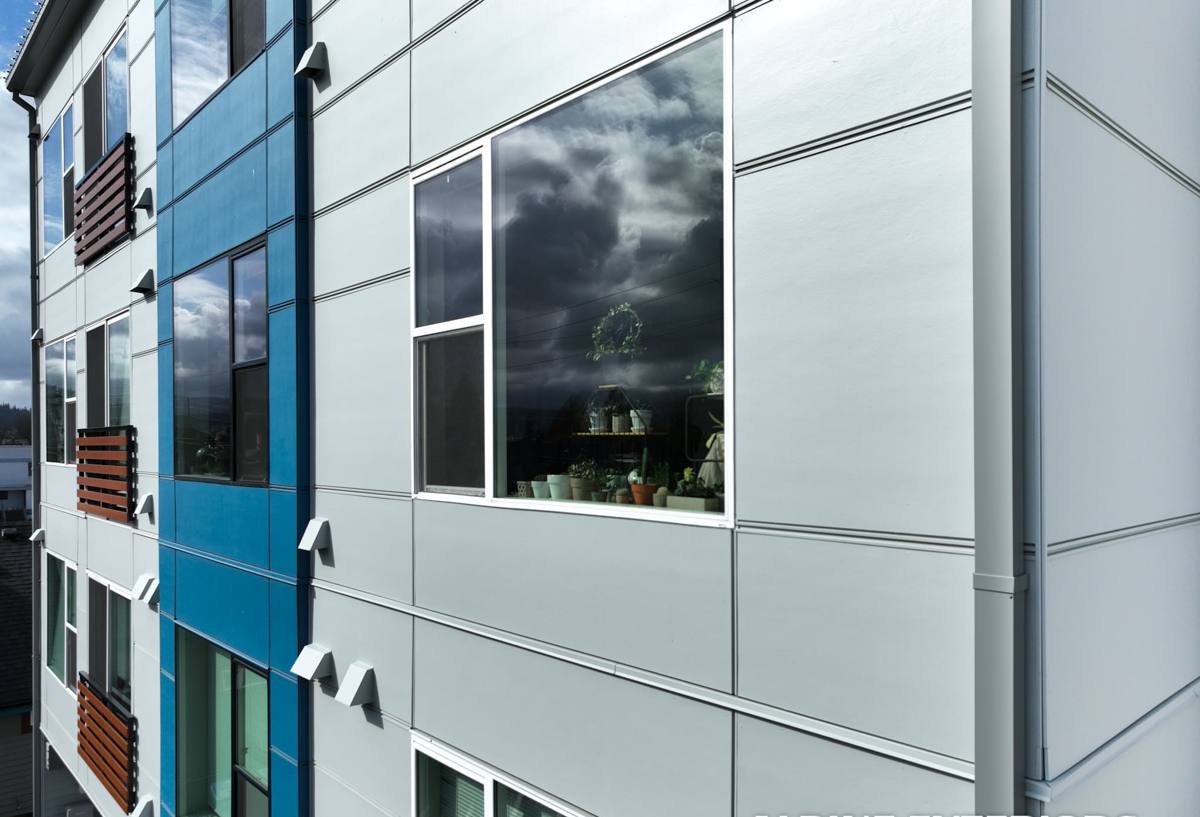
Windows: Where Salt Air and Moisture Cause the Most Damage
Windows are usually the first thing homeowners notice, because the symptoms are visible from inside the house — fogging between panes, drafts around the frame, sashes that stick or won't latch cleanly, and condensation that never fully clears on cool mornings. In a coastal, high-rain area like this, three things drive window failure faster than they would somewhere drier:
Seal Failure from Constant Humidity
Insulated glass units depend on a sealed edge to keep the gas fill and the airspace between panes intact. Constant humidity cycling — wet mornings, drier afternoons, wet again overnight — works that seal harder than a stable climate would. Once it fails, fogging between the panes is permanent; the unit needs replacing, not cleaning.
Frame Material and Corrosion
Salt-influenced air is harder on certain frame materials and hardware finishes than most manufacturers' warranty language accounts for. Locks, hinges, and cranks in lower-grade hardware can corrode or seize years before the glass itself is a problem. We pay attention to hardware quality on every install for that reason, not just the frame material.
Wood Rot at Sills and Corners
Older wood-frame windows, especially original single-pane units still found in some of Blaine's older homes, are vulnerable at the sill and lower corners where water sits longest. By the time rot is visible from outside, it has often traveled further into the framing than it looks.
We install and service vinyl, fiberglass, and clad-wood windows depending on the home and the homeowner's priorities. We're honest about trade-offs rather than pushing one material as a cure-all — every option has a maintenance profile, and the right call depends on the specific exposure of that wall.
| Frame Material | Best For | Maintenance Consideration |
|---|---|---|
| Vinyl | Budget-conscious replacements, rental and standard-use homes | Low maintenance, but quality varies a lot between manufacturers |
| Fiberglass | Coastal-exposed walls, long-term ownership | Higher upfront cost, very stable in temperature and humidity swings |
| Clad-Wood | Homeowners wanting a wood interior look with exterior protection | Cladding needs to be properly detailed at joints or moisture gets behind it |
Siding: Keeping Wind-Driven Rain from Getting Behind the Wall
Most siding failures we see in this part of Blaine aren't about the siding material failing outright — they're about water finding a way behind it. Driving rain off the water pushes moisture sideways, not just down, which means poorly flashed windows, doors, and butt joints let water in even when the siding face looks fine. Once moisture gets behind siding and can't dry out because the wall is shaded or the humidity stays high, sheathing rot and mold follow.
We pay particular attention to:
- Flashing above and around windows and doors, not just caulk
- Proper lap direction and overlap so wind-driven rain sheds outward instead of wicking in
- A drainage gap or house wrap detail that lets any moisture that does get in find its way back out
- Butt joints and corners, which are the most common failure points on older installs
Fiber cement and quality engineered wood products both perform well here when installed with the right flashing details. Vinyl siding can also hold up, but it's less forgiving of installation shortcuts in a wet climate — gaps and poor overlap show up as problems faster than they would in a drier region.
Roofing: Moss, Shade, and the Long Wet Season
Whatcom County's tree cover and cloud cover are a good combination for moss and a bad combination for roofs. Moss holds moisture directly against shingles, keeps that section of the roof from drying between rain events, and over time lifts shingle edges enough for water to get underneath. North-facing slopes and anything shaded by trees are almost always the first places moss takes hold.
What We Actually Recommend
Moss removal that's done wrong — pressure washing or aggressive scraping — can strip granules and shorten a roof's remaining life faster than the moss would have. We favor gentler removal methods paired with zinc or copper strips at the ridge, which use rainwater runoff to inhibit regrowth over time without damaging the shingle surface.
Ventilation Matters as Much as the Shingles
A roof that can't breathe holds condensation on the underside of the sheathing, which shortens its life regardless of shingle quality. In a climate this wet, we check attic ventilation as part of any roofing inspection, not as an upsell.
Decks: Built for Standing Water, Not Just Rain
Decks in this area fail less often from rain itself and more from water that sits — in fastener holes, between boards that are laid too tight, and at ledger connections where the deck meets the house. That standing moisture is what drives rot, and it's often invisible until a board is soft underfoot.
Composite decking has become popular for exactly this reason: it doesn't absorb water the way wood does, so it's less vulnerable to the freeze-thaw and swell-shrink cycles common in a marine climate. Wood decking still has a place for homeowners who want that look and are willing to keep up with sealing and inspection, but it needs a more disciplined maintenance schedule here than in a drier region.
Comparing Your Options: A Straight Answer on What Costs More Over Time
| Project | Lower Upfront Cost Option | Trade-off in This Climate |
|---|---|---|
| Windows | Standard vinyl | Shorter hardware life near salt air; fine for most interior walls |
| Siding | Vinyl siding | Less forgiving of installation gaps in wind-driven rain |
| Roofing | Standard asphalt shingle | Needs more frequent moss management under tree cover |
| Decking | Pressure-treated wood | Requires ongoing sealing; composite costs more but needs far less upkeep |
We're not in the business of steering every homeowner toward the most expensive option. Some homes and some budgets are well served by the lower-cost choice — the point is making that decision with the actual trade-off in front of you, not finding out about it five years later.
Why a Local Crew Matters for Grandview Homes
A crew that works across Whatcom County and along the Blaine coastline sees the same failure patterns repeatedly — the same flashing mistakes, the same moss-prone roof slopes, the same window corners that rot first. That pattern recognition is what lets us catch a small problem before it becomes a wall or roof replacement instead of a repair. It also means we're not guessing at what this climate does to a house; we're accounting for it in how we flash, seal, vent, and space every install from the start.
Being local also means we're accountable after the job is done. If something needs a second look after the next storm season, we're the same crew that did the original work, not a subcontractor who's moved on.
A Simple Maintenance Checklist for Grandview Homeowners
- Check north-facing roof slopes and shaded areas for moss buildup at least once a year
- Inspect window sills and corners for soft wood or paint bubbling, especially on older wood-frame units
- Look for gaps or lifted caulk around window and door trim after major windstorms
- Clear debris from deck board gaps so water doesn't sit against fasteners
- Check attic ventilation if you notice condensation on windows from the inside during winter
- Walk the exterior after the first heavy rain of the season and note any new staining or soft spots
If you're not sure what you're looking at, that's a reasonable reason to have someone take a look — most of these issues are inexpensive to address early and expensive to ignore.
If you own a home in Grandview and want an honest read on your windows, siding, roof, or deck, we're glad to come take a look. There's no pressure and no obligation — just a straight assessment of what's actually going on and what it would take to fix it. Use the form below to request your free estimate.