 Blaine Window
 Windows Built for Birch Point's Waterfront Climate
Birch Point sits close enough to the water that homes there deal with a different set of pressures than houses further inland in Whatcom County. Salt-laden air off the water accelerates corrosion on hardware, fasteners, and unprotected metal components. Driving rain off the water finds its way into gaps that would stay dry on a more sheltered lot. And the long, damp shoulder seasons that define this part of Washington give moss and mildew months at a time to establish themselves on anything that stays wet. Windows are one of the first places all three of these show up — clouded glass, swollen sashes, corroded latches, and frames that have started to go soft at the corners.
We've worked on homes throughout the Blaine area and understand that a window package that performs fine in a subdivision a few miles inland can fail early on a lot that catches wind and spray directly off the water. That's the starting point for how we spec and install windows in Birch Point.
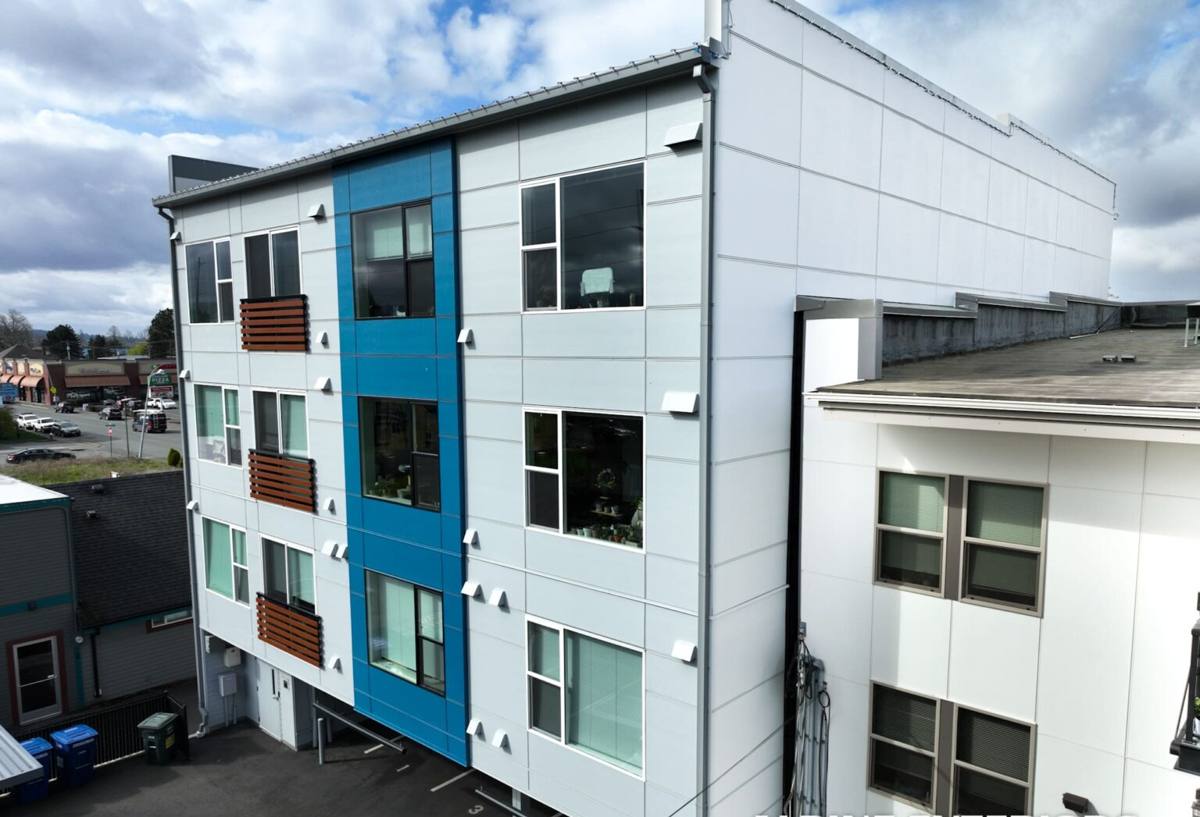
What Salt Air and Coastal Exposure Do to Windows Over Time
Salt air is corrosive to exposed metal — screws, hinges, balance hardware, and cheaper aluminum cladding all degrade faster near the water than they would a few miles away. Once corrosion starts on a window's moving hardware, the sash stops sealing evenly, and that's when air and moisture start working their way past the weatherstripping.
Common issues we see on Birch Point homes
- Pitted or seized hardware on operable sashes, especially on windows facing the water
- Fogged or failed insulated glass units where the seal has broken down from constant moisture cycling
- Soft or discolored wood trim and sills where paint or sealant has worn through
- Black staining or moss growth in corners and on north-facing sills that rarely get direct sun
- Drafts around older frames as gaskets and caulking lose flexibility in the cold, wet winters
None of this means a home in Birch Point is doomed to constant window trouble — it just means the products, flashing details, and hardware finishes matter more here than they would on a sheltered inland lot.
Choosing Materials That Hold Up Near the Water
We don't push one brand or one frame material as the universal right answer, because the right choice depends on sun exposure, wind exposure, and how close the house sits to open water. What we do insist on is being honest about trade-offs.
Vinyl
Vinyl frames handle salt air well because there's no bare metal to corrode, and they don't need repainting. The trade-off is that lower-grade vinyl can become brittle over years of UV and temperature cycling, so we spec heavier-gauge, multi-chambered frames rather than the thinnest options on the market.
Fiberglass
Fiberglass frames are dimensionally stable and shrug off moisture, which makes them a strong fit for waterfront exposure. They cost more up front, and we tell homeowners that plainly rather than upselling around it — it's a longer-term investment, not a budget option.
Wood and wood-clad
Wood offers a look a lot of homeowners want, but bare or poorly clad wood is genuinely a poor match for this kind of coastal exposure — not because wood is a bad material in general, but because constant moisture cycling is exactly what wood struggles with over time. If a homeowner wants a wood look, we steer toward well-clad or engineered options and are upfront that unprotected wood sashes facing the water will need more maintenance than most people want to keep up with.
Aluminum
Standard aluminum frames are the one option we're most cautious about this close to the water, since bare aluminum corrodes and conducts cold, which shows up as condensation on the interior in our wet winters. Where aluminum is used — often for larger or more architectural window walls — we make sure it's a marine-grade or properly finished product, not a budget-grade frame.
| Frame Type | Coastal Durability | Maintenance | Typical Cost Position |
|---|---|---|---|
| Vinyl (heavy-gauge) | Good — no corrosion risk | Low | Lower to mid |
| Fiberglass | Very good — stable in moisture and UV | Low | Mid to higher |
| Wood-clad | Good on clad exterior, needs sound detailing | Moderate | Mid to higher |
| Bare wood | Poor in direct salt exposure | High | Varies |
| Marine-grade aluminum | Good if properly finished | Low to moderate | Higher |
Glass and Seal Performance in a Wet, Marine Climate
Insulated glass units fail for a reason, and near the water that reason is usually constant moisture cycling working on the seal faster than it would inland. We spec dual- or triple-pane units with warm-edge spacers, which resist that kind of long-term seal fatigue better than older metal spacer designs. Low-E coatings also matter here — not just for energy performance, but because they cut down on the interior condensation that shows up on cold, damp Whatcom County mornings when warm indoor air meets a cold pane of glass.
If you're noticing fog or moisture trapped between panes on any window in your home, that's a failed seal, not something that can be cleaned out. It means the unit needs replacement — patching or resealing an existing IGU isn't a real fix.
Installation Details That Matter More on a Waterfront Lot
A quality window that's installed poorly will still let water in. On exposure like Birch Point gets, flashing and sealing details are not optional extras — they're the difference between a window that lasts decades and one that starts leaking within a few years.
What we pay close attention to on every install
- Proper flashing sequencing so water is directed out and down, never trapped behind the frame
- Sill pans on replacement openings to catch any moisture that gets past the primary seal
- Compatible, marine-appropriate sealants and fasteners rather than whatever is cheapest
- Correct shimming and squaring so sashes seal evenly across their whole perimeter
- Attention to how the window ties into siding and trim, since a gap at that transition is a common leak point
This is also where hiring locally pays off. A crew that installs windows across a lot of different microclimates in one region learns which corners of a house need extra attention — the side that takes the worst of the wind, the sills that stay shaded and wet longest, the details that a generic install crew from outside the area might not think twice about.
Moss, Mildew, and the Long Wet Season
Whatcom County's moss season isn't a two-week nuisance — it's a stretch of months where anything that stays damp and shaded has time to grow something on it. Window sills, especially on north- and east-facing walls, are prime spots for moss and black mildew staining because they hold moisture and rarely get direct sun to dry out.
Beyond the cosmetic issue, sustained moss and moisture on a sill or frame edge can work into seams and fastener points over time, especially on wood components. Keeping sills clear, making sure caulking lines are intact, and catching early staining before it becomes established growth all extend the life of a window system in this climate.
A simple seasonal check for Birch Point homeowners
- Look at north- and water-facing sills for early moss or dark staining, especially after the wet months
- Check that caulking around frames is still flexible and unbroken, not cracked or pulling away
- Test that sashes open, close, and lock smoothly — stiffness or grinding often means hardware corrosion has started
- Feel for drafts on a windy day, particularly on the side of the house that faces open water
- Watch for any haze or fog between panes, which signals a failed insulated glass seal
Repair, Replace, or Full Reopening — Making the Right Call
Not every window problem means full replacement. A single failed seal or a corroded latch can sometimes be repaired or the hardware replaced outright. But when a home has several original windows from the same era, and one is showing seal failure or frame softening, it's often a sign the others aren't far behind — especially if they've all had the same coastal exposure for the same number of years.
We look at the whole picture before recommending anything: how many windows are affected, how the frames are holding up structurally, whether the flashing and sealing behind the trim is doing its job, and what the home actually needs versus what would just be an upsell. Full-frame replacement is more involved and more expensive than a simple insert replacement, but it's the right call when the existing frame or the flashing behind it has deteriorated — patching over a compromised opening just delays a bigger repair.
Why a Local, Whatcom County Crew Makes a Difference
Windows are one piece of a home's exterior envelope, and they don't perform in isolation from the siding, roofing, and trim around them. A crew that also handles siding, roofing, and decks across Blaine and the surrounding area sees how these systems interact — how water sheds off a roofline onto a window head, how siding details tie into window trim, how a deck or covered porch changes the amount of direct weather a nearby window takes on. That whole-house perspective matters more on an exposed, waterfront lot like Birch Point than it does on a typical inland property.
Being local also means we're not guessing at what this climate does to a house — we see it on jobs throughout the season, year after year, on homes with the same kind of salt and rain exposure yours has.
If you're noticing drafts, fogged glass, stiff hardware, or moss building up on your window sills, we're happy to take a look and give you a straightforward, no-pressure assessment of what's actually going on and what your options are. Reach out for a free estimate using the form below.