 Blaine Window
 Windows in California Creek: A Different Kind of Wear
California Creek sits close enough to the water that homes here take a different kind of beating than houses further inland in Whatcom County. It's not one dramatic storm that does the damage — it's the steady, year-round combination of salt-laden air blowing off the bay, driving rain that comes in sideways more often than straight down, and a moss season that seems to stretch longer every year. Individually, none of that sounds severe. Applied to the same set of windows for ten or fifteen years without a break, it adds up to failed seals, soft frames, and glass that fogs between the panes.
We're a Blaine-based exterior crew, and California Creek is inside our regular service area — not a stretch job we drive an hour to reach once a season. That matters more than most homeowners expect when it comes to windows specifically, because window problems here rarely show up as a single obvious failure. They show up as a slow drift: a little more draft each winter, a little more condensation, a sash that used to slide easily and now sticks.
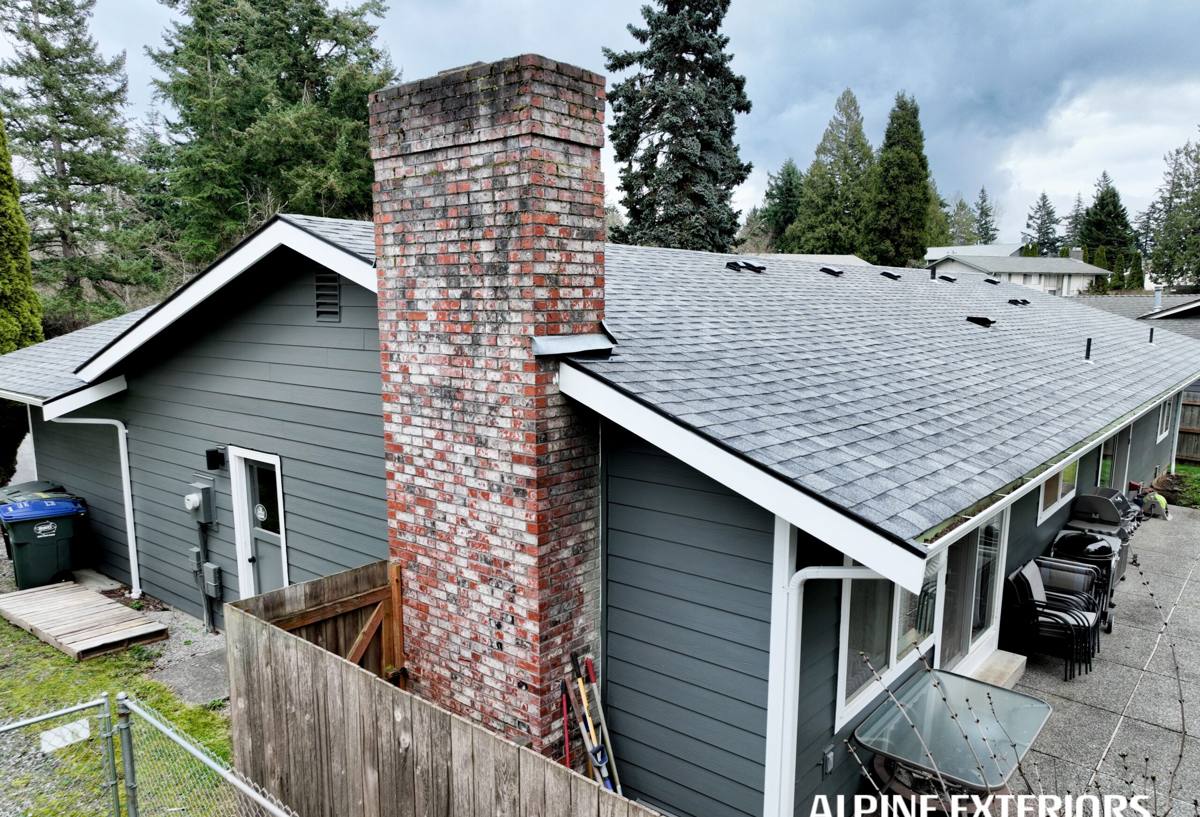
What the Climate Actually Does to a Window
Salt Air and Metal Components
Salt in the air doesn't just sit on the glass — it settles into hardware, hinges, balance mechanisms, and any exposed fasteners. Over time it accelerates corrosion on lower-grade metal parts, which is one reason we pay attention to hardware quality, not just frame material, when we talk through options with homeowners near the water.
Driving Rain and Wind-Driven Moisture
Blaine's weather regularly pushes rain at an angle rather than straight down, which puts real pressure on window flashing, sill details, and the seal between the window unit and the wall opening. A window that would perform fine in a drier, calmer climate can leak here if it wasn't installed with wind-driven rain specifically in mind. This is an installation issue as much as a product issue — the best window on the market will still leak if the flashing and sill pan underneath it weren't done right.
The Long Moss Season
Moss doesn't grow on glass, but it does grow on window sills, trim, and the wood or composite surfaces around a window opening, especially on north-facing walls that stay shaded and damp for months. Moss holds moisture against the surface it's growing on, which slowly breaks down caulking, paint, and unprotected wood trim — and once trim starts failing, water finds its way behind the window frame.
Signs Your Windows Are Losing the Battle
- Fogging or a hazy film between the panes of double-pane glass — this means the seal has failed and the insulating gas has escaped
- Visible gaps, soft spots, or paint failure on the wood or trim surrounding the window
- Drafts you can feel with a hand near the frame on a windy day, even with the window fully closed and locked
- Windows that are difficult to open, close, or lock — often a sign the frame has shifted or swollen
- Water staining on interior sills or the wall below a window after a hard rain
- Visible moss or persistent green staining on exterior trim around the window opening
- A noticeable jump in heating costs without any other explanation
How We Approach Window Replacement Here
We don't sell a single "package" and try to fit every house into it. What makes sense for a wall that takes direct weather off the water is often different from what makes sense on a sheltered side of the same house. Before we quote anything, we look at exposure, existing framing condition, and whether there's any hidden rot behind the current trim — because replacing glass in a frame that's already compromised just means doing the job twice.
Assessment and Honest Scoping
We check the condition of the framing and sill, not just the visible window unit, since water damage in this climate tends to start behind the trim before it's visible from the outside.
Sill and Flashing Detail
Given how much wind-driven rain this area sees, we treat the sill pan and flashing as seriously as the window itself. A properly detailed sill pan directs any water that does get past the exterior seal back outside instead of into the wall cavity.
Material Matched to Exposure
Homes closer to the water or facing prevailing weather get a different recommendation than sheltered homes further from the shoreline — mainly around frame material and hardware finish, since corrosion resistance matters more on an exposed wall.
Comparing Common Window Frame Options
| Frame Type | Behavior Near Salt Air | Maintenance | General Notes |
|---|---|---|---|
| Vinyl | Doesn't corrode; performs consistently | Low — occasional cleaning | Widely used, cost-effective, good energy performance |
| Fiberglass | Very stable in salt air and temperature swings | Low | Higher upfront cost, holds paint well if a custom color is wanted |
| Aluminum | Can corrode faster unless properly coated | Moderate | Slim sightlines, but conducts cold — condensation risk in our winters |
| Wood | Vulnerable to moisture and moss unless well-maintained | High — regular painting/sealing | Classic look, but demands the most upkeep in this climate |
| Wood-clad | Exterior shell protects the wood core | Low to moderate | Interior wood warmth with better exterior protection |
None of these is universally "right" — the honest answer depends on your home's exposure, your maintenance appetite, and your budget. We'll walk through the real trade-offs during the estimate rather than push whatever has the highest margin.
Windows Don't Work in Isolation
Because we handle siding, roofing, and decks as well as windows, we tend to see the whole envelope of a house rather than just one component. That matters in California Creek specifically because window failures here are frequently connected to something happening one step away — a roof edge shedding water onto a wall below, siding that's let moisture behind it near a window opening, or a deck ledger trapping moisture against the house.
Roofing and Water Path
Where a roofline directs water can affect how much a nearby window has to deal with. If we're replacing windows on a wall that also has a roofing or gutter issue upstream, we'll flag it rather than install new windows under a problem that will just recreate the same damage.
Siding and the Window Opening
Window replacement is also a natural time to check the siding immediately around the opening. If there's rot or moisture intrusion at the edges, addressing it during the window job is far less disruptive than coming back separately later.
Decks and Nearby Walls
Decks attached near window walls can create shaded, damp microclimates that accelerate the same moss and moisture issues affecting the windows above or beside them — worth a look if your deck and windows are on the same side of the house.
Why a Local Crew Matters for This Kind of Work
A window job in this climate isn't just "remove old unit, install new unit." It requires understanding how this specific stretch of Whatcom County weather behaves — how much wind-driven rain a given wall orientation actually takes, how fast moss reestablishes on shaded trim, and which details matter most on a job a mile from the water versus a job further inland. That's knowledge that comes from working on houses in this area repeatedly, not from a general national playbook.
Being local also means we're a known, reachable crew if a question comes up after the install — not a name from an out-of-town flyer. If something needs a follow-up look, we're already working in the neighborhood.
What to Expect: Process and Timeline
- Estimate visit — we look at your existing windows, framing condition, and exposure, and talk through realistic options
- Written proposal — clear scope and pricing, no vague allowances
- Scheduling — timed around weather windows where possible, since installation quality depends on working in reasonably dry conditions
- Installation — including proper flashing and sill detail, not just swapping the visible unit
- Walkthrough — checking operation, seals, and finish before we consider the job done
Checklist: Getting Ready for Your Estimate
- Note which windows feel drafty, stick, or fog up, and when you first noticed it
- Check for soft or discolored trim around any window from outside
- Look for moss buildup on sills or nearby trim, especially on shaded walls
- Think about whether you're open to a different frame material or just replacing like-for-like
- Mention any recent roof, siding, or deck work (or known issues) on the same walls
- Have a rough sense of your budget range so we can give options that fit it
If your windows in California Creek are drafty, fogged, or just old enough that you're wondering whether it's time, we're happy to come take an honest look. The estimate is free, there's no pressure, and you'll get a straight answer about what actually needs doing — use the form below to get on our schedule.