 Blaine Window
 Windows in Custer Face a Different Climate Than Windows Inland
Custer sits in that stretch of Whatcom County between Bellingham and the Canadian border, close enough to the water that homes here deal with a different set of pressures than a house twenty miles inland. Salt-laden air off the Strait of Georgia and Drayton Harbor moves through on the prevailing winds, driving rain comes in sideways more often than it falls straight down, and the long gray stretch from October through May keeps everything damp for months at a time. None of that is dramatic on any given day. It's the accumulation that gets windows — seals that dry out and crack a little earlier than the warranty assumed, frames that hold moisture longer than they were designed to, hardware that corrodes quietly until a lock or crank stops working right.
We've worked on enough houses in and around Blaine and Custer to know this isn't a hypothetical. It shows up as fogged double panes, sashes that swell shut in winter and won't seal in summer, and sills with soft wood under paint that still looks fine from three feet away. A window that's failing here doesn't always look failed. That's the tricky part, and it's why a proper inspection matters more than a quick glance from the driveway.
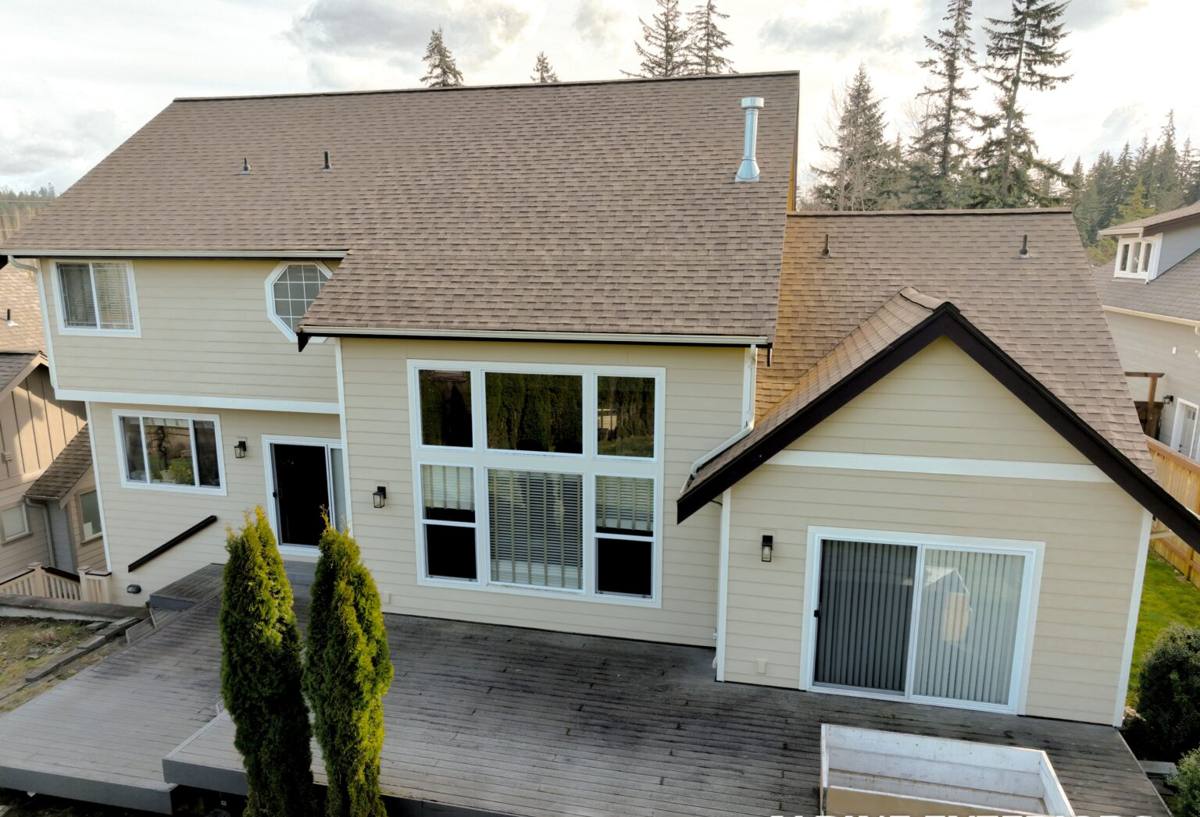
What Actually Wears Out Windows in This Area
Salt Air and Metal Components
Salt air is corrosive to the hardware inside a window long before it does anything visible to the frame or glass. Cranks on casement windows, balance systems on double-hung units, and screws holding hinges in place are all vulnerable. Once a mechanism starts corroding, it gets stiff, then it binds, and eventually it fails — usually at an inconvenient moment, like a window that won't close during a storm.
Driving Rain and Water Intrusion
Wind-driven rain finds gaps that vertical rain never would. It pushes water sideways into flashing details, under trim, and around the perimeter of a window unit where the seal to the wall has degraded. Over years, that's how you end up with rot in the framing around a window that had no obvious problem from outside. Flashing and proper sealant work at the time of install matter as much as the window unit itself.
Moss, Shade, and Moisture Retention
Custer has plenty of tree cover and the kind of persistent damp that lets moss get a foothold on north-facing walls, window sills, and trim. Moss holds moisture against wood and paint far longer than open exposure would, which accelerates rot in sills and casings. It's a slower process than storm damage, but it's steady, and it's one of the more common reasons we find soft wood on window trim during an inspection even when the glass and seals are still fine.
Signs It's Time to Look at Your Windows
- Fogging or a hazy film between panes — the seal has failed and the gas fill (or just dry air) has been replaced by trapped moisture
- Drafts you can feel near the frame even with the window latched shut
- Wood trim or sills that feel soft, spongy, or show dark staining under paint
- Cranks, locks, or balances that stick, grind, or need extra force to operate
- Visible gaps between the window frame and the siding or trim around it
- A noticeable jump in heating costs without any other obvious cause
- Condensation forming on the inside of the glass regularly, even in mild weather
Repair or Replace: How We Think About It
Not every problem window needs to come out. A single failed seal on an otherwise sound unit is often a repair — the glass unit can sometimes be replaced without touching the frame. Hardware issues like a stuck crank or worn balance are usually a straightforward fix. Where we lean toward full replacement is when the frame itself has taken on water damage, when multiple windows on a wall are all showing the same age-related wear, or when a homeowner is dealing with single-pane or early-generation dual-pane units that were never built for today's efficiency standards to begin with.
| Situation | Likely Path | Why |
|---|---|---|
| One or two foggy panes, frame is solid | Glass unit replacement | Cheaper fix, frame doesn't need to be disturbed |
| Stiff crank or lock, no rot | Hardware repair | Mechanical issue, not structural |
| Soft sill or casing, staining, visible rot | Full window replacement | Water has already compromised the frame |
| Single-pane or older aluminum-frame units | Full replacement | No efficiency upgrade possible without new frame |
| Several windows on the same wall failing together | Replace as a group | Consistent age and exposure means the rest will follow soon |
What We Install and Why
We install vinyl and fiberglass-framed windows built for Pacific Northwest conditions — good thermal performance, low-maintenance exteriors, and hardware rated for coastal exposure. We're selective about brands and product lines, and we're honest with homeowners about trade-offs rather than pushing whatever has the best margin. Some window lines look good on a spec sheet but are sensitive to installation error or have warranty structures that make claims difficult down the road. We'd rather install fewer products well than carry a catalog we can't stand behind.
Wood windows have real appeal, especially on older or historic-style homes, but in a climate with this much sustained moisture, they carry a maintenance burden — regular repainting, sealant checks, and vigilance against rot — that many homeowners don't want to sign up for. If you want that look, we'll talk through clad-wood options that give you the appearance with less upkeep, and we'll be straight with you about what maintenance is still required either way.
Why Installation Quality Matters as Much as the Window Itself
A high-end window installed with a poor seal to the wall will leak. A mid-range window installed correctly, with proper flashing and sealant integrated into the wall assembly, will outperform it. This is the piece homeowners often don't see and contractors sometimes rush. Correct installation means the flashing tape ties into the water-resistive barrier the right way, sealant is applied where it actually does something, and the window is shimmed and fastened so it doesn't rack out of square over time. In an area getting regular driving rain off the water, this is not optional detail work — it's the difference between a window that lasts and one that starts leaking in year three.
Timing Around the Season
Window replacement can happen year-round here, but we plan installs around weather windows to keep your home protected during the swap. A single window replacement is usually a same-day job. Whole-house replacements get scheduled and staged so you're never left with open wall sections overnight, especially during the wetter months.
Beyond Windows: The Rest of Your Home's Exterior
Windows don't fail in isolation — the same salt air, driving rain, and moss exposure that wears on window frames is working on your siding, roof, and any exterior decking at the same rate. We handle all of it, which matters practically: if we're already on-site addressing a window with water damage at the sill, we can often see whether that damage traces back to a roofing or siding issue nearby and flag it before it becomes its own separate problem. A crew that only does windows has no reason to look up at your roofline or check your siding's flashing details. We do, because in this climate those systems all depend on each other.
Why a Local Crew Matters Here
Whatcom County's exterior conditions aren't the same as what a national window company designs its default installation practices around. A crew that works Blaine, Custer, and the surrounding areas regularly knows which walls take the worst of the wind-driven rain, how moss behaves on north-facing exposures here, and what corrosion actually looks like on hardware after a few winters near the water. That's not something you get from a general specification sheet — it comes from doing the work in this specific place, repeatedly, and seeing how these decisions hold up a few years later.
We're also here after the install. If something needs adjustment once the house has settled through a season, or a warranty issue comes up, we're not a call center in another state — we're the same local crew that did the work.
Getting an Honest Estimate
Every home in Custer carries a slightly different mix of exposure — how close to the water, how much tree cover, which direction the prevailing wind hits the house. We look at your specific windows, your specific walls, and give you a straight assessment of what needs repair now, what can wait, and what full replacement would look like. There's no pressure and no inflated urgency — just a clear picture so you can make the call on your own timeline. Reach out for a free estimate using the form below.