 Blaine Window
 Living Near Blaine Harbor Wears on a House Differently
Homes near Blaine Harbor sit close to the Salish Sea, with the Strait of Georgia funneling wind and moisture straight off the water. That proximity is part of what makes the area a great place to live, but it's also why windows here age faster than the same product would three miles inland. Salt-laden air, wind-driven rain, and a moss season that can run from early fall through late spring all put steady pressure on window frames, seals, and the trim around them. We've worked on enough homes in this stretch of Whatcom County to know that "standard" window specs from a big-box catalog aren't always the right call for a harbor-adjacent property.
This page walks through what that climate actually does to windows over time, what to look for when replacing or repairing them, and how our approach as a local crew is different from a crew that only shows up for one job and leaves.
What Salt Air Does to Window Frames and Hardware
Salt air doesn't just smell like the ocean — it's corrosive. Fine salt particles carried on the wind settle on exterior surfaces and, combined with moisture, accelerate corrosion of exposed metal. On windows, that shows up first in the small parts: hinges, cranks, balance systems, and screen hardware. Aluminum-framed windows, which handle cold and moisture reasonably well in a lot of the Pacific Northwest, tend to show pitting and white oxidation faster in a salt-air environment like Blaine Harbor.
Where the Damage Shows Up First
- Crank handles and hinges on casement windows becoming stiff or corroded
- Discoloration or pitting on aluminum sills and frames
- Screen frames and mesh corroding faster than the window itself
- Fasteners and cladding nails rusting and staining nearby siding or trim
None of this means windows near the water are a lost cause — it means frame material and hardware grade matter more here than they do for a home set back from the harbor.
Driving Rain and the Water Management Question
Rain in Whatcom County is rarely gentle when it comes off the water. Wind-driven rain near Blaine Harbor can push moisture sideways into gaps that would stay dry on a calmer site. This is why window installation quality matters as much as the window product itself. A window that's flashed and sealed correctly sheds that water; one that isn't will let moisture track behind the trim and into the wall assembly, often for months before anyone notices a stain or a soft spot.
We pay particular attention to a few details on every install in this area:
- Proper sill pan flashing so any water that gets past the window drains back out, not into the wall
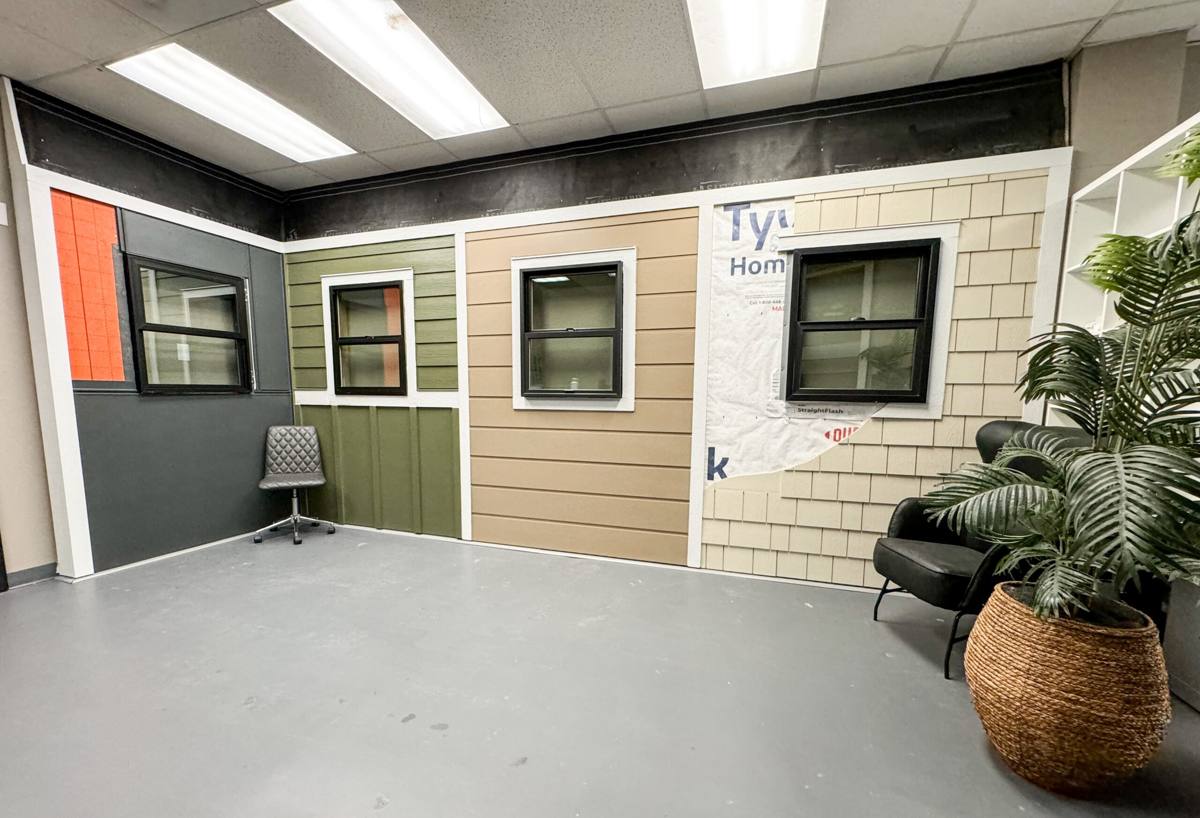
- Correctly lapped house wrap and flashing tape at the window's top, sides, and bottom
- Backer rod and quality exterior sealant at the frame perimeter, sized for the joint
- Weep holes kept clear so trapped water has somewhere to go
These aren't upgrades — they're the baseline for a window installation that's actually built for driving rain, not just rated for it on paper.
The Long Moss Season and What It Means for Openings
Whatcom County's moss season is long, and a harbor-adjacent lot with shade from trees or neighboring structures often stays damp longer than an open, sun-exposed site. Moss itself doesn't damage glass or vinyl, but it holds moisture against wood trim, sills, and the transition points where siding meets a window frame. Over a few seasons, that sustained dampness is what leads to soft wood, peeling paint, and eventually rot around an opening — even when the window unit itself is fine.
If you're noticing moss creeping onto window trim or sills, it's worth having someone look at the wood underneath before repainting over it. A fresh coat of paint on damp trim looks fine for a season and then fails fast.
Choosing a Frame Material for a Harbor-Adjacent Home
There's no single "best" window material for every property near Blaine Harbor — it depends on sun exposure, how close you are to the water, your budget, and how much maintenance you want to take on. Here's how the common options compare for this specific climate:
| Frame Material | Salt Air Behavior | Maintenance | Typical Cost Position |
|---|---|---|---|
| Vinyl | Doesn't corrode; UV exposure over many years can affect color and brittleness | Low — occasional cleaning | Lower to mid |
| Fiberglass | Very stable in salt air and temperature swings; dimensionally stable | Low | Mid to higher |
| Aluminum | Prone to pitting and corrosion close to the water without a marine-grade finish | Moderate to high near the harbor | Varies widely |
| Wood / wood-clad | Handles salt air fine when properly clad and sealed, but exposed wood needs upkeep | High on exposed wood; lower if fully clad | Higher |
For homes within the first block or two of the harbor, we lean toward vinyl or fiberglass unless there's a strong aesthetic reason to go with wood or wood-clad — and if it's wood, we're careful about cladding and flashing details at every joint.
Beyond Windows: The Same Climate Hits the Whole Exterior
Windows don't fail in isolation — they're one part of a building envelope that also includes siding, roofing, and any decks exposed to the same salt air and rain. When we're out for a window job near Blaine Harbor, we're also looking at the flashing where siding meets trim, the condition of roofing near valleys and penetrations, and whether a deck's ledger board or fasteners are showing early corrosion. It's common for a home in this area to need attention on more than one of these at the same time, since they all age under the same conditions. We handle siding, roofing, windows, and decks, which means we can flag an issue in one area while we're already on site for another instead of you having to find and coordinate separate crews.
What a Proper Window Installation Looks Like Near Blaine Harbor
Whether you're replacing a single failed window or doing a whole-house project, here's the checklist we work from on harbor-adjacent homes:
- Confirm the existing rough opening isn't already showing water damage before installing anything new
- Install or verify sill pan flashing at every opening, not just the ones that look bad
- Choose hardware rated for coastal or high-humidity use, not standard interior-grade fasteners
- Seal and flash in the correct order — house wrap, flashing tape, then window, then more flashing over the nailing flange
- Leave the manufacturer's specified expansion gap so the frame can move with temperature swings off the water
- Check that weep holes and drainage paths are clear and unobstructed before closing up trim
- Walk the finished install with the homeowner and point out what maintenance to expect
Skipping any one of these doesn't usually cause a problem in year one. It shows up in year three or four, which is exactly why cutting corners on installation is a bad trade for a house that sits this close to the water.
Why a Local Crew Matters for This Stretch of Whatcom County
A crew that works across Whatcom County regularly, rather than parachuting in from out of the area, has actually seen how a Blaine Harbor property behaves in February compared to a similar house set back from the water. That matters when deciding on flashing details, sealant choice, and whether a repair is a quick fix or a sign of a bigger moisture issue. It also matters for follow-up — if something needs a look after a hard windstorm off the Strait, you're not waiting for a crew to drive in from another region. We're local, we pull the permits that Blaine and Whatcom County require, and we stand behind the work because we're not going anywhere.
Simple Maintenance That Extends Window Life Here
A little regular attention goes a long way for windows in this climate. Homeowners near Blaine Harbor get the most life out of their windows by staying on top of a few basics:
- Rinse salt residue off frames and glass a few times a year, especially after windy weather off the water
- Clear moss and debris from sills and tracks before it holds moisture against wood or trim
- Lubricate crank mechanisms and hinges annually to slow corrosion
- Check exterior caulking each fall and touch up any cracked or separated sealant before the wet season sets in
- Watch for soft spots in trim around window openings, which usually mean moisture is getting in somewhere
If you're noticing drafts, fogging between panes, sticking sashes, or soft trim around your windows, it's worth having a local set of eyes on it before a small issue turns into a bigger repair. We're happy to come take a look, walk you through honest options, and put together a free, no-pressure estimate for your Blaine Harbor home — no obligation either way.