 Blaine Window
 Siding Replacement Built for Sumas, Not a Generic Job Site
Sumas sits inland from Blaine but shares the same Whatcom County weather pattern that wears down exterior materials year-round: long stretches of driving rain, marine-influenced humidity that pushes in off the Strait and Semiahmoo Bay, and a moss and algae season that can run from early fall into late spring. Siding here isn't decorative — it's the first line of defense against moisture that never really stops. When it's installed wrong, or installed with the wrong material, that failure shows up faster than it would in a drier climate.
We're a Blaine-based crew that works this corridor regularly, and Sumas siding replacement is a service we approach the same way every time: understand what the climate is doing to the home, tear off what's failing, fix what's underneath, and install a product system that's actually built for this environment.
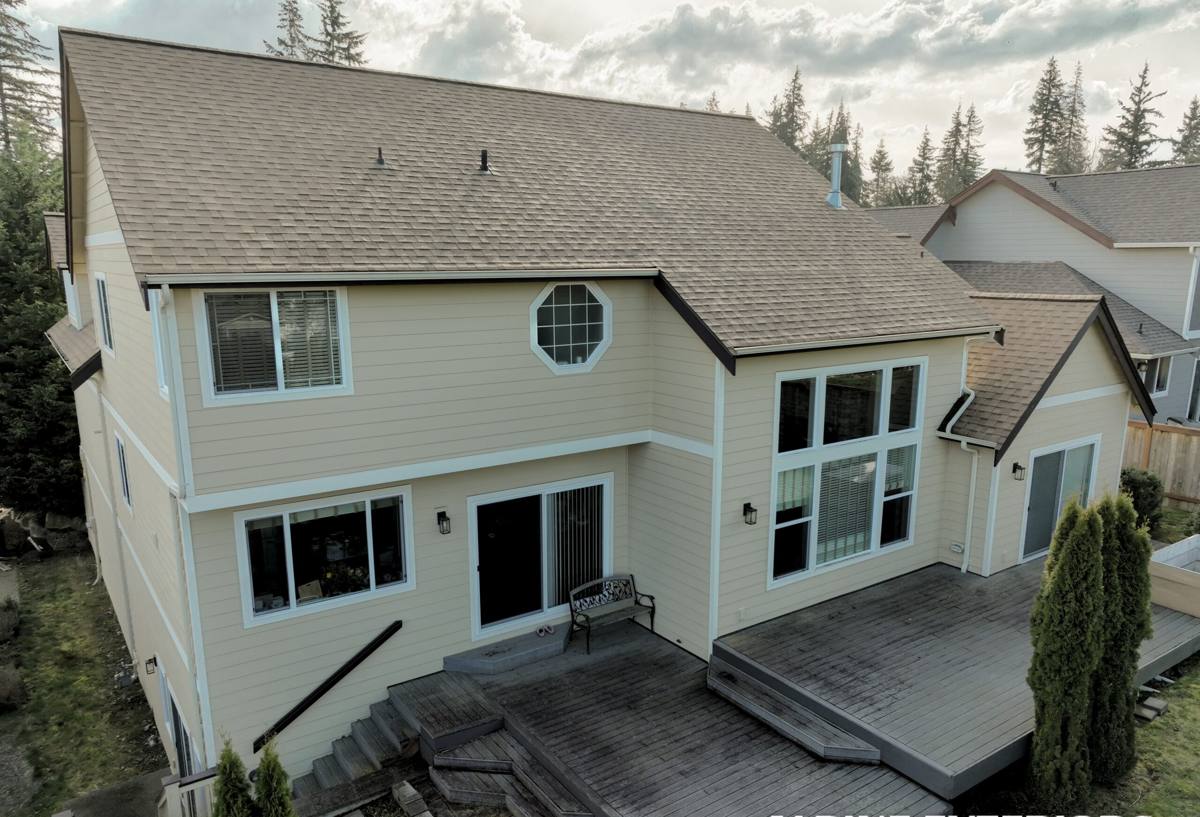
What This Climate Does to Siding Over Time
Whatcom County's damp, marine-influenced air doesn't hit a home all at once — it works slowly, and most homeowners don't notice until the damage is already behind the siding, not just on top of it.
- Constant low-grade moisture keeps wood and wood-composite siding damp for days at a time, which is exactly the condition moss, mold, and rot need to take hold.
- Driving rain, pushed by wind rather than falling straight down, finds its way into seams, laps, and fastener holes that would stay dry in a calmer climate.
- Moss and algae growth holds moisture against the surface even longer, which accelerates whatever decay process has already started underneath.
- Freeze-thaw swings, even mild ones, stress any siding material that has already absorbed water — expanding cracks, popping fasteners, and loosening seams over a few winters.
None of this is unique to Sumas specifically. It's a regional problem. But it's a problem that shows up on every home in the area sooner or later, and the siding material and installation method make a real difference in how soon.
Signs a Sumas Home Needs Siding Replacement, Not Just a Patch
Some siding problems are cosmetic and can be repaired. Others mean the material or the assembly behind it has already failed. Knowing the difference saves homeowners from either overpaying for a full replacement they don't need yet, or under-fixing a problem that's going to come back worse.
- Soft, spongy, or crumbling spots when you press on the siding, especially near the bottom courses or around windows
- Persistent moss or algae staining that comes back within a season of cleaning
- Bubbling, peeling, or chalking paint on wood or composite siding that keeps recurring in the same spots
- Visible cupping, warping, or swelling boards, particularly on the sides of the home that face prevailing wind and rain
- Gaps opening up at seams, corners, or butt joints that weren't there a few years ago
- A musty smell or visible staining on interior walls that back up to exterior siding
If you're seeing more than one or two of these, it's usually worth a real inspection rather than another round of caulk and paint.
Why Patching Often Doesn't Hold
Spot-repairing siding without checking what's behind it treats the symptom, not the cause. If moisture has already gotten past the old siding into the weather-resistive barrier or sheathing, a patch on the visible surface just hides the problem for another season or two. That's especially true for lap siding products that have already started cupping or delaminating — the damage is rarely limited to the board you can see failing.
What a Correct Siding Replacement Job Actually Involves
A siding replacement is really two jobs stacked together: removing and repairing what's underneath, and installing a new exterior system correctly. Skipping the first part is the most common way a siding job fails early, no matter how good the new material is.
- Full tear-off of the failing siding, rather than installing new siding over old — overlay traps moisture and hides problems instead of fixing them.
- Sheathing inspection once the old siding is off, checking for soft or rotted wood that needs to be cut out and replaced before anything new goes on.
- A continuous weather-resistive barrier, properly lapped top-over-bottom so water sheds down and out rather than working its way behind the new siding.
- Correct flashing at every window, door, roofline, and any point where two surfaces meet — this is where the majority of hidden leaks originate.
- Proper fastening and clearances, including keeping siding a safe distance off grade, decks, and roof surfaces so it isn't sitting in standing water or splashback.
- Sealed, factory-finished seams where the product allows it, which cuts down on the field-painted joints that are usually the first place a siding job starts to fail.
Any of these steps done poorly can undercut an otherwise good siding product. That's why we treat the prep and flashing work as equally important as the material itself.
Comparing Siding Materials for a Whatcom County Climate
Homeowners in Sumas typically end up choosing between three broad categories of siding. Each behaves differently once it's exposed to years of Pacific Northwest moisture.
| Material | Moisture & Moss Behavior | Typical Maintenance | Fire Resistance |
|---|---|---|---|
| Vinyl siding | Doesn't absorb water itself, but seams and panels can warp or gap, letting moisture behind the material where it's hard to spot | Low, but panels are difficult to repair invisibly and can fade or become brittle over time | Combustible; can soften or melt near heat sources |
| Wood / primed spruce / cedar | Absorbs moisture readily; prone to cupping, splitting, and rot in constant damp conditions without diligent upkeep | High — regular repainting, caulking, and moisture checks | Combustible |
| James Hardie fiber cement | Engineered for moisture and moss-prone climates; dimensionally stable when installed to spec | Low — factory ColorPlus finish resists fading and doesn't require repainting on the manufacturer's typical schedule | Non-combustible |
This isn't a knock on every product in the vinyl or wood-composite category — some of it is reasonably made. It's a reflection of how each material tends to perform after a decade or more of exactly the weather Whatcom County produces every year.
Why We Only Install James Hardie Fiber Cement
We made a decision as a company to install James Hardie fiber cement siding exclusively, and not LP SmartSide, vinyl, Cemplank, Allura, primed spruce, or cedar. That's a deliberate standard, not a sales pitch.
Fiber cement is non-combustible, which matters in a region that sees wildfire smoke and periodic dry spells even alongside its wet winters. Hardie's ColorPlus factory finish is baked on under controlled conditions, which holds color and resists the kind of chalking and peeling that field-applied paint struggles with here. Hardie also builds climate-specific HZ product lines engineered for regions with heavy moisture exposure — that's directly relevant in a county where rain and humidity are the default, not the exception. And the warranty is transferable, which protects resale value if a homeowner sells before the siding's functional life is over.
Other products aren't without merit — vinyl is inexpensive and low-maintenance in mild climates, wood has a look some homeowners specifically want, and engineered wood products have improved over the years. But installation sensitivity, long-term moisture behavior, and maintenance burden are real trade-offs in this climate, and we'd rather stand behind one product system we trust completely than install several we have reservations about.
Our Sumas Siding Replacement Process
- On-site inspection and estimate, including a look at the current siding, trim, and any visible moisture damage
- Full removal of the old siding down to the sheathing
- Repair or replacement of any rotted or compromised sheathing before moving forward
- Installation of a continuous, properly lapped weather-resistive barrier
- Flashing installed at all windows, doors, and transition points
- James Hardie siding installed to manufacturer fastening and clearance specifications
- Trim, caulking, and finish work completed
- Site cleanup and a final walkthrough before we consider the job done
Why It Matters That We Already Work Sumas
A siding crew that already works the Blaine-to-Sumas corridor isn't guessing at how this climate treats a home — we're seeing the same rain patterns, the same moss growth, and the same wear points on a regular basis. That local familiarity shows up in small but real ways: knowing which sides of a home typically take the worst weather, understanding Whatcom County permitting expectations, and being realistic with homeowners about timelines when a rainy stretch pushes a project back a few days.
It also means we're not learning on someone's home. The prep work, flashing details, and product handling that a correct siding job requires are the same steps we follow on every project in the area, not a one-off approach put together for a job outside our usual territory.
What Affects the Cost of a Siding Replacement
Every home is different, but a few factors consistently drive the scope and cost of a siding replacement project:
- The size and complexity of the home's exterior, including the number of corners, gables, and trim details
- How much sheathing repair is needed once the old siding comes off
- The condition of existing flashing around windows, doors, and rooflines
- Whether the current siding requires special handling or disposal
- The specific James Hardie product and ColorPlus finish selected
We won't know which of these apply to your home until we take a look in person — which is exactly what a free estimate is for.
If your Sumas-area home is showing signs of siding wear, or you're planning ahead before it becomes an urgent repair, we're glad to come take a look. The estimate is free, there's no pressure, and you'll get a straight answer about what your siding actually needs — use the form below to get started.