 Blaine Window
 Semiahmoo sits out on a narrow spit between Semiahmoo Bay and Drayton Harbor, right at the edge of Blaine and the Canadian border. There's almost nothing to break the wind out there, and homes on the spit and along the surrounding waterfront take weather from more than one direction at once. Windows are usually the first exterior component to show that stress — they're penetrations in the wall, they're full of moving hardware, and they get hit directly by whatever the water throws at the house. Custom window work in Semiahmoo isn't just about matching an opening or a look; it's about building an installation that can stand up to conditions most manufacturer specs weren't written for.
Why Semiahmoo Windows Take a Harder Hit
Most window installation guidance assumes a fairly average environment — moderate wind, occasional rain, normal humidity. Semiahmoo doesn't offer any of that. Being surrounded by water on more than one side means salt-laden air reaches the house from multiple directions instead of one prevailing exposure, and open wind across the bay pushes rain sideways into wall assemblies rather than letting it fall straight down. Add in Whatcom County's long, mild, damp stretch of the year and you get a moss and mildew season that runs most months, not just winter. None of that makes correct window work impossible — it just means the margin for a shortcut installation is much thinner here than it is a few miles inland.
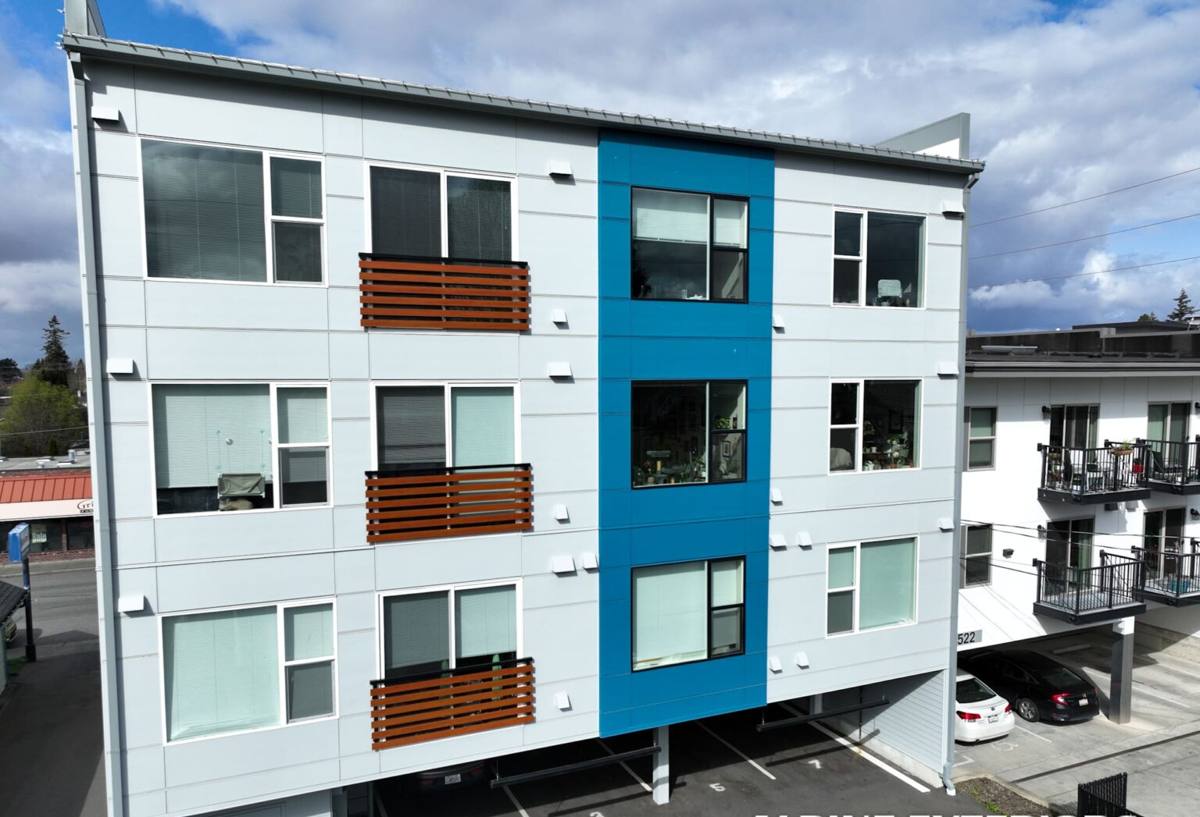
What Salt Air, Driving Rain, and Moss Season Actually Do to a Window
Salt Air and Hardware Corrosion
Salt in the air settles on everything, including the parts of a window you rarely think about — hinges, cranks, locks, and the fasteners holding the frame to the wall. Lower-grade hardware starts corroding faster near the water than it would inland, and once a lock or crank mechanism starts binding, homeowners often force it, which speeds up the failure. Fasteners matter just as much as the visible hardware; the wrong fastener material can start rusting behind the trim years before anyone notices a problem on the surface.
Wind-Driven Rain and Flashing Failure
On an open, waterfront lot, wind doesn't just blow rain against the glass — it drives it up and under trim, into joints, and against flashing details that were designed for water falling straight down. A window that's flashed correctly sheds that water back out before it reaches the framing. A window that's flashed to a generic, inland-standard sequence can leak specifically because it was never tested against sideways-driven rain, even though it would perform fine in a calmer setting.
Moss, Mildew, and Sills That Never Fully Dry
Shaded, north-facing walls and the near-constant humidity off the water keep sills and trim damp longer here than in a drier part of Whatcom County. That extended dampness is what lets moss and mildew take hold on window sills, trim boards, and any wood components that aren't well protected. It's rarely dramatic — it shows up slowly, as staining, soft spots, or a sill that never quite dries out between storms.
What a Correct Window Installation Involves Here
Measuring and Assessing the Opening
Every job starts with an honest look at the existing opening, not just the window itself. On older Semiahmoo homes that means checking for out-of-square framing, past water damage around the rough opening, and whatever condition the existing flashing and sheathing are actually in — not assuming they're fine because the wall looks fine from outside.
Flashing Sequence
This is the single most important step in a climate like this one. Water management around a window has to be sequenced correctly — sill pan first, then side flashing lapped over it, then the head flashing lapped over the sides, integrated with the house wrap or building paper so water is always directed outward and down, never trapped behind the window. On an exposed, wind-driven site, we don't treat this as optional detailing; it's the difference between a window that performs for decades and one that leaks within a few wet seasons.
Sealant and Hardware Choices
Not every sealant or fastener is rated for sustained salt exposure. We use corrosion-resistant fasteners and sealants suited to marine and coastal conditions rather than whatever's cheapest or most common inland, because the cost difference up front is small compared to the cost of a hardware failure or a leak five years down the road.
Trim and Finish
Exterior trim around a window is one of the more exposed pieces of wood or composite on the whole house. We plan drainage behind it, avoid designs that trap water against the sill, and match the finish to the rest of the exterior so the window looks like it belongs rather than looking added on.
Frame Materials Compared for This Exposure
Frame material matters more on an open, salt-exposed lot than it does a few miles inland, because there's simply more moisture and salt working against the frame year-round. Here's how the common options generally hold up in a setting like Semiahmoo's.
| Frame Material | Behavior in Salt Air & Moisture | Maintenance | Best Fit |
|---|---|---|---|
| Vinyl | Generally stable; welded corners resist moisture intrusion | Low; occasional cleaning of hardware and tracks | Cost-conscious replacements where color options are flexible |
| Fiberglass | Very stable dimensionally; holds up well to sustained coastal exposure | Low | Larger openings or homes where long-term stability matters most |
| Wood-clad (exterior-clad interior wood) | Exterior cladding protects the wood, but any cladding breach exposes wood to rot | Higher; cladding seams and any exposed wood need monitoring | Homes where an interior wood look matters and the exterior is properly detailed |
| Aluminum | Conducts heat and cold readily; can corrode without a marine-grade finish | Moderate; finish quality determines long-term performance | Specific architectural applications where thin sightlines are the priority |
Signs Your Current Windows Are Losing the Fight
A lot of window failure on the spit happens slowly enough that homeowners adjust to it without noticing. A few things worth checking:
- Cranks, locks, or sliders that have started sticking or feel gritty when operated
- Visible rust or discoloration on hinges, hardware, or fasteners
- Soft or discolored trim and sills, especially on north-facing or wind-exposed walls
- Persistent moss or mildew on sills that returns quickly after cleaning
- Drafts or whistling around the frame during wind events off the water
- Fogging or moisture between panes on double- or triple-glazed units, which signals a failed seal
- Paint or finish that's chalking, peeling, or bubbling near the frame edges
Our Process, Start to Finish
- On-site assessment — we look at the existing windows, framing, and flashing condition, not just measure for a replacement unit
- Honest recommendation — frame material, glazing, and installation approach explained with the reasoning behind it for your specific exposure
- Ordering — realistic lead times given upfront, since coastal-rated hardware and certain frame materials aren't always same-week stock
- Removal and opening prep — old units come out carefully, and any hidden rot, corrosion, or flashing failure gets addressed before the new window goes in
- Installation and flashing — sill pan, side flashing, and head flashing sequenced correctly and integrated with the wall's water management
- Trim, finish, and final check — exterior trim matched to the house, hardware tested, and the finished install walked through with you
What Drives Cost on a Semiahmoo Window Job
We won't quote a number without seeing the openings, but these are the factors that consistently move price on this kind of job:
| Factor | Why It Matters |
|---|---|
| Frame material | Vinyl, fiberglass, wood-clad, and aluminum differ in both unit cost and long-term maintenance in salt air |
| Number and size of openings | Larger or more numerous windows increase both material and labor cost |
| Existing condition | Rot, corroded flashing, or out-of-square framing add repair work before the new window can go in |
| Hardware grade | Marine-rated hardware and fasteners cost more than standard-grade options but hold up far longer here |
| Glazing package | Glass coatings and gas fills affect both energy performance and price |
| Access and site conditions | Upper-story or hard-to-reach windows on waterfront homes can add labor time |
Why a Crew That Already Works Semiahmoo Matters
Manufacturer installation guidance is written for average conditions, and Semiahmoo isn't average — it's one of the more exposed residential settings in Whatcom County. A crew that regularly works this stretch of coastline already knows which details in that guidance are non-negotiable here: how much lap a flashing course needs against wind-driven rain, which hardware grades actually hold up to salt air over years rather than months, and where a sill needs extra drainage detailing instead of relying on caulk alone. Those aren't decisions you can evaluate by looking at a finished window from the curb — they show up years later, in whether the installation is still performing cleanly or starting to fail.
If you're weighing a window replacement or a custom installation for a home in Semiahmoo, it's worth having someone look at the actual openings and the site's exposure before you start pricing units. We offer free, no-pressure estimates for window projects in Semiahmoo and the surrounding Blaine area — use the form below to get a time on the schedule.