 Blaine Window
 Deck Repair for Sumas Homes: Built for Whatcom County Conditions
A deck in Sumas doesn't fail the way a deck does in a drier climate. Out here, the damage is slow and cumulative — driven by salt-laden air blowing in off the water, months of driving rain, and a moss season that can run from October well into spring. By the time most homeowners notice a problem, the underlying structure has usually been dealing with moisture for a year or more. Deck repair in this area isn't just about swapping a few boards; it's about understanding how a deck actually fails here and fixing the cause, not just the symptom.
This page covers what deck repair looks like specifically for homes in and around Sumas, near Blaine — what to watch for, what a correct repair involves, and how we approach the work when we're called out.
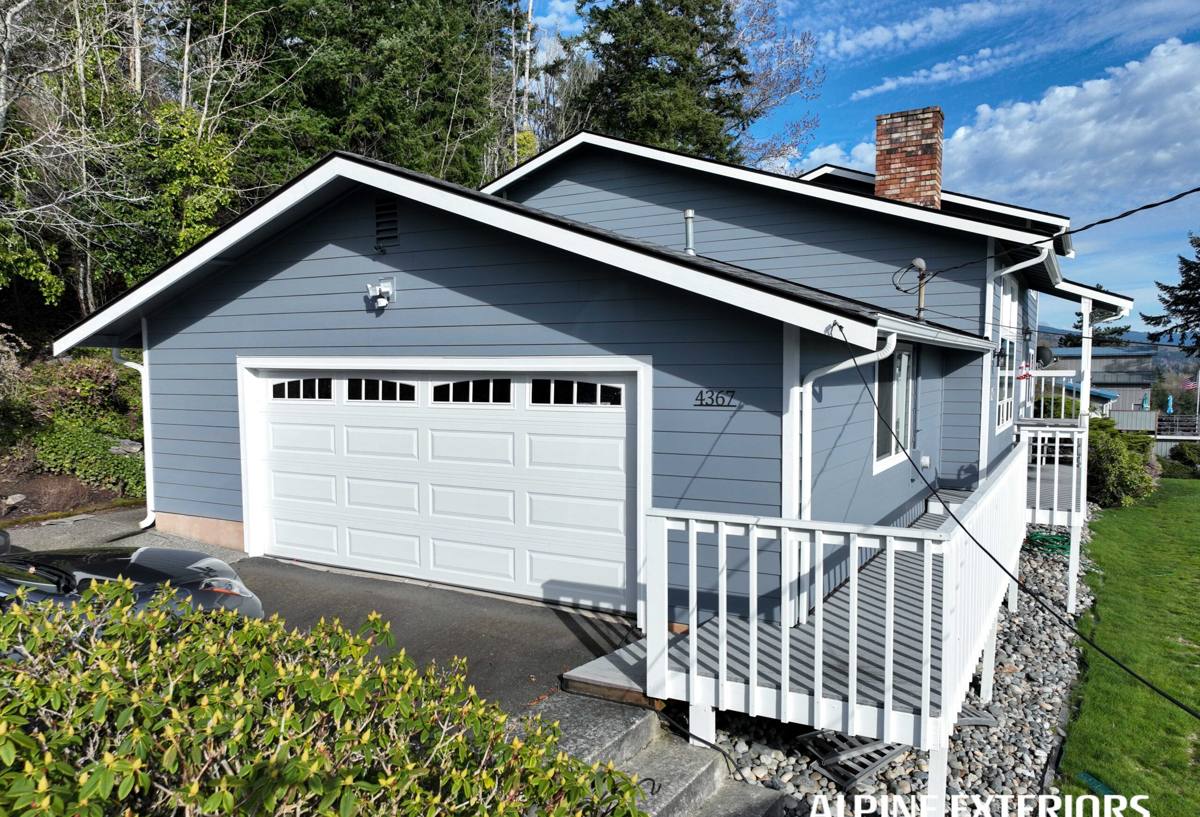
Why Decks in This Area Take a Beating
Three regional factors do most of the damage to decks around Sumas and the broader Blaine area:
- Salt air: Even set back from the water, coastal Whatcom County air carries enough salt to accelerate corrosion on fasteners, brackets, and any exposed metal hardware — often years before the visible decking shows wear.
- Driving rain: Wind-driven rain doesn't just wet the surface of a deck. It gets pushed sideways and upward into board gaps, ledger connections, and end grain — areas that were never designed to shed water from that angle.
- A long moss season: Cool, damp, and shaded conditions for much of the year let moss and algae establish quickly on deck surfaces and framing. Beyond looking bad, moss holds moisture against wood and makes boards dangerously slick.
None of these factors alone would be a big deal. Together, and repeated year after year, they're what turns a well-built deck into one that needs structural attention within 10 to 15 years instead of 25 or more.
Signs Your Deck Needs Repair
Most deck problems start small and stay hidden under the surface. A quick walk-around a couple of times a year can catch issues while they're still cheap to fix. Look for:
- Soft, spongy, or springy spots when you walk across the deck
- Boards that are cupping, splitting, or visibly darker where water sits
- Rust streaks below fasteners, joist hangers, or railing posts
- Green or black film that returns quickly after cleaning, especially on north-facing or shaded sections
- Gaps opening up where the deck meets the house, or a ledger board that feels loose
- Railing posts that wiggle when pushed, or stair stringers that flex underfoot
- Visible daylight or water staining underneath the deck where framing is exposed
Any one of these on its own might just need monitoring. Two or three together, especially involving the ledger board or framing, usually means it's time for a closer look.
What a Correct Deck Repair Actually Involves
A repair that only addresses what's visible from above tends to fail again within a season or two. A repair that holds up here starts underneath.
Structural Framing and the Ledger Board
The ledger board — where the deck attaches to the house — is the single most important connection on the whole structure, and it's also the part most exposed to water running off the siding above it. We check for proper flashing, correct fastener type and spacing, and any signs of rot in the rim joist behind it. A deck can look perfectly fine on the surface while the ledger connection underneath is quietly failing.
Joists and Beams
Joists take on moisture at their cut ends and anywhere they're notched or drilled. We look for soft spots, delamination in engineered lumber, and any joist hangers that have rusted or pulled loose. Damaged joists get sistered or replaced — not just wrapped or patched.
Decking Boards and Surface
Whether it's wood or composite, board-level damage is usually the easiest fix but the most visible. We match spacing and fastening pattern to the existing deck where possible, and replace boards edge to edge rather than patching individual sections, which tends to create uneven wear later.
Railings and Stairs
Railing posts and stair stringers see constant stress and are common failure points, especially where posts were originally attached with lag screws directly into rim joists without blocking. We correct undersized or improperly anchored railings as part of the repair, not as an afterthought.
Fasteners and Hardware
In a salt-air environment, fastener choice matters more than most homeowners realize. Standard coated screws and brackets can start showing corrosion within a few years here. We use fasteners and connectors rated for the exposure, matched to whatever decking material is already in place.
Repair vs. Replacement: How We Decide
Not every deck with problems needs to be torn out. The decision usually comes down to how much of the structural framing is still sound.
| Factor | Points Toward Repair | Points Toward Replacement |
|---|---|---|
| Ledger board and rim joist condition | Solid, no soft spots | Rot present at attachment point |
| Joist condition | Isolated soft spots, mostly sound | Widespread softness or sagging |
| Age of structure | Under 15 years | Original construction 20+ years old |
| Footings and posts | Level, no shifting | Heaving, rot at post base, or undersized footings |
| Code compliance | Meets current railing and attachment code | Missing hardware required by current code |
| Decking material | Surface wear only | Framing damage beneath multiple boards |
In many cases the honest answer is a hybrid: replace the framing and ledger connection, then keep or replace decking separately depending on its condition. We'll tell you plainly which category your deck falls into and why — not just recommend the bigger job by default.
Material Considerations for a Salt-Air, High-Rain Climate
When boards need replacing, material choice affects how soon you'll be doing this again.
| Material | How It Handles This Climate | Maintenance |
|---|---|---|
| Pressure-treated lumber | Affordable, but end grain and cut edges are vulnerable to rot without diligent sealing | Needs re-staining or sealing every 1-2 years |
| Cedar | Naturally rot-resistant but softer; can gray and check under constant damp/dry cycling | Periodic cleaning and oiling to hold color and resist moss |
| Composite decking | Resists rot and doesn't need sealing, but low-quality boards can trap surface moisture and grow algae in shaded areas | Periodic cleaning; no staining required |
There's no single "best" answer here — it depends on your budget, how much maintenance you want to keep up with, and how shaded the deck is. We'll walk through the honest trade-offs for your specific setup rather than push one product line.
Dealing with Moss and Algae Long-Term
Given how long moss season runs in this part of Whatcom County, cleaning alone rarely solves the problem for good — it just resets the clock. During a repair, we look for ways to reduce the conditions moss needs to take hold:
- Correcting board spacing so water actually drains instead of pooling
- Addressing overhead vegetation or drainage issues contributing to a shaded, damp surface (where within scope)
- Using fasteners and hardware that won't stain or corrode under the film moss leaves behind
- Recommending a realistic cleaning interval based on how shaded your specific deck is
None of this eliminates moss entirely — that's just the climate here — but it slows how fast it comes back and keeps it from becoming a structural issue rather than a cosmetic one.
Our Process for Sumas Deck Repairs
- On-site inspection: We check the deck from both above and below where access allows, including the ledger connection, footings, and any soft or discolored areas.
- Honest scope and estimate: You get a clear breakdown of what needs structural attention versus what's cosmetic, and a straightforward price — no inflated worst-case scoping to pad the job.
- Repair work: Framing and connection issues get addressed first, then decking, railings, and stairs as needed, using hardware suited to the local exposure.
- Final walk-through: We check the deck is solid, level, and code-compliant on railings and attachment points before we call it done.
We don't upsell a full rebuild when a targeted repair will genuinely hold up. If a repair isn't going to be a good long-term fix, we'll say so and explain why.
Why It Matters to Hire a Crew That Already Works This Area
Deck repair advice that's correct for a dry inland climate can be the wrong call here. A crew that regularly works decks around Sumas and Blaine already knows which connection details tend to fail first in this weather, which fastener grades actually hold up against salt air, and how much moss shading a given deck orientation is realistically going to deal with. That local pattern recognition is the difference between a repair that lasts one season and one that lasts a decade.
Get a Free Estimate
If your deck in Sumas or anywhere around the Blaine area is showing soft spots, rust stains, or persistent moss, it's worth having someone take a real look underneath before deciding between repair and replacement. Request a free, no-pressure estimate using the form below and we'll give you a straight assessment of what your deck actually needs.