 Blaine Window
 Why Sandy Point Roofs Wear Differently Than Roofs Inland
Sandy Point sits out on the water, and that changes what a roof has to deal with day after day. Homes a few miles inland in Blaine catch a milder version of the same weather. Out here, the salt air is more concentrated, the wind has a longer unobstructed run before it hits your roofline, and driving rain during winter storms comes in sideways as often as it comes straight down. None of that is dramatic on any single day, but it adds up fast over the life of a roof.
Salt air is corrosive to unprotected or poorly coated metal fasteners and flashing. Wind uplift matters more on an exposed waterfront lot than it does in a sheltered neighborhood a half mile back from the shore. And moss, which is a fact of life across Whatcom County, grows faster and holds moisture longer on roofs that stay shaded and damp for long stretches of the fall and winter. A metal roof handles all three of these better than most other materials, but only if it's specified and installed with this specific environment in mind.
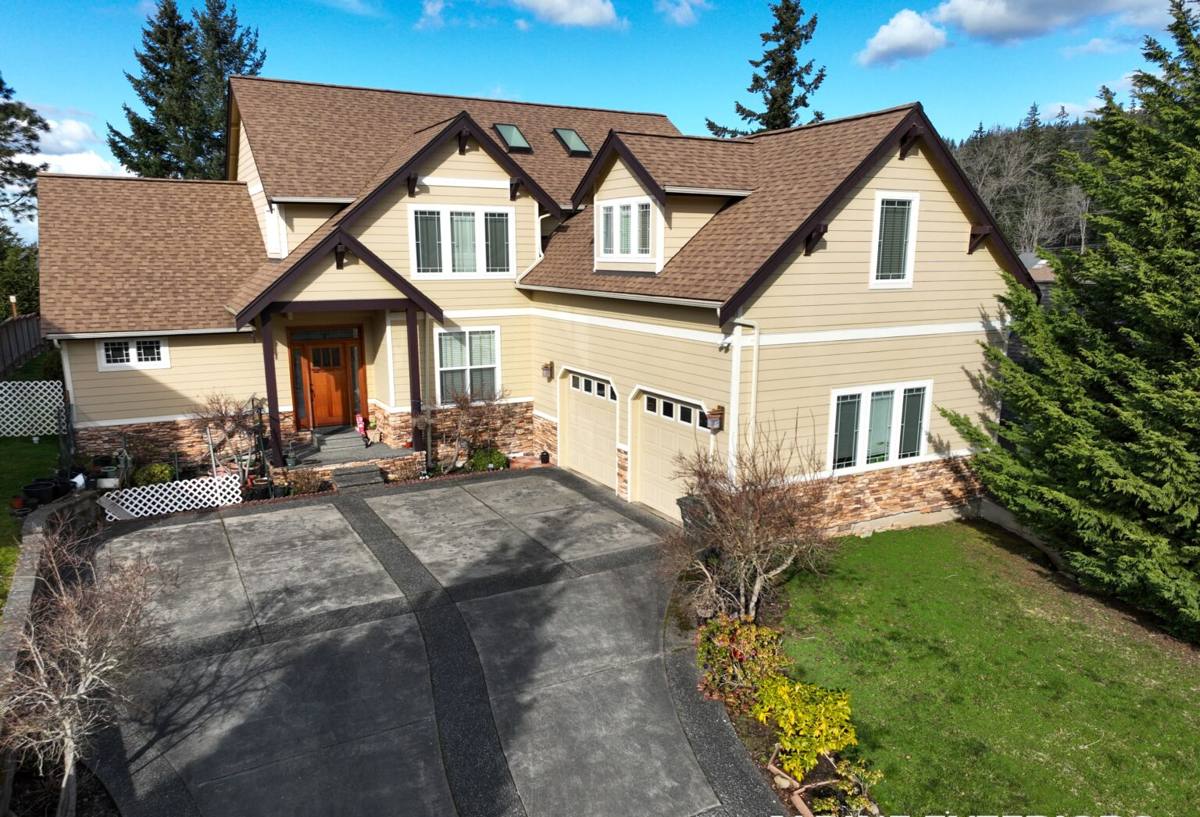
What a Correct Metal Roof Actually Needs to Handle Here
Corrosion Resistance
Not all metal roofing is rated the same for coastal exposure. The base metal, the coating, and even the fasteners all need to be matched to a salt-air environment, or you end up with premature rust streaking, fastener failure, or coating breakdown years before the panel itself would otherwise wear out.
Wind Performance
A roof on an open waterfront lot sees higher sustained wind loads and more gusting than a roof tucked into a sheltered subdivision. Panel profile, fastening pattern, and edge detailing all affect how well a roof resists uplift in those conditions.
Moisture Management
Whatcom County's wet season is long, and a roof at Sandy Point often stays damp longer than one further inland because of shade, tree cover, or simply the ambient humidity coming off the water. Underlayment, ventilation, and flashing details matter more here than they do in a drier climate.
Metal Roofing Material Options for a Coastal Property
We don't push one product on every roof. The right choice depends on your budget, your home's exposure, and how long you want to go before any maintenance is needed. Here's how the common options compare specifically for a salt-air setting like Sandy Point.
| Material | Salt Air Performance | Maintenance | General Cost Position |
|---|---|---|---|
| Coated steel (standing seam) | Good, when specified with a marine-grade coating and correct fastener metallurgy | Low; periodic rinse recommended | Mid-range |
| Aluminum | Excellent; naturally resistant to salt-driven corrosion | Low | Mid-to-upper range |
| Galvalume steel | Fair to good; performs best when coated and detailed properly, more sensitive to cut edges and fastener quality near the water | Moderate | Lower-to-mid range |
| Copper or zinc | Very good long-term, develops a protective patina over time | Low, but higher upfront investment | Upper range |
For most Sandy Point homes we're weighing coated steel against aluminum. Aluminum has an edge in a straight salt-spray comparison since it doesn't rely on a coating to resist corrosion the way steel does — if a steel panel's coating gets scratched or a cut edge is left exposed, that's where rust starts. Aluminum simply doesn't rust. Steel systems can still perform very well here, but the coating quality, the fastener material, and how carefully cut edges are treated during installation matter more than they would on a home set back from the water.
Panel Profile and Fastening: Where the Real Difference Shows Up
Two roofs can use the same base material and still perform very differently depending on the panel system and how it's attached.
Standing seam systems use concealed fasteners and interlocking panel edges, which means there are no exposed screw heads for wind-driven rain to work against and no exposed fastener that will eventually need re-sealing or replacing. This is generally our first recommendation for waterfront exposure. Exposed-fastener panel systems can still be a reasonable, more budget-friendly option, but they depend on gasketed screws that compress correctly and stay compressed over years of thermal movement and wind load — something worth discussing honestly if that's the direction that fits your budget.
Fastening pattern and clip spacing also get tightened up on an exposed lot. A wind uplift rating that's adequate for a sheltered roof isn't necessarily adequate for a roof with a clear line to the water, so we adjust spacing rather than defaulting to a standard interior pattern.
Flashing and Detail Work: The Part That Actually Prevents Leaks
Most roof leaks, metal or otherwise, don't happen because the field panels failed. They happen at the transitions — where the roof meets a wall, a chimney, a vent pipe, or a valley. This is where careful work matters most, and it's also the part of the job that's easiest to shortcut if a crew isn't paying attention.
- Correct underlayment for a marine climate, not just whatever is cheapest or fastest to install
- Properly lapped and sealed valley flashing sized for real rain volume, not a token strip
- Step and counter-flashing at any wall intersections, integrated rather than caulked over
- Fastener and flashing metal that's compatible with the panel metal, so you don't get galvanic corrosion between two dissimilar metals in contact
- Sealed and properly flashed penetrations for vents, chimneys, and any roof-mounted equipment
- Drip edge and eave detailing that accounts for wind-driven rain, not just gravity drainage
Mixing metals without thinking about it — say, steel screws in an aluminum panel, or the wrong flashing metal against a dissimilar panel — sets up galvanic corrosion that shows up as pitting and staining well before the roof should be showing any wear. It's a detail that's invisible on install day and expensive to ignore.
Moss, Debris, and Long-Term Upkeep in This Climate
Moss is close to unavoidable somewhere in Whatcom County given how long the wet season runs, but a metal roof gives you a real advantage over shingles here. Moss struggles to get a foothold on a smooth metal surface the way it does on the textured surface of asphalt shingles, and what does land tends to wash off rather than root in. That said, shaded roof sections, valleys where debris collects, and areas near overhanging trees still need periodic attention.
A short annual check — clearing debris from valleys and around penetrations, confirming gutters are flowing, and looking for any early staining at fastener heads or flashing seams — goes a long way toward keeping a coastal metal roof performing the way it's supposed to for decades rather than years.
Our Process for a Sandy Point Metal Roofing Project
The steps aren't unusual, but the standard we hold each one to is shaped by working this specific stretch of coastline.
- On-site assessment. We look at your roof's exposure, existing decking condition, ventilation, and any problem areas before recommending a system — not before we've actually seen the roof.
- Material and system recommendation. Based on your exposure, budget, and how long you want to go before any maintenance, we walk through honest trade-offs between panel types and materials rather than defaulting to one product.
- Tear-off or overlay decision. On an older roof, especially one with underlying moisture damage, we'll be direct with you about whether a tear-off is the right call versus installing over the existing surface.
- Underlayment and flashing installation. This is where most of the long-term performance is decided, and we don't rush it to hit a faster install timeline.
- Panel installation. Fastening pattern and clip spacing set for your lot's actual wind exposure, not a generic default.
- Final walkthrough. We go over the completed roof with you, including what routine upkeep, if any, will look like going forward.
Signs Your Current Roof May Need Attention
If you're not sure whether your roof needs a repair, a partial replacement, or just monitoring, these are the things worth having a second look at:
- Rust streaking or discoloration around fasteners, seams, or flashing
- Persistent moss or algae buildup in shaded sections or valleys
- Visible gaps, lifted edges, or loose panels after a windstorm
- Water stains on interior ceilings, especially near chimneys, vents, or wall intersections
- Granule loss or curling on an aging asphalt roof you're considering replacing with metal
- Gutters that are consistently overflowing or pulling away from the fascia
Why Hiring a Crew That Already Works Sandy Point Matters
A roof spec that's correct for a sheltered lot in Blaine's downtown core isn't automatically correct for a home sitting out on the water at Sandy Point. Fastener spacing, coating selection, and flashing details that are "good enough" inland can fall short here, and the difference usually doesn't show up until a few winters in, when it's a repair job instead of a five-minute conversation during the original install. Working this area regularly means we're not guessing at what the salt air and wind actually do to a roof over time — we've seen it, and we build for it from the start.
If you're weighing a metal roof for your Sandy Point home, or you've got an existing roof you want a second opinion on, we're glad to take a look and give you a straightforward assessment. Reach out for a free, no-pressure estimate using the form below.