 Blaine Window
 Birch Point Roofs Work Harder Than Most
Birch Point sits close enough to the water that its roofs deal with a different combination of stresses than homes even a few miles inland. Salt-laden air moves through fasteners, flashing, and vent boots faster than it does further from the shoreline. Driving rain off Whatcom County storms gets pushed sideways under wind gusts, finding any gap in flashing or shingle lap that a calmer climate would never expose. And the long, wet, low-sun stretch of fall through spring gives moss and algae months to establish themselves on anything with north-facing shade or slow drainage. None of this means a Birch Point roof is doomed — it means a repair has to account for all three factors at once, not just patch the symptom in front of you.
We work on roofs in this part of Blaine regularly enough to know which failure points show up first, which repairs actually hold, and which shortcuts turn into a callback six months later. That local pattern recognition is most of what you're paying for when you hire a repair crew instead of doing a quick fix yourself.
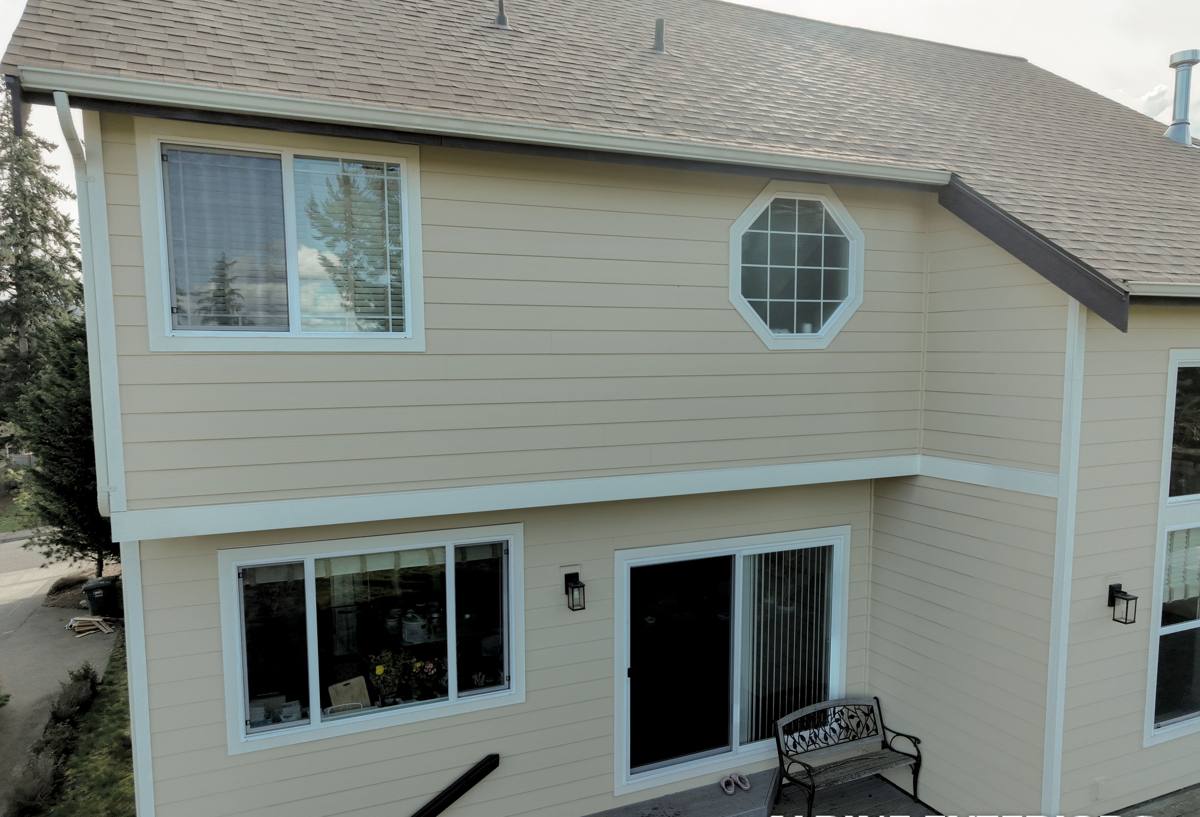
Signs a Birch Point Roof Needs Repair — Not a Full Tear-Off
Most roofs don't fail all at once. They fail in specific spots first, and catching those spots early is what keeps a repair a repair instead of turning into a replacement. Watch for:
- Dark streaking or thick moss growth concentrated on north- or shade-facing slopes
- Granule buildup in gutters or at downspout outlets, a sign shingles are wearing thin
- Soft spots, sagging, or visible staining on interior ceilings near exterior walls or chimneys
- Curling, cracking, or lifted shingle edges, especially on slopes that catch the most wind-driven rain
- Rust streaks or gaps around flashing at chimneys, skylights, and roof-to-wall transitions
- Daylight visible through the roof deck from the attic, or damp insulation below the sheathing
Any one of these on its own is usually a repair. Several of them together, or moss and wear spread across most of the roof rather than isolated spots, is when a straight repair stops being the honest recommendation — we'll tell you if that's the case rather than patch something that needs more.
What a Correct Repair Actually Involves
Diagnosing the Real Source, Not Just the Wet Spot
Water rarely shows up on your ceiling directly below where it entered the roof. It travels along rafters, sheathing, and underlayment before it finds a low point to drip through. A repair that just patches the visible leak location without tracing it back to the actual entry point — often a flashing seam or a nail hole several feet away — will look fixed for a while and then come back.
Flashing Before Shingles
In a marine climate like this, flashing failure is behind more repeat leaks than worn-out shingle material. Chimney step flashing, valley flashing, and flashing around vent boots and skylights take the brunt of driving rain and salt exposure. A repair that reseats or replaces failed flashing correctly — with proper laps and fresh sealant where needed, not sealant alone covering a gap — holds up far longer than a shingle swap by itself.
Moss and Algae Treatment, Not Just Removal
Scraping moss off a roof without addressing why it grew there just buys you a season. A correct repair clears moss without damaging granules, checks for the trapped moisture or shade conditions that let it take hold, and — where appropriate — treats the surface to slow regrowth through the next wet stretch. Zinc or copper strips near the ridge are a reasonable long-term deterrent on shaded slopes, and we'll say so when a roof is a good candidate for one.
Ventilation Checks
A roof deck that can't breathe holds moisture longer after every rain, which accelerates both rot and moss growth. Part of a thorough repair visit includes a quick check of attic ventilation — soffit intake and ridge or roof-vent exhaust — since a ventilation gap is sometimes the real reason one section of roof wears out faster than the rest.
Common Repair Issues We See on Birch Point Homes
| Issue | Likely Cause | What the Repair Involves |
|---|---|---|
| Recurring leak near a chimney or skylight | Failed step or counter flashing, often sealant used to cover a gap instead of proper flashing | Remove and reflash the transition, replace damaged decking if water has been sitting there |
| Heavy moss on shaded slopes | Shade, slow drying time, and organic debris buildup over a wet season | Careful mechanical removal, gutter and valley clearing, moss-inhibiting treatment |
| Granule loss and thinning shingles | UV and wind-driven rain exposure over time, sometimes accelerated by salt air | Spot replacement of affected shingles if the surrounding roof is still sound |
| Corroded or lifted flashing nails | Salt-air corrosion on fasteners and metal edges | Replace fasteners and flashing sections with corrosion-resistant materials |
| Soft or stained sheathing in one area | A slow, long-term leak that went unnoticed | Localized deck repair or replacement, then correct the entry point above it |
How Our Repair Process Works
1. Inspection First, Estimate Second
We walk the roof and the attic where accessible, and we look past the obvious symptom to find where water is actually getting in. That means checking flashing, valleys, penetrations, and ventilation, not just the spot you called about.
2. A Plain-English Explanation
You'll get a clear description of what's actually wrong, what it takes to fix it correctly, and what it would cost to let it go another season. If a repair is genuinely the right call, we'll say so. If the roof is past the point where repair makes sense, we'll say that too — with the reasoning, not just a bigger number.
3. The Repair Itself
We match materials to what's already on your roof where possible, address the root cause first, then handle moss, debris, and any secondary damage. Fasteners and flashing exposed to this area's salt air get materials suited for that exposure, not whatever's cheapest.
4. Cleanup and a Straight Answer on What to Expect Next
We clear debris, check gutters and downspouts are draining properly after the repair, and let you know if there's anything worth watching — a slope that's a moss risk, a section of roof that's getting close to the end of its service life, that kind of thing.
Repair vs. Replacement: What Actually Drives the Decision
| Factor | Favors Repair | Favors Replacement |
|---|---|---|
| Age of roofing material | Well within expected lifespan | Near or past typical service life for the material |
| Extent of damage | Localized — one flashing point, one slope, one leak source | Widespread wear, moss, or granule loss across most slopes |
| Decking condition | Sound, dry sheathing beneath the affected area | Soft, rotted, or repeatedly wet decking in multiple spots |
| History of repairs | First or second repair in this area | Same spot has needed repair multiple times already |
| Budget timeline | Buys time before a planned future replacement | Repair costs are approaching a meaningful fraction of replacement cost |
Neither option is automatically the "responsible" one — a well-timed repair on a roof with years of life left is often the smarter financial call, and a replacement on a roof that's failing in multiple places at once avoids paying for repeat repairs on the same underlying problem.
A Moss-Season Maintenance Checklist for Birch Point Homes
Between full inspections, a few habits go a long way toward keeping small issues small in this climate:
- Clear gutters and valleys of needles and debris before the wet season sets in
- Trim back overhanging branches that keep shaded roof sections damp longer
- Look for moss starting on north-facing slopes early, before it spreads
- Check attic insulation after heavy storms for damp spots near exterior walls
- Have flashing around chimneys and skylights checked every couple of years, since sealant alone tends to fail quietly
- Don't pressure-wash moss off — it can strip granules and shorten the roof's life faster than the moss itself
Why Local Experience in Birch Point Matters
A roofer who mostly works drier, inland areas can still do competent work, but they're often seeing salt-air corrosion, heavy sustained moss, and wind-driven rain patterns for the first time on your roof — which means some learning happens at your expense. Working this stretch of Whatcom County regularly means we already know which flashing details need upgrading for this exposure, which slopes in this kind of layout tend to hold moisture, and which repairs from other crews tend to need revisiting. That's not a knock on anyone — it's just the value of doing the same climate's roofs over and over.
If you've got a leak, heavy moss, or a roof that's just due for a look, we're glad to come out, walk it, and give you a straight assessment — repair or otherwise. The estimate is free and there's no pressure attached to it; use the form below to get in touch.