 Blaine Window
 Roofing Built for What Bellingham and Blaine Actually Get
A roof in Whatcom County works harder than a roof almost anywhere else in the state. Between Bellingham Bay and the Strait of Georgia, homes take on salt-laden air, long stretches of driving rain off the water, and short, low-sun winters that keep roofs damp for weeks at a time. Add in the tree cover common through Bellingham's older neighborhoods and the outlying areas around Blaine, and you get ideal conditions for moss, algae streaking, and slow moisture damage that homeowners often don't notice until it shows up as a stain on a ceiling. Asphalt shingle roofing can handle all of this well, but only when it's specified and installed with this climate in mind — not treated like a generic install copied from a drier region.
This page covers what an asphalt shingle roof actually needs to hold up in Bellingham and Blaine, what a correct installation looks like, and how we approach the job from the first estimate to final cleanup.
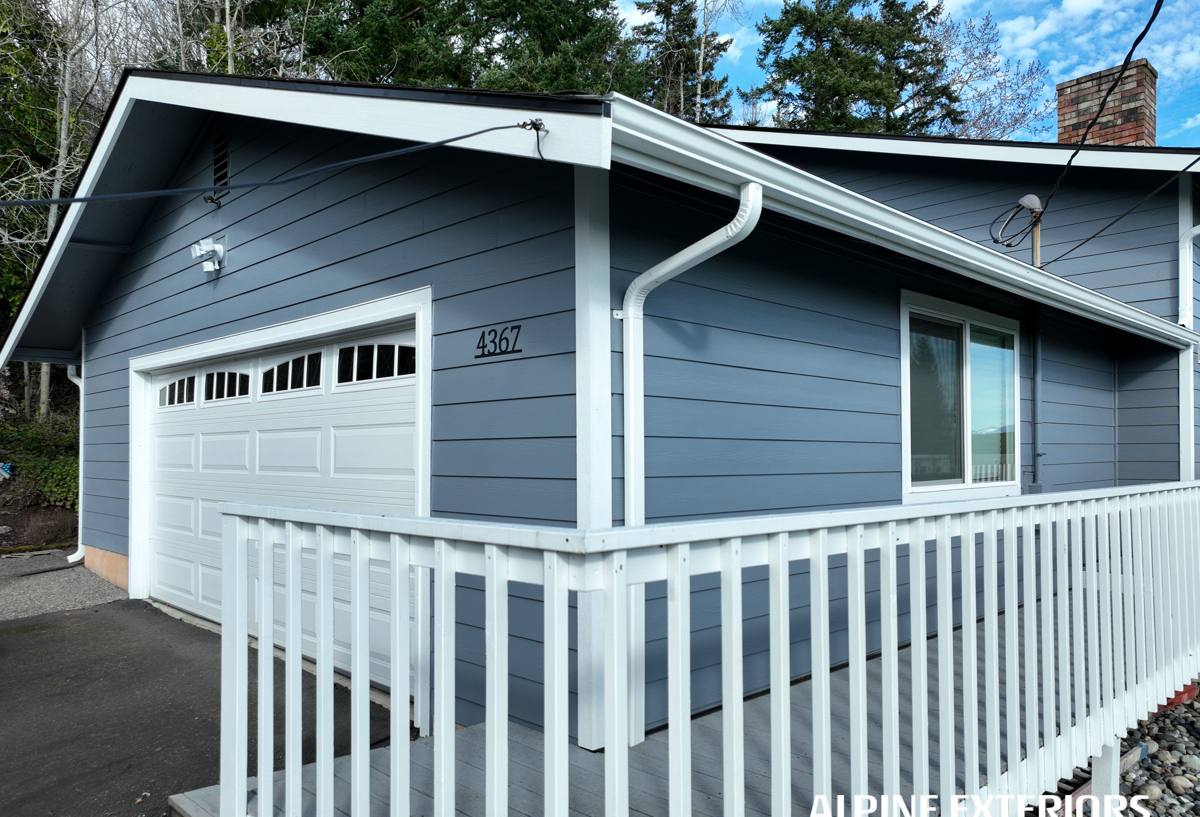
What Salt Air, Rain, and Moss Do to a Shingle Roof
Salt Air and Metal Components
Asphalt shingles themselves aren't damaged by salt air the way bare metal is, but nearly every roof has metal in the system — flashing, vent caps, drip edge, nail heads, and sometimes gutters. Standard galvanized components corrode faster this close to saltwater, which is why material choice for the metal parts of a roof matters just as much as the shingle brand. We spec corrosion-resistant flashing and fasteners on homes in Blaine and along the Bellingham waterfront corridor rather than defaulting to whatever is cheapest at the yard.
Driving, Wind-Driven Rain
Rain that falls straight down is easy to shed. Rain that's pushed sideways by wind off the water finds every weak seam, nail pop, and gap in flashing. This is a wind-and-rain climate, not just a rain climate, so underlayment coverage, flashing laps, and fastening patterns need to account for wind-driven moisture working its way uphill under shingles — something a rushed or budget install often misses.
Moss, Algae, and a Long Wet Season
Western Washington's moss season isn't really a season here — on a shaded, north-facing slope it can be nearly year-round. Moss holds moisture against the shingle surface, lifts shingle edges as it grows, and works its way into nail lines over time. Left unmanaged, it shortens the life of an otherwise sound roof by years. Algae streaking (the dark stains you see on older roofs) is cosmetic rather than structural, but it's a visible sign that a roof is staying damp longer than it should.
What a Correct Asphalt Shingle Roof Job Involves
A shingle roof is only as good as the layers underneath it. In this climate, cutting corners on the parts you can't see is where most roof failures start.
Deck Inspection and Repair
Once old roofing is stripped, the deck gets inspected for soft spots, delamination, or water staining — common on older Bellingham homes where a roof may have been going damp longer than anyone realized. Any compromised sheathing gets replaced before anything new goes down. Roofing over a bad deck just hides the problem for another few years.
Ice-and-Water Shield and Underlayment
Self-adhering ice-and-water membrane at eaves, valleys, and around every penetration is not optional in this climate — it's the backup layer that protects the deck if wind-driven rain or an ice dam gets past the shingles. The rest of the roof gets synthetic underlayment sized to the roof's actual exposure, not the cheapest roll available.
Flashing at Every Transition
Chimneys, skylights, dormers, and sidewall intersections are where roofs actually leak — rarely in the open field of shingles. Correct step flashing, counter-flashing, and valley metal, properly lapped and sealed, matter more to a roof's lifespan than the shingle brand printed on the wrapper.
Ventilation
A shingle roof needs balanced intake and exhaust ventilation to let moisture escape the attic instead of condensing against the underside of the deck. Poor ventilation is one of the most common — and most preventable — causes of premature deck rot and shortened shingle life in this region's damp, mild climate.
Shingle Installation
Correct nail placement (not staples, not overdriven or underdriven nails), proper course exposure, and starter strip at eaves and rakes all affect wind resistance. A shingle rated for high wind uplift performs like a budget shingle if it's installed with sloppy nailing.
Choosing the Right Shingle for a Whatcom County Home
Not every shingle line is worth the same money on a coastal roof. Here's how the common options compare for homes in this area:
| Shingle Type | Typical Lifespan | Best Fit For | Trade-Offs |
|---|---|---|---|
| 3-Tab Asphalt | 15–20 years | Budget-conscious re-roofs, secondary structures | Lower wind rating, thinner profile shows less shadow-line detail |
| Architectural (Laminate) | 25–30+ years | Most Bellingham and Blaine homes | Higher upfront cost, but stronger wind rating and better moss/algae-resistant options |
| Impact-Rated Architectural | 25–30+ years | Homes wanting added durability against debris and hail | Higher material cost; benefit is durability, not necessarily longer lifespan |
For most homes in this area, we lean toward architectural shingles with algae-resistant (copper- or zinc-infused) granules. The upcharge over standard architectural shingles is modest, and it directly addresses the algae streaking that's so common on roofs here — it doesn't stop moss growth on its own, but it slows the biological staining that makes an otherwise sound roof look prematurely worn.
Our Process, Start to Finish
- On-site inspection and estimate — we look at the existing roof, attic ventilation, and any problem areas before quoting anything.
- Written scope and material selection — you know exactly what shingle, underlayment, and flashing package you're getting, in writing, before work starts.
- Tear-off and deck inspection — old roofing removed down to the deck, with any damaged sheathing flagged and repaired.
- Underlayment, ice-and-water shield, and flashing — the protective layers go down first, sized for this climate's rain and wind exposure.
- Shingle installation — installed to manufacturer nailing specs, not shortcuts, to keep the wind-rating warranty intact.
- Ventilation check — intake and exhaust confirmed balanced before we call the job done.
- Cleanup and magnetic sweep — job site and surrounding yard cleared of debris and stray fasteners.
- Final walkthrough — we go over the finished roof with you before we consider the job complete.
Maintenance to Keep a Bellingham Roof Performing
An asphalt shingle roof in this climate isn't maintenance-free, but the upkeep is manageable if it's done consistently:
- Have moss physically removed (not just chemically treated) every year or two on shaded, north-facing slopes
- Keep gutters and valleys clear of needles and leaf litter so water has a clean path off the roof
- Trim back overhanging branches to cut down on shade, debris, and moss spore contact
- Walk the attic once a year and look for daylight, staining, or musty odor — early signs of a leak
- Have flashing around chimneys and skylights checked periodically, since these are the most common leak points
- Avoid pressure washing shingles — it strips granules and shortens shingle life; use low-pressure rinsing or soft brushing instead
Repair or Replace? Signs to Watch For
Not every roof problem means a full replacement. Isolated flashing leaks, a handful of wind-lifted shingles, or moss buildup on an otherwise sound roof are often repairable. Full replacement usually makes more sense when you're seeing granule loss across large areas, multiple soft spots in the deck, or a roof that's already near the end of its rated lifespan and starting to show age in more than one place at once. We'll tell you honestly which situation you're in rather than defaulting to the more expensive option.
Why Hire a Crew That Already Works Bellingham and Blaine Roofs
Roofing crews that mostly work drier, inland climates tend to underbuild for what this coastline throws at a roof — thinner underlayment packages, standard-grade metal, and ventilation specs that don't account for how long moisture sits on a roof here. A crew that regularly works Whatcom County knows which slopes in a given neighborhood tend to hold moss, how much ice-and-water coverage a valley actually needs in this rainfall pattern, and which metal specs hold up near saltwater instead of chalking and corroding within a few years. That local pattern-recognition is the difference between a roof that looks fine at handoff and one that's still performing correctly a decade later.
If you're weighing a repair, a full re-roof, or just want an honest read on how much life is left in your current shingles, we're happy to take a look. Request a free, no-pressure estimate using the form below and we'll walk the roof with you and give you a straight answer.