 Blaine Window
 Why Bellingham Roofs Take More Storm Damage Than They Should
Bellingham sits right on the water, and that location shapes what a storm actually does to a roof here. Salt-tinged marine air works on exposed metal and fasteners year-round, wind off Bellingham Bay and the Strait of Georgia drives rain sideways instead of straight down, and a moss season that runs most of the year on shaded, tree-covered roofs keeps shingles damp long after a storm has passed. None of those three things causes dramatic damage on their own. Together, over a few wet seasons, they weaken a roof enough that a storm which would leave a drier, sunnier roof untouched somewhere else can be the event that finally exposes a real problem here. That's the pattern we see most often on storm calls in this area — the wind or rain gets blamed, but the roof had already been losing ground for a while.
That's part of why storm damage repair in Whatcom County isn't just "patch what blew off." A roof that took visible damage in a windstorm was very often already dealing with moss intrusion, softened flashing seals, or underlayment that had been absorbing moisture for longer than anyone realized. A repair that only addresses what's obviously broken and ignores what the storm revealed tends to be back on the schedule within a year or two.
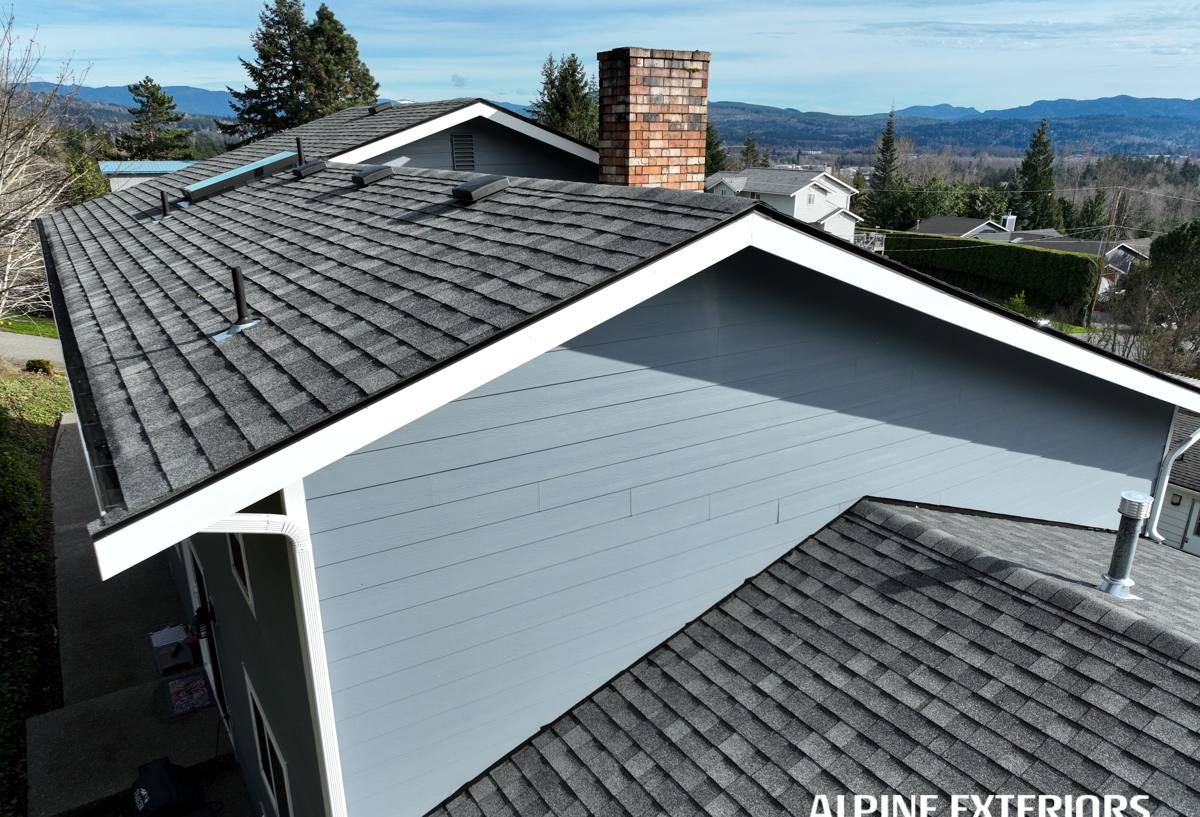
What Storm Damage Actually Looks Like on a Bellingham Roof
Wind Damage
Wind damage here usually shows up as shingles that are lifted, cracked, or torn at the tab rather than shingles that are simply gone. Ridge caps and shingles along roof edges and near chimneys take the worst of it, since those are the areas most exposed to gusts coming off the water. Nails that have backed out slightly from repeated wind cycles are also common and easy to miss from the ground, since the shingle can still look mostly intact while it's no longer properly fastened.
Water Intrusion
Because this area's storms usually bring wind-driven rain rather than rain falling straight down, water gets pushed sideways and upward under shingle edges and around flashing in a way that a calm, vertical rainstorm wouldn't manage. That's why water stains inside the house often trace back to a spot several feet away from where the actual roof opening is — the water traveled sideways under the roofing before it found a way in. It's also why a homeowner can find a stain on a ceiling after a storm and assume the roof is fine, simply because nothing looks obviously wrong when they check the attic in dry weather afterward.
Moss and Debris-Related Damage
Falling branches and wind-thrown debris crack shingles and dent or bend flashing directly. Just as often, though, storm damage here is moss finishing a job it already started — a shingle that moss had already lifted at the butt edge over a damp winter gives way completely once wind gets under it, in a spot that would have held up fine if it had been clear.
Why Waiting on Storm Damage Costs More Here Than It Does Elsewhere
In a climate with long dry stretches, a missing shingle or a lifted flashing edge can sit for a while without much consequence. Bellingham doesn't offer that grace period for most of the year. An opening in the roofing that would take months to cause real damage somewhere drier can soak the decking underneath within a few storm cycles here, and once the decking is wet, you're looking at rot and possible structural repair instead of a straightforward shingle and flashing fix.
Waiting also works against you if you're planning to file an insurance claim. Most policies expect prompt reporting and documentation of storm damage, and a delay gives an adjuster room to question whether the damage happened in the storm you're claiming or developed afterward from neglect. Getting a roof looked at within a few days of a significant windstorm, even if nothing looks obviously wrong yet, is worth the time either way.
What a Correct Storm Damage Repair Involves
A Real Inspection, Not a Ground-Level Guess
Storm damage isn't always visible from the driveway. A proper assessment means getting on the roof, checking the areas most exposed to wind and driving rain, and looking at flashing, ridge lines, and valleys specifically, not just scanning for obviously missing shingles.
Checking What's Underneath, Not Just Replacing Shingles
If wind-driven rain got past the shingle layer, the underlayment and decking underneath may already be wet or damaged even where the shingles themselves look repairable. A repair that goes back on top of wet decking or compromised underlayment without addressing it is covering up the actual problem, not fixing it.
Matching Materials and Reintegrating Flashing Properly
A patch repair needs to tie into the existing roofing correctly — step flashing woven back into shingle courses rather than caulked over the top, replacement shingles that match the existing profile and are fastened to spec, and underlayment repairs lapped the right direction so water sheds over the seam instead of into it. A repair that looks fine from the ground but skips these details tends to fail again in the next comparable storm.
Documenting the Damage Properly
A thorough repair includes photos and a written description of what was found and what was done, before and after. That record is useful if you end up filing an insurance claim, and it also gives you something concrete to refer back to if a question ever comes up about what was repaired and how.
Our Storm Damage Repair Process
- Assessment and documentation — we get on the roof, identify what the storm actually damaged versus pre-existing wear, and photograph it, which also gives you documentation if you're filing an insurance claim.
- Temporary protection if needed — if there's an active opening, we get it covered to stop further water intrusion before the full repair is scheduled.
- A written, specific scope — you get a clear description of what's damaged and what the repair involves, not a vague "storm repair package."
- The repair itself — shingles, flashing, and underlayment addressed together where the damage requires it, matched to your existing roof.
- Cleanup and walkthrough — debris and old material hauled off, and we walk the repair with you before calling it done.
Repair or Replace: What We Actually Look At
Not every storm-damaged roof needs a repair, and not every one needs a full replacement. The right call usually comes down to a handful of factors, and we'll walk you through which ones apply to your roof rather than defaulting to whichever option is more profitable for us:
| Factor | Leans Toward Repair | Leans Toward Replacement |
|---|---|---|
| Extent of damage | Isolated to one section or slope | Spread across multiple slopes or the whole roof |
| Roof age | Well within its expected lifespan | Already near or past typical service life for the material |
| Moss and moisture history | Minimal prior moss or underlayment concerns | Storm revealed damage on top of long-term moss or moisture problems |
| Underlying decking | Decking is dry and solid where exposed | Decking is soft, delaminated, or wet over a wide area |
| Insurance coverage | Claim supports a targeted repair | Claim or adjuster assessment supports full replacement |
A repair on a roof with a lot of life left in it is usually the right call. Repairing a roof that's already near the end of its service life, or one where the storm exposed moss and moisture damage that goes well beyond the visible break, often ends up costing you twice — once for the patch and again for the replacement a season or two later.
Keeping Storm Damage From Becoming a Repeat Problem
A handful of maintenance habits go a long way toward reducing how much damage the next storm does to a Bellingham roof:
- Trim back branches overhanging the roof — they drop debris in wind and keep sections of the roof shaded and slow to dry
- Clean gutters before the fall storm season and again after any major wind event, since clogged gutters push water back up under roof edges
- Have moss removed and treated before it lifts shingle edges, rather than after a storm finishes the job
- Check flashing around chimneys, skylights, and vent pipes each fall, before sustained wet weather sets in
- Watch the attic for musty smells, new staining, or damp insulation after any significant storm, even if the roof looks fine from outside
Why Hiring a Crew That Already Works Bellingham Matters
After a significant windstorm, it's common to see unfamiliar trucks and door-to-door offers for fast, cheap storm repairs in this area. Some of that work is fine, but a lot of it is a rushed patch by a crew that won't be around if it fails. A contractor who already works roofs across Bellingham and the rest of Whatcom County knows what normal wear looks like on homes here versus what's actually storm-caused, has a track record you can check locally, and is still reachable if a repair needs a follow-up look after the next round of driving rain.
That local presence also matters for scheduling. When a regional windstorm hits, every roofing crew in the area gets busy at once, and a contractor already working Bellingham on a regular basis is easier to get on the schedule than one driving in from out of the area chasing storm work. That local accountability matters more with storm repair than almost any other kind of roofing job, because storm damage is exactly the situation where a fast, low-quality fix is easiest to sell and hardest for a homeowner to evaluate on the spot.
If a recent storm left your roof with missing shingles, a leak, or damage you're not sure how serious, we're happy to take a look and give you a straightforward, no-pressure estimate. There's a form below — reach out and we'll get out to your Bellingham home to assess it.