 Blaine Window
 Siding Repair Around Blaine Harbor: A Waterfront Repair Job, Not a Generic One
Blaine Harbor sits right at the working waterfront of Blaine, where Drayton Harbor meets the town, and homes in this part of the community deal with a more concentrated version of everything Whatcom County's coast throws at an exterior. Salt air comes off the harbor almost daily, wind carries rain sideways into walls during winter storms, and shaded lots near the water stay damp long enough for moss to move in and stay. We work this stretch of Blaine regularly, and siding repair calls near the harbor look different from repair calls even a mile or two inland — more corrosion on fasteners and trim, more moisture that's traveled further than it looks from the outside, and less patience for a repair that only fixes what's visible.
This page is specifically about repairing existing siding, not a full re-side. A lot of Blaine Harbor homes have siding that's fundamentally sound but has a section, corner, or wall plane that's failing — usually near grade, around a window, or on the side that takes the worst of the wind off the water. Repair is often the right call in those cases. The trick is doing it in a way that actually holds up in this climate instead of buying a homeowner a year or two before the same spot fails again.
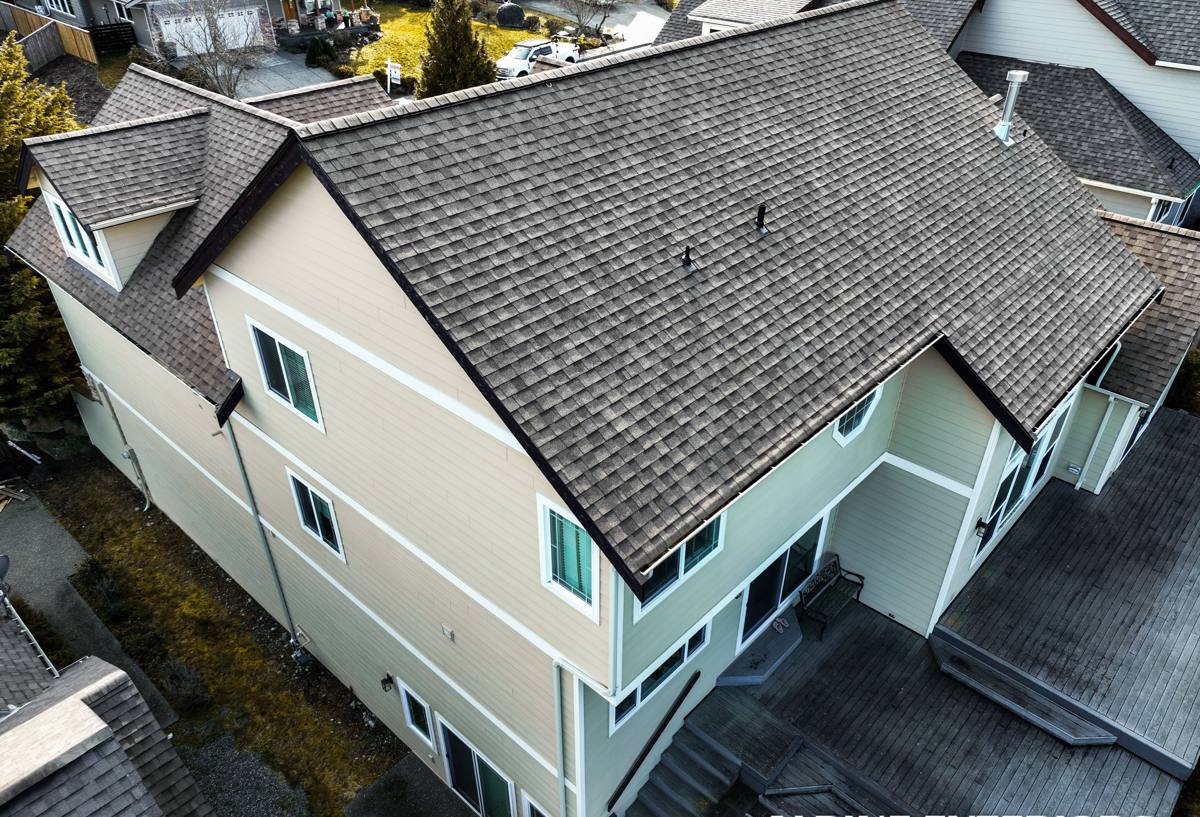
What the Harbor's Climate Does to Siding
Concentrated Salt Air
Proximity to open water means Blaine Harbor homes take a steadier, more direct dose of salt-laden air than properties set back from the shoreline. Salt speeds up corrosion on fasteners, flashing, and any exposed metal trim, and it breaks down lower-quality paint and caulk faster than a dry inland climate would. On repair jobs near the harbor, we routinely find that the fasteners or flashing failed well before the siding material itself did — the metal gave out first and took the siding's protection with it.
Wind-Driven Rain Off the Water
Storms rolling in off Drayton Harbor and the wider Salish Sea don't just fall straight down. Wind pushes rain sideways into wall assemblies, window flashing, and the seams where trim meets siding, and that sideways load finds gaps a calmer climate would never expose. This is the mechanism behind most of the hidden moisture damage we find on repair calls — water didn't pour in from an obvious opening, it worked its way in sideways through a joint or lap that wasn't sealed to spec.
A Moss Season That Runs Most of the Year
Mild temperatures combined with near-constant moisture give moss and mildew a long growing season on shaded, north-facing, or tree-covered walls, and Blaine Harbor has plenty of both between waterfront tree lines and homes packed close together. Moss holds moisture against the siding surface longer than an open, sunny wall ever would, and that prolonged dampness is exactly what accelerates rot underneath a section that already has a compromised seam or fastener.
When Repair Is the Right Call, and When It Isn't
Good Candidates for Repair
Not every siding problem near the harbor means a full re-side. Localized damage — a rotted section near grade, a cracked or impact-damaged board, moisture around a single window that hasn't spread, or corrosion-damaged trim on one wall plane — is often a legitimate repair, especially if the rest of the siding is sound and the underlying wall assembly wasn't compromised for long. The key question isn't how bad the visible damage looks, it's how far the moisture actually traveled behind the surface.
Signs the Damage Has Gone Past a Simple Repair
Some homes near the harbor come in for a repair quote and turn out to need something closer to a partial or full re-side once we get behind the siding. A few signs that tip the scope in that direction:
- Soft or spongy wall sheathing found once the damaged siding section is pulled, not just soft siding on the surface
- Moisture staining or rot that shows up on multiple, unrelated wall planes rather than one contained spot
- Siding material that's discontinued or no longer produced in a matching profile, making a clean patch impossible
- A house wrap or weather barrier underneath that's degraded, torn, or missing in the repair area
- Repeated past repairs in the same spot, which usually means the original cause was never actually fixed
We'll always tell a homeowner honestly which category their project falls into once we've actually opened up the damaged area. Quoting a repair before that inspection happens is how homeowners end up paying twice — once for a patch, and again a year later for the re-side that was actually needed.
What a Correct Siding Repair Actually Involves
Finding the Real Extent of the Damage
Visible siding damage is almost always smaller than the actual problem. Before we quote or start any repair near Blaine Harbor, we open up the affected area enough to see the sheathing, house wrap, and framing underneath, and in cases where moisture intrusion is suspected but not obvious, we'll check moisture content directly rather than guess from the surface. Repairing over a wall assembly that's still wet just seals the problem in and guarantees a repeat call.
Fixing the Cause, Not Just the Symptom
Replacing a damaged board without correcting whatever let water in behind it is a cosmetic fix, not a repair. That usually means re-lapping or replacing house wrap in the repair zone, correcting flashing at any window, door, or roof-to-wall transition nearby, and making sure a drainage gap exists behind the new material so any moisture that does get past the surface can drain and dry instead of sitting against the sheathing. On a harbor-facing wall taking direct wind-driven rain, skipping this step is the single most common reason a repair fails again within a few years.
Matching Material and Finish
A repair that stands out visually is still a poor repair in most homeowners' eyes, even if it's structurally sound. We match profile, exposure, and color as closely as the existing siding allows, and on James Hardie siding specifically, matching a factory ColorPlus finish accurately depends on knowing the product line and color family already on the house, since Hardie's finishes aren't a universal, one-size stock match. Where an exact color match isn't available, we'll say so up front rather than let a homeowner discover a visible seam after the work is done.
Fastening and Sealing to Spec
Correct fastener type, spacing, and sealing at butt joints and trim transitions matter as much on a repair as they do on a new installation, arguably more, since a repair area is often a smaller target for wind-driven rain to find and exploit. We follow the manufacturer's fastening and sealing spec on every repair, not a shortcut version, because a repair section that isn't fastened and sealed correctly becomes the new weak point on the wall.
Repairing Different Siding Types Near the Harbor
Blaine Harbor has a real mix of siding on its homes — James Hardie fiber cement, vinyl, cedar, engineered wood products like LP SmartSide, and older primed spruce siding all show up on repair calls. We install new siding exclusively in James Hardie fiber cement, but repair work is a different conversation, since most homeowners calling about a repair already have an existing product on the wall that a full re-side isn't yet warranted for.
| Existing Siding | Typical Repair Considerations Near the Harbor |
|---|---|
| James Hardie fiber cement | Straightforward material match if the color and profile are still in production; the more common issue is flashing or fastener failure around the damaged section rather than the board itself |
| Vinyl | Panels can crack or warp from impact and heat cycling; exact color and profile matches get harder to find as a panel run ages, especially after sun exposure has faded the surrounding material |
| Cedar | Repair often means addressing rot or moisture absorption directly, since cedar's performance depends heavily on maintained finish, and salt air near the harbor accelerates finish breakdown |
| LP SmartSide / engineered wood | Swelling or softening at cut edges and seams is the most common repair trigger; the repair needs to seal those edges thoroughly or the same spot tends to recur |
| Primed spruce | Often the oldest siding we see on harbor-area homes; repair is usually a bridge to a planned full re-side rather than a long-term fix on its own |
When a homeowner's existing siding isn't Hardie, we'll still do the repair right and be straightforward about that product's realistic lifespan and maintenance needs in this climate. If a home is heading toward needing a full re-side within the next few years regardless, we'll say so, since it changes whether a repair is worth the investment or better spent toward the eventual replacement.
Our Repair Process, Start to Finish
- Inspection: We look at the visible damage, check for related issues nearby, and open up the area enough to assess the sheathing and moisture barrier underneath before quoting anything.
- Honest scope and quote: We tell the homeowner whether this is a genuine repair or something that's grown into a larger project, and what drives the price either way.
- Material and color matching: We source matching siding material and, where the existing siding is Hardie, work from the correct ColorPlus line to get as close a match as the product allows.
- Repair of the underlying assembly: Flashing, house wrap, and any compromised framing get addressed before new siding material goes back on.
- Reinstallation to spec: New material goes on with correct fastening, sealed joints, and a drainage gap, following the same installation standard we'd use on a full job.
- Final check: We walk the repair with the homeowner before calling it finished, and point out anything nearby worth keeping an eye on.
Cost Factors for Siding Repair Near Blaine Harbor
| Factor | Why It Matters |
|---|---|
| Extent of hidden moisture damage | Sheathing or framing repair behind the siding adds cost beyond the visible siding material itself |
| Material match availability | Discontinued colors or profiles can require sourcing time or a compromise on exact match |
| Accessibility of the repair area | Wall height, obstructions, and proximity to decks or fences affect labor time |
| Flashing and moisture barrier condition | A repair that also has to correct failed flashing takes longer than a straightforward board swap |
| Number of separate repair areas | Several small repair zones on one home can add up to more total labor than one larger contained area |
These are general drivers, not a quote for a specific home. Every property near the harbor sits at a slightly different distance from the water and under different tree cover, so we walk the site and open up the damaged area before putting a real number on the work.
Timing a Siding Repair Around Blaine Harbor's Weather
Whatcom County's wettest, windiest stretch generally runs from late fall through winter, and Blaine Harbor's direct exposure to the water makes that stretch harder on both the house and the repair crew than it is further inland. Spring and summer typically offer the driest, most stable conditions for siding repair, since fiber cement, sealants, and house wrap all perform better when they can be installed and allowed to set up without a storm moving through partway. That said, active moisture intrusion doesn't wait for good weather. A repair addressing ongoing water entry is worth scheduling on its own timeline rather than holding out for the ideal season, since every additional wet month adds to what's actually damaged underneath.
Signs a Blaine Harbor Home Needs a Siding Repair
- A section of siding that feels soft or spongy to the touch, especially low on the wall or near grade
- Visible rust staining or corrosion around fasteners, flashing, or trim near the damaged area
- Moss or dark staining that returns quickly after cleaning on one specific wall section
- Peeling paint, bubbling, or a warped board on a shaded or harbor-facing wall
- Staining or a musty smell inside near an exterior wall, which often points to moisture that's already traveled past the siding
- A crack, impact damage, or a gap at a seam that's opened up since the siding was installed
Why a Crew That Already Works Blaine Harbor Matters
A repair crew that works this stretch of Blaine regularly has a working sense of which walls near the harbor take the worst of the wind, how far moisture tends to travel behind a given siding type in this climate, and where a quick patch would leave a homeowner right back where they started after the next winter storm. That local pattern recognition shapes real decisions on a repair call — how much of the surrounding area to open up before closing it back in, which flashing details are worth extra attention on a harbor-facing wall, and when a repair genuinely won't hold and a homeowner deserves to hear that honestly rather than get sold a patch. Blaine Harbor's direct waterfront exposure isn't the same as siding conditions even a short distance inland, and a crew that treats it that way tends to get called back for new work, not warranty complaints.
If you've got a section of siding near Blaine Harbor that's showing damage, we're glad to take a look, open it up if needed, and give you an honest read on whether it's a straightforward repair or something bigger. Reach out using the form below to schedule a free, no-pressure estimate.