 Blaine Window
 Sumas Sits in a Different Kind of Wet Than Most of Whatcom County
Sumas is a small river-valley community tucked against the Canadian border, a short drive inland from Blaine and Semiahmoo Bay. That inland position changes what siding has to deal with. Homes right on Blaine's shoreline take salt-tinged marine air head-on off the water. Sumas homes get a different version of the same regional weather: low-lying valley humidity along the Nooksack lowlands, dense tree cover that keeps yards and north-facing walls shaded most of the year, and long stretches where surfaces simply never fully dry out between storms. We work both sides of that difference, and it matters when you're specifying and installing siding correctly.
Whatcom County's climate overall is defined by driving rain off the Pacific, a moss season that can run eight or nine months out of twelve, and enough freeze-thaw cycling in the colder months to punish any material or installation detail that lets water get behind the cladding. Sumas adds valley dampness and shade to that list. None of this is exotic weather — it's just persistent, and persistent is what wears siding out ahead of schedule.
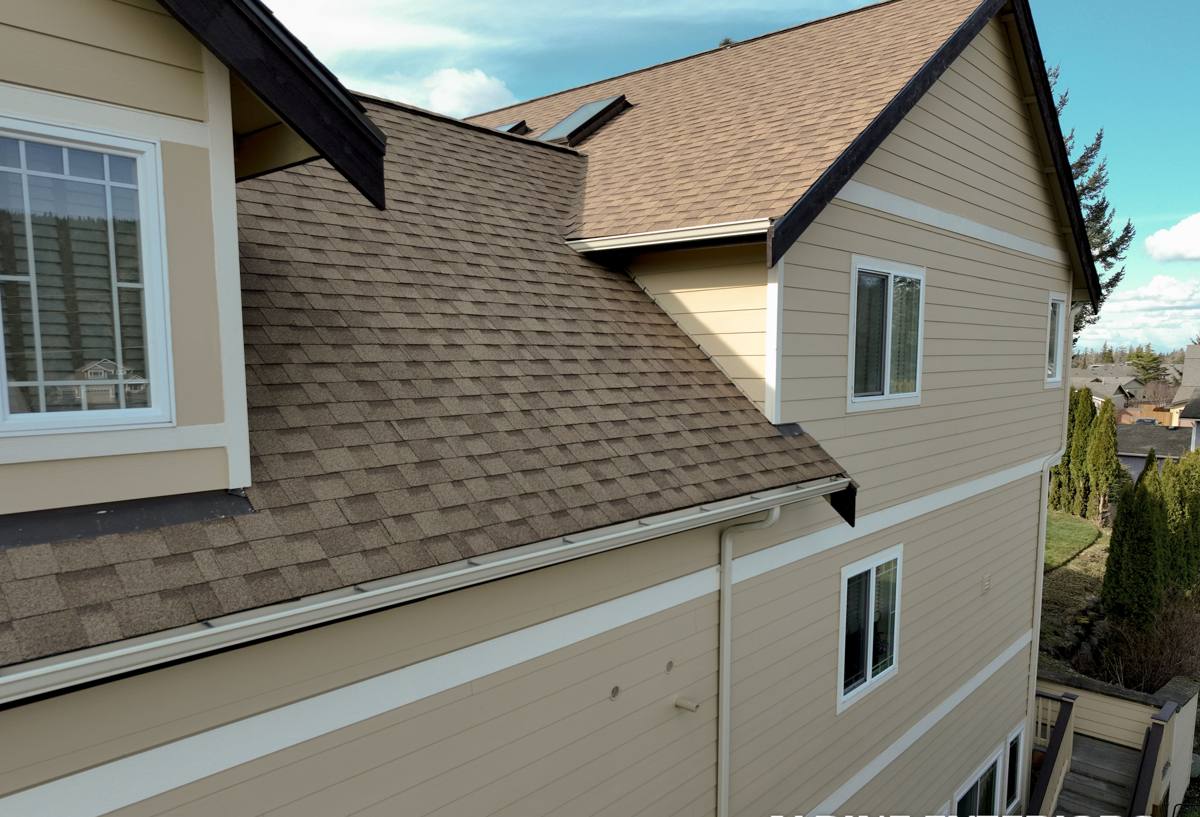
Why Siding Fails Faster in This Corner of the County
Driving Rain and Wind-Driven Water
Rain in this region rarely falls straight down. Pacific storm systems push it sideways, which means water gets forced up under laps, around trim, and into seams that would stay dry in a calmer climate. Any gap in the water-resistive barrier, any missed flashing detail, any caulk joint that was never really needed in the first place becomes the entry point for moisture that has nowhere to go once it's behind the siding.
Moss, Algae, and Shade
Sumas' tree cover and valley humidity are close to ideal growing conditions for moss and algae. On siding that holds moisture — untreated wood, some engineered wood products, and lower-grade composites — that growth isn't just cosmetic. It holds water against the surface, breaks down finishes, and accelerates rot at seams and butt joints. Shaded north and east walls are usually the first to show it.
Freeze-Thaw and Prolonged Dampness
Whatcom County doesn't get brutal cold, but it gets enough freeze-thaw cycling that any siding material already holding moisture is at a disadvantage. Water that's absorbed into a porous material and then freezes expands, and that stress repeats itself all winter on anything that wasn't built or installed to shed water fast.
What Correct Siding Installation Actually Involves
Good siding installation is mostly about what's happening behind the visible surface. The cladding itself gets the attention, but the water management system underneath it is what determines whether a wall stays dry for thirty years or starts rotting sheathing in eight.
Water Management Comes First
- A continuous, properly lapped weather-resistive barrier installed shingle-style so every seam sheds water downward
- Correct flashing at every window, door, and roof-to-wall transition — the details that stop water intrusion at the places it's most likely to occur
- A drainage gap behind the siding so any water that does get past the cladding can drain and the wall can dry rather than trapping moisture against the sheathing
- Kick-out flashing where a roofline meets a wall, directing water away from the siding instead of letting it run down behind it
Fastening and Fit
Fiber cement siding has manufacturer-specified fastening patterns, nail spacing, and clearances from grade, decks, and roof lines — all of it engineered for wind and moisture exposure, not just appearance. Skipping or shortcutting these specs is one of the most common reasons siding fails early, and it's invisible from the curb until years later when boards start cupping or pulling loose.
Caulk and Sealant, Used Correctly
Caulk has a place — at specific transitions, not as a substitute for proper flashing. Siding jobs that rely on heavy caulking to make up for missing flashing details tend to look fine for a year or two and then fail exactly where the caulk was doing the flashing's job.
Why We Install Only James Hardie Fiber Cement
Given what this climate does to siding, we standardized on James Hardie fiber cement for every installation, including work in Sumas and throughout the Blaine area. It's non-combustible, holds a factory-baked ColorPlus finish that resists the fading and staining that shaded, mossy walls tend to cause, and Hardie's HZ product lines are engineered specifically for climates with sustained moisture exposure — which describes this part of Whatcom County well. It also carries a strong, transferable warranty, which matters on a product that's meant to last decades, not a decade.
Fiber cement doesn't feed moss and algae the way wood-based products can, and it doesn't absorb water the way engineered wood siding does. That combination of moisture resistance, finish durability, and fire performance is why it's the only product we put on a house, whether that house is a block from Drayton Harbor or out in the Sumas valley.
Comparing Siding Options for This Climate
| Material | Moisture Behavior | Moss/Algae Resistance | Typical Maintenance |
|---|---|---|---|
| James Hardie Fiber Cement | Does not absorb and swell; engineered for wet climates | Factory finish resists growth better than raw wood surfaces | Occasional wash; repaint only if ever needed, decades out |
| Vinyl | Sheds water but can warp/buckle with temperature swings; seams are failure points | Can host growth in shaded, damp spots | Low, but panels can crack and aren't repairable in place |
| Wood or Primed Spruce | Absorbs moisture readily; prone to swelling and rot at joints | High — a preferred surface for moss and algae in shaded, damp areas | Frequent repainting/sealing and active moisture monitoring |
This is a simplified comparison of general material tendencies, not a claim about any specific manufacturer's product performance. It's meant to explain the trade-offs behind our decision to install only fiber cement.
Our Installation Process for Sumas Homes
- On-site assessment. We look at existing siding, sheathing condition, trim, and the specific exposure of each wall — shaded valley-facing walls get evaluated differently than sun- and wind-exposed ones.
- Tear-off and sheathing check. Removing old siding is when hidden moisture damage shows up. Any soft or compromised sheathing gets addressed before anything new goes on — covering a problem never fixes it.
- Weather-resistive barrier and flashing. Installed to manufacturer spec at every penetration, window, door, and transition, because this layer is doing most of the actual water-management work.
- Fiber cement installation. Hardie panels or lap siding installed to the specified fastening pattern, clearances, and joint treatment.
- Trim, caulk, and finish detailing. Sealant used only where it belongs, not as a stand-in for flashing.
- Walkthrough. We go over what was done, what the warranty covers, and what basic upkeep — if any — the homeowner should expect.
What Drives the Cost of a Siding Installation
| Factor | Why It Matters |
|---|---|
| Home size and wall complexity | More corners, gables, and dormers mean more cutting, flashing, and labor time |
| Tear-off and disposal | Removing and hauling away old siding adds cost versus a bare-sheathing new build |
| Sheathing repair | Water-damaged sheathing found during tear-off has to be replaced before new siding goes on |
| Trim and detail work | Homes with more windows, doors, and rooflines need more precise flashing and trim carpentry |
| Access and site conditions | Steep lots, tight setbacks, or limited equipment access add labor time |
We don't quote broad numbers here because every home is different — a Sumas home with straightforward walls and sound sheathing costs meaningfully less than one with extensive water damage behind old siding. A site visit is the only honest way to price it.
Questions Worth Asking Before You Hire
- Will you inspect and, if needed, replace damaged sheathing before installing new siding — or just install over it?
- What weather-resistive barrier and flashing details do you use, and are they to the manufacturer's written specification?
- Is the fastening pattern and clearance to grade, decks, and rooflines done to the siding manufacturer's spec sheet, not just "how we usually do it"?
- What does the warranty actually cover, and is it transferable if you sell the home?
- Have you worked on homes in Sumas or similar valley/shoreline conditions in Whatcom County before?
Why Local Experience in Sumas and Blaine Matters
A crew that already works this area knows the difference between a wall that takes direct wind-driven rain off Semiahmoo Bay and a shaded, humid wall in the Nooksack lowlands near Sumas — and installs accordingly. That includes knowing which walls need the most attention to drainage and flashing, which sites tend to hold moss the longest, and how permitting and inspection work locally in Whatcom County. It's the difference between a generic install and one that's actually built for where the house sits.
If you're weighing a siding replacement or new installation on a home in Sumas or anywhere in the Blaine area, we're happy to take a look and give you a straightforward, no-pressure estimate — no obligation, just an honest read on what your home needs. The form below gets you started.