 Blaine Window
 Why Semiahmoo's Waterfront Setting Is Tough on Windows
Semiahmoo sits right on the water, exposed to wind coming off Semiahmoo Bay with very little to break it up before it reaches a home's exterior. That exposure means windows here deal with a combination most inland Whatcom County homes never see at the same intensity: salt-laden air, wind-driven rain that gets pushed sideways into frames and sills, and a long stretch of the year where surfaces stay damp enough for moss and algae to take hold. None of that is dramatic on its own, but stacked together year after year, it wears down window components faster than a standard product spec sheet assumes.
An energy-efficient window is only efficient if it stays sealed, stays square, and keeps moisture out of the wall cavity. In a waterfront setting like Semiahmoo, the install details matter as much as the glass package — sometimes more.
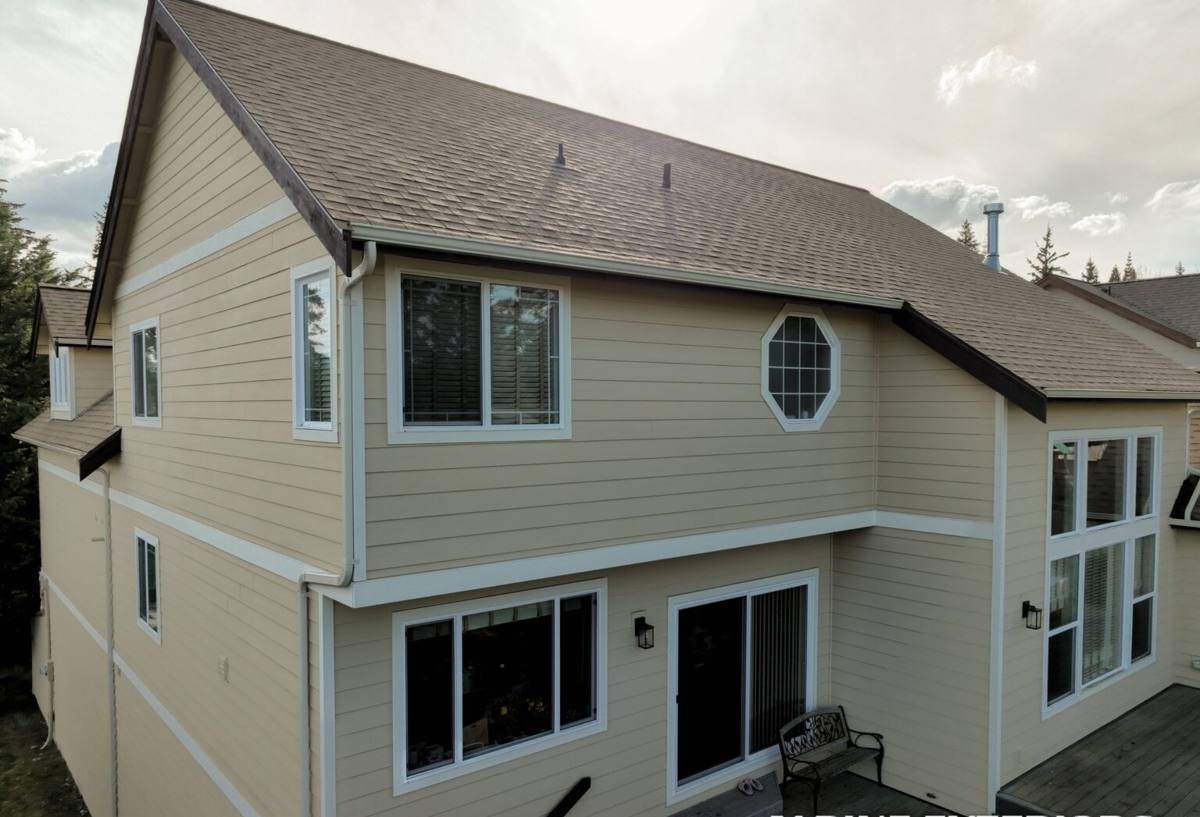
What "Energy-Efficient" Actually Means Here
Energy efficiency in a window isn't one number — it's a combination of ratings that all matter for a Pacific Northwest coastal climate:
- U-factor — how well the window resists heat transfer. Lower is better for our mild-but-damp winters, where the goal is holding heat in without the home ever getting bone dry.
- SHGC (Solar Heat Gain Coefficient) — how much solar heat passes through the glass. Semiahmoo doesn't get intense sun exposure most of the year, so this matters less here than it would in a hotter, sunnier climate, but it still factors into comfort on west-facing water-view walls.
- Air leakage rating — arguably the most important number for a wind-exposed site. A window with a great U-factor but a poor air-leakage rating will still let cold, salty drafts in around a sash that isn't sealing tight.
- Condensation resistance — how well the interior glass surface resists fogging and moisture buildup, which matters in a climate where indoor-outdoor temperature and humidity differences are a near-constant.
We look at the whole package for a Semiahmoo home, not just the headline efficiency number on a sticker.
Frame Materials: What Holds Up Near Salt Water
Frame material choice matters more on Semiahmoo Bay than it does a few miles inland. Salt air accelerates corrosion on anything with exposed metal hardware or fasteners, and it can be harder on certain finishes than plain rain alone.
| Material | Salt-Air Behavior | Maintenance Load | Our Take for Semiahmoo |
|---|---|---|---|
| Vinyl | Doesn't corrode; UV-stable finishes hold color | Low — occasional rinse | Solid, budget-friendly default for most waterfront homes |
| Fiberglass | Excellent — dimensionally stable, resists pitting | Low | Best long-term performer in direct salt exposure; higher upfront cost |
| Aluminum | Prone to pitting/corrosion unless marine-grade and well-finished | Moderate to high near the bay | We're selective about where we use it on exposed elevations |
| Wood / wood-clad | Vulnerable where cladding is breached; moisture intrusion risk | High — regular inspection and finish upkeep | Can work with disciplined maintenance; not our default on the water-facing side |
None of these are "bad" products — they're trade-offs. Wood windows can look great and perform well for years, but they demand more attention in a salt-air environment than vinyl or fiberglass does. That's a maintenance conversation we have honestly with every Semiahmoo homeowner rather than steering everyone toward one material by default.
Hardware and Fasteners
The frame gets most of the attention, but corrosion often shows up first in hinges, locks, and cranks. On homes closer to the water, we pay specific attention to hardware finish and fastener material — stainless or coated hardware earns its keep here.
The Moss and Moisture Factor
Whatcom County's long wet season means moss and algae aren't limited to roofs and north-facing siding — they show up in window tracks, on sills, and in any spot where water sits instead of draining. On sliding windows and sliders in particular, a track that doesn't drain properly becomes a year-round damp environment, which is exactly what moss and mildew need to establish.
A correct installation addresses this with:
- Sill pans or sloped sills that actively shed water away from the frame, not just toward it
- Weep holes sized and positioned so they don't clog with debris or get painted/caulked shut during finishing
- Drainage tracks kept clear of obstructions on sliding and gliding styles
- Materials and finishes on the exterior sill and trim that resist moss colonization rather than giving it a foothold
These aren't upgrades — they're baseline requirements for any window installed on a Semiahmoo lot facing the water or persistent shade.
Getting the Installation Right for Wind-Driven Rain
A window's efficiency rating is tested in a lab, not in 40-mph wind gusts pushing rain sideways off the bay. The installation is what determines whether that lab rating holds up in real conditions.
Flashing and the Water-Resistive Barrier
Proper flashing integration with the home's weather-resistive barrier is non-negotiable on any wind-exposed elevation. Flashing has to shed water down and out, layered correctly with the barrier above and below, so wind-driven rain can't get pushed up and under the window edge. This is one of the most common failure points we see on older or improperly installed windows — not the glass, not the frame, but a flashing detail that let water behind the wall.
Sealing and Backer Rod
Caulking alone isn't a seal — it's a finish layer over a proper backer rod and sealant joint sized for the gap. On a site that takes wind pressure directly off open water, an undersized or skipped backer rod shows up as a draft or a leak within a season or two.
Fastening for Wind Load
Homes on exposed Semiahmoo lots see real wind load on their window openings. Fastening schedules and shim placement need to account for that, not just meet the bare minimum for a sheltered inland install.
Our Process for a Semiahmoo Window Project
- On-site assessment — we look at each opening's exposure (direct water view, wind corridor, shaded/damp side) and current condition, including sill and flashing condition where visible.
- Product recommendation — matched to that specific opening's exposure, not a one-size answer for the whole house.
- Removal and opening prep — including inspection of the sheathing and framing underneath for any moisture damage before a new window goes in.
- Flashing and barrier integration — done to shed water correctly given the home's wind exposure.
- Installation, shimming, and fastening — set level, plumb, and square, fastened for the actual wind load the opening sees.
- Sealing and finish work — interior and exterior, with attention to drainage paths and weep function.
- Final walkthrough — operation check on every sash, lock, and seal before we call it done.
If we find moisture damage behind an existing window during removal, we'll show you what we found and talk through the repair before moving forward — not surprise you with it after the fact.
Signs Your Semiahmoo Windows Are Losing You Money
- Visible condensation or fogging between panes (a sign the seal has failed on a double- or triple-pane unit)
- Drafts you can feel near the frame on a windy day, even with the window latched
- Soft, discolored, or spongy trim and sill material — often a sign water has been getting behind the finish
- Moss, algae, or persistent green staining building up on sills, tracks, or exterior trim
- Difficulty opening, closing, or locking a sash that used to operate smoothly — frames can shift as moisture affects the surrounding structure
- A noticeable difference in room temperature near the window compared to the rest of the house
Any one of these is worth a look. Several together usually mean the window and its installation are both due for attention, not just the glass.
Why Local Experience in Semiahmoo Matters
A window that performs well in a sheltered neighborhood a few miles inland can underperform on an exposed Semiahmoo lot facing the bay. Knowing which elevations take the brunt of the wind and rain, how the moss season affects drainage details, and how salt air treats different hardware finishes over time isn't something you get from a spec sheet — it comes from working this specific stretch of Whatcom County's coastline. That local knowledge shapes which products we recommend, where we spend extra care on flashing and sealing, and what maintenance conversation we have with you before you commit to a material.
If you're weighing a window replacement or want a second opinion on drafts, fogging, or moisture issues at your Semiahmoo property, we're glad to take a look. Reach out for a free, no-pressure estimate using the form below — we'll walk the exposures with you and give you a straight answer on what your home actually needs.