 Blaine Window
 Decks in Semiahmoo Take a Different Kind of Beating
Semiahmoo sits right where Whatcom County meets Semiahmoo Bay and the Strait of Georgia, and that waterfront location is exactly why decks out here age differently than decks ten miles inland. Salt-laden air corrodes fasteners and hardware faster than it does in town. Wind-driven rain gets pushed sideways into ledger boards, rail posts, and end grain that a roof overhang would normally protect. And the long, wet Pacific Northwest shoulder seasons mean moss and algae get a real foothold on horizontal surfaces for months at a time, holding moisture against the wood or composite long after a storm has passed.
None of that means a deck in Semiahmoo is doomed — it means the repair work has to account for what's actually attacking the structure, not just patch what's visible. We've worked on enough decks along this stretch of coastline to know where the damage tends to start and where a quick cosmetic fix will just mask a bigger problem underneath.
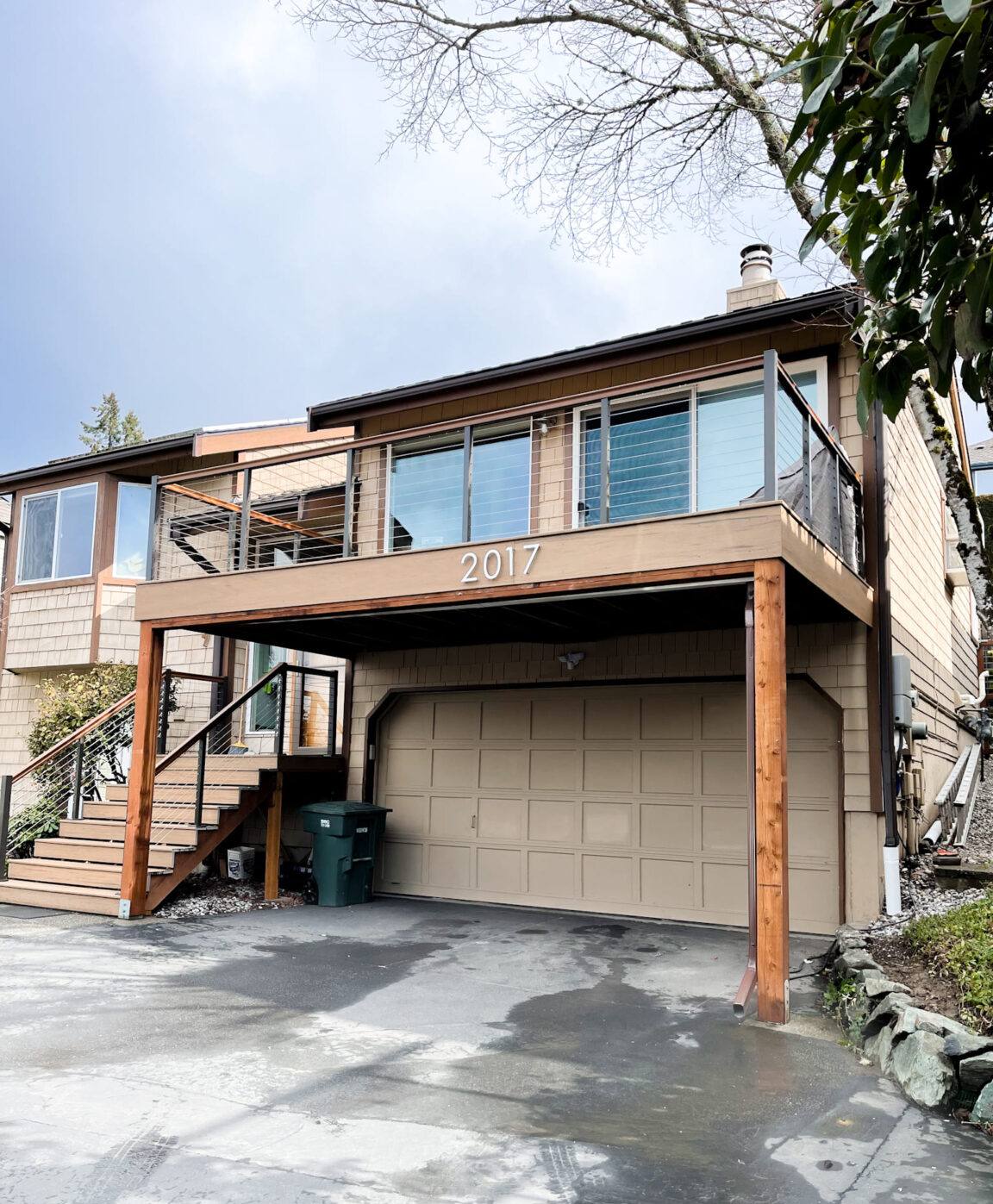
Where Semiahmoo Decks Actually Fail First
Ledger Board and House Connection
The ledger board — where the deck attaches to the house — is the single most important structural connection on most decks, and it's also the part most exposed to wind-driven rain in a waterfront setting. Flashing that was installed correctly ten or fifteen years ago can still fail as caulking shrinks and sealant joints open up. Once water gets behind that ledger, rot spreads quietly between the deck and the house framing, often with no visible sign until boards start to feel spongy or the deck develops a slight sag near the house.
Fasteners and Hardware
Salt air corrodes standard galvanized fasteners and joist hangers faster than most homeowners expect. We regularly find hardware on Semiahmoo decks that's rusted, weakened, or partially failed well before the wood around it shows obvious damage. Corroded joist hangers and pull-out screws are a structural issue, not a cosmetic one — they're often the actual reason a deck feels bouncy or unstable.
Moss, Algae, and Trapped Moisture
Long moss season here means horizontal deck boards, especially in shaded or north-facing areas, stay damp far longer than they would in a drier climate. That constant moisture accelerates wood rot and, on composite decking, can allow mold and mildew to take hold in the surface texture. Gaps between boards that have swollen shut trap debris and moisture instead of letting water drain through, which speeds up the problem it's supposed to prevent.
Railings and Guard Posts
Railing posts anchored into or through the deck framing are a common weak point because they concentrate stress at a single connection point that's also exposed to the weather. Loose, wobbly, or visibly leaning rail posts are a safety issue we treat as a priority, not a minor punch-list item.
What a Correct Deck Repair Actually Involves
A repair that lasts starts with an honest structural assessment, not just a look at the surface boards. We check the ledger connection and flashing, probe joists and beams for soft spots, inspect hardware for corrosion, and test railings for movement before we talk about what needs replacing.
- Probing suspect framing members with an awl or screwdriver to find soft, rotted wood hidden under paint or stain
- Checking ledger board flashing and the seal where the deck meets the house siding
- Inspecting joist hangers, post bases, and structural fasteners for rust and corrosion, not just visible cracks
- Testing railing posts and guard systems for lateral movement
- Evaluating drainage — whether water is actually shedding off the deck or pooling and sitting
- Confirming footings and posts are still sound below the deck surface where accessible
Once we know what's actually wrong, the fix matches the problem. Localized rot gets sistered or the affected members get replaced outright — we don't just sister over wood that's too far gone to hold a fastener securely. Corroded hardware gets swapped for fasteners and connectors rated for coastal, high-moisture exposure, which matters more here than it would on an inland deck. Ledger flashing gets corrected, not just re-caulked over the same failure point. And decking boards that are cupping, splitting, or holding moss get replaced with proper drainage gaps so water actually clears the surface instead of sitting on it.
Repair or Replace: How We Help You Decide
Not every deck problem calls for a full rebuild, and not every deck is worth patching indefinitely. The honest answer depends on how much of the structure is affected versus how much is cosmetic.
| Situation | Usually Repairable | Usually Needs Replacement |
|---|---|---|
| Isolated rot in a few boards or one joist | Yes — targeted replacement | No |
| Widespread rot across framing and decking | No | Yes — full or near-full rebuild |
| Corroded but structurally intact hardware | Yes — hardware swap | No |
| Ledger board rot at the house connection | Sometimes — depends on extent | Often, if rot has spread into house framing |
| Cosmetic graying, staining, or surface moss | Yes — cleaning and refinishing | No |
| Deck is 25+ years old with recurring structural issues | Case by case | Often more cost-effective long term |
We'll tell you plainly when a repair makes sense and when you'd be spending money to delay a rebuild you'll need in a few years anyway. That's a judgment call best made in person, looking at your actual framing.
Materials That Hold Up on the Bay
Material choice matters more on a waterfront deck than it does further inland. Pressure-treated framing lumber is standard, but the fasteners, hangers, and connectors tying it together need to be rated for coastal and high-moisture exposure — standard hardware corrodes faster here than the manufacturer's general ratings would suggest. For decking surfaces, both quality wood and composite products can perform well, but each comes with real trade-offs worth understanding before you decide.
Wood decking is more affordable up front and easy to spot-repair board by board, but it needs regular cleaning, sealing, and moss removal to hold up through our wet season — skip that maintenance for a couple of years and you'll see it. Composite decking resists rot and doesn't need staining, but it isn't maintenance-free either; it still needs periodic cleaning to keep algae and mold from taking hold in the surface texture, and it comes with a wider range of quality and warranty structures across brands. We'll walk you through what fits your deck, your budget, and how much upkeep you actually want to do.
Why It Matters That We Already Work in Semiahmoo
A contractor who's worked decks in Semiahmoo and along the Blaine waterfront already knows what standard construction practices from a drier region tend to miss here — where wind-driven rain actually hits, how fast salt air chews through unprotected hardware, and how long moss holds moisture against a horizontal surface before it becomes a rot problem. That local experience shows up in the details: the flashing detail at the ledger, the hardware spec we reach for, and the drainage gaps we build into the decking layout. It's the difference between a repair that holds up through a few more Whatcom County winters and one that reopens the same problem in three years.
What to Watch For Between Now and Your Next Inspection
- Boards that feel soft, spongy, or flex underfoot in specific spots
- Visible gaps or cracking in the caulk line where the deck meets the house
- Rust streaks below fasteners or hardware
- Railings or posts that wobble or shift when pushed
- Standing water or slow drainage after rain instead of water shedding off the edges
- Persistent moss or dark staining on the same boards year after year
- A noticeable slope, sag, or separation where the deck meets the house
Catching any of these early is almost always cheaper than waiting until the problem is structural.
Our Process, Start to Finish
We start with an on-site inspection where we actually get under the deck and probe the framing, not just walk the surface. You get a plain-language explanation of what we found, what's structural versus cosmetic, and a written estimate that separates repair options from replacement so you can make an informed call. Once you approve the scope, we schedule the work around Whatcom County's weather windows, source materials suited to a coastal environment, and complete the repair with the same attention to flashing, drainage, and hardware we'd want on our own deck. We stand behind the work and will tell you honestly if something we find mid-repair changes the scope.
Get an Honest Look at Your Deck
If your Semiahmoo deck has soft spots, rusting hardware, wobbly railings, or just isn't draining the way it should, it's worth getting an honest assessment before another wet season adds to the damage. We offer free, no-pressure estimates — use the form below to get started.