 Blaine Window
 Why California Creek Roofs Take a Different Kind of Beating
California Creek sits close enough to the water and open enough to weather that roofs here see a combination most inland Whatcom County homes don't deal with: salt-laden wind off the Strait, driving rain that comes in sideways during winter systems, and a moss season that runs long and wet for months at a stretch. None of these on their own is unusual for Blaine. Together, and repeated year after year, they wear a roof down faster than the manufacturer's warranty paperwork suggests they will.
Storm damage in this neighborhood rarely shows up as one dramatic event. More often it's a windstorm that lifts a few shingle tabs, followed by weeks of rain finding that opening before anyone notices a stain on the ceiling. By the time the damage is visible from inside the house, it's usually been developing for a while. That's the pattern we plan around when we work on roofs out here.
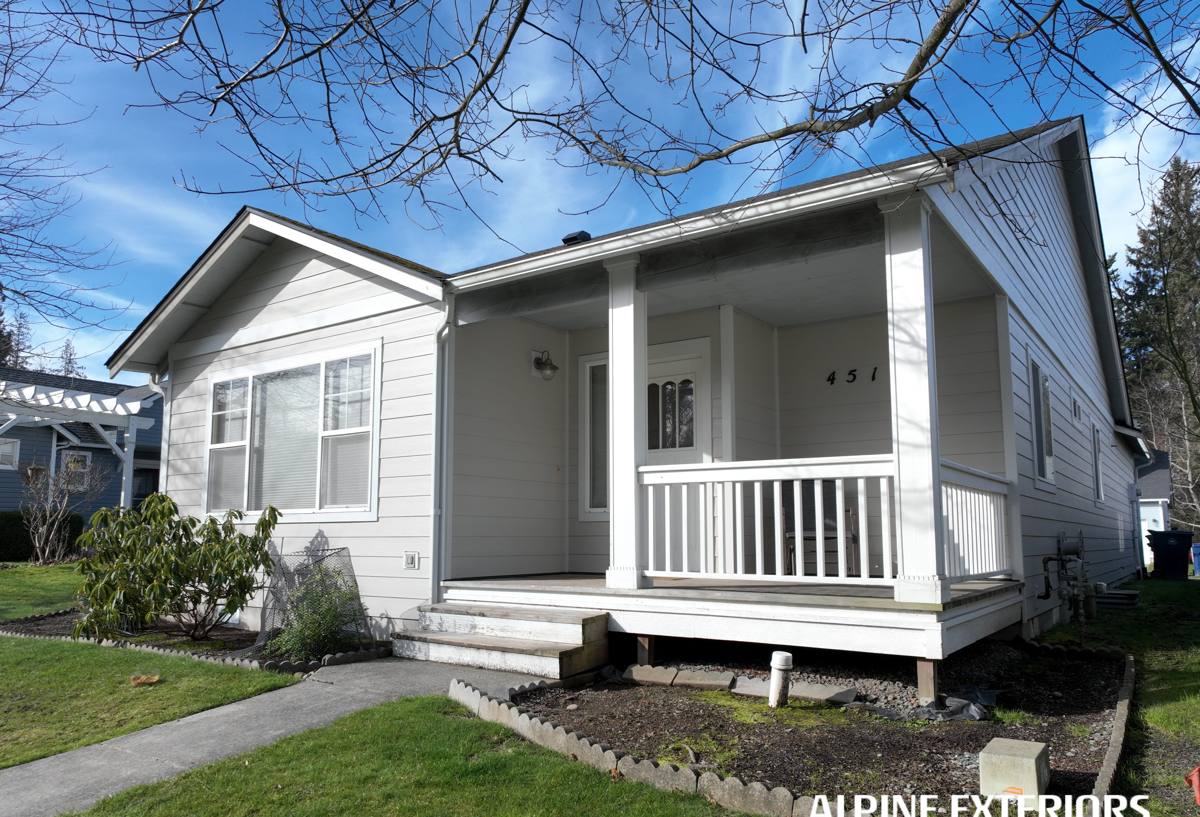
What Actually Damages Roofs in This Area
Wind and Gusting
Storms moving through the Strait of Georgia funnel wind that can gust well above the sustained speed reported for the day. California Creek's exposure means roofs here catch more of that uplift than homes tucked into more sheltered parts of Blaine. Wind damage usually starts at the edges — ridge caps, rake edges, and the first few courses of shingles nearest a roof's perimeter, since those are the areas with the least overlap holding them down.
Driving Rain
Wind-driven rain doesn't behave like a normal downpour. It pushes water sideways and even slightly upward under shingle tabs, around flashing, and into any gap that a calm-weather roof would never leak from. A roof that's watertight in a straight-down rain can still leak badly in a wind-driven storm if the underlayment, flashing, or fastening isn't done to handle it.
Long Moss Season
Blaine's mild, wet winters and shaded lots around California Creek give moss a long growing window — often close to eight or nine months of the year when conditions stay damp enough for it to spread. Moss holds moisture directly against the shingle surface, and as it grows it works its rhizoids under shingle edges, lifting them just enough for wind and rain to get underneath. A moss-covered roof isn't just cosmetic; it's a roof that's already been pre-weakened before the next storm even arrives.
Salt Air
Proximity to saltwater accelerates corrosion on exposed metal — nail heads, flashing, vent caps, and gutter hardware. Once that hardware starts to corrode, fasteners lose their grip and flashing seams open up, both of which turn an otherwise sound roof into one that's vulnerable in the next windstorm.
Signs of Storm Damage Worth Checking After a Blow
- Shingle tabs curled up, cracked, or missing entirely, especially along ridges and edges
- Granules collecting in gutters or at downspout outlets after a storm
- Soft spots or slight sagging when walking the attic or viewing the roof deck from inside
- New or spreading water stains on ceilings or in the attic, particularly near chimneys, vents, or valleys
- Flashing that looks bent, lifted, or separated from the roof plane around chimneys and skylights
- Debris — branches, needles, moss clumps — packed into valleys or against the downhill side of roof features
- Gutters pulling away from the fascia or sagging under storm debris weight
Homeowners don't need to get on the roof to check most of these. A pair of binoculars from the ground and a walk through the attic with a flashlight covers the majority of it safely.
What a Correct Storm Damage Repair Actually Involves
A lot of storm repair work in this region gets done as a patch — a few shingles swapped, a bead of sealant run around a flashing edge, done. That approach holds for a season or two and then fails again, usually in the next big wind event. A repair that's actually going to last through another Blaine winter needs to address the whole assembly, not just the visible symptom.
Our Process
- Ground and roof-level assessment. We look at the whole roof, not just the area that's obviously damaged — wind and moss damage both tend to be worse than what's visible from one spot.
- Underlayment and deck check. Where shingles have lifted or been torn off, we check the underlayment and decking underneath for water intrusion before covering anything back up. Repairing over a wet deck just traps the problem.
- Matching materials. We match shingle type, color line, and exposure as closely as the existing roof allows so repairs blend in rather than standing out as an obvious patch.
- Flashing and fastening review. Since salt air accelerates hardware corrosion here, we check flashing and fasteners in the repair area and replace anything showing early corrosion rather than leaving it to fail again in a year.
- Moss and debris clearing. If moss contributed to the damage, we clear it from the repair zone and talk through options for slowing regrowth, since re-covering over live moss just restarts the same failure.
- Final water test where warranted. On repairs involving valleys, flashing, or multiple penetrations, we run water over the area to confirm it sheds correctly before calling the job done.
Repair vs. Replacement: How We Make the Call
Not every storm-damaged roof needs to come off. But a roof that's already near the end of its service life, or that's taken damage in several unrelated areas, often makes more financial sense to replace than to keep patching. We walk homeowners through the honest version of that math rather than defaulting to whichever answer is more work for us.
| Factor | Leans Toward Repair | Leans Toward Replacement |
|---|---|---|
| Roof age | Under roughly 12-15 years | Approaching or past expected shingle lifespan |
| Damage location | Isolated to one section or slope | Scattered across multiple areas of the roof |
| Deck condition | Dry, solid decking under the damaged area | Soft, delaminated, or water-stained decking found during inspection |
| Moss history | Light, recent moss growth | Years of heavy moss with visible shingle lifting across the roof |
| Shingle match | Close match available for a clean patch | Discontinued shingle line, patch would be visibly mismatched |
Working With Insurance on a Storm Claim
Most storm damage repair in Whatcom County goes through homeowners insurance, and the process goes more smoothly when the documentation is solid from the start. We photograph and describe the damage clearly enough to support a claim, and we're glad to meet an adjuster on-site to walk the roof together and explain what we're seeing. We won't inflate a scope of work to pad a claim — that's not a service we offer, and it isn't in a homeowner's long-term interest either. Our job is to document what's actually damaged and repair it correctly.
Why Local Experience on This Roof Type Matters
California Creek's mix of salt exposure, wind funneling, and moss pressure isn't something every roofing crew accounts for. A contractor who mostly works drier, more sheltered inland areas may not think to check corroding fasteners on a two-year-old flashing repair, or may not recognize how far moss has already undermined a shingle course before it's visibly lifted. Working this neighborhood regularly means we've seen how these specific conditions play out over years, not just at the moment of a single repair, and we build that into how we assess and fix a roof rather than treating every storm call the same.
Maintenance That Reduces Storm Damage Before It Happens
- Have moss treated or removed on a schedule that matches how shaded and damp the roof actually is — heavier growth areas need attention more than once a year
- Keep gutters and downspouts clear so wind-driven rain has somewhere to go instead of backing up under the roof edge
- Trim back branches that overhang the roof, since falling limbs are one of the more common causes of storm damage in tree-covered Blaine lots
- Have flashing and fastener hardware checked periodically given how much faster salt air corrodes exposed metal here
- Get a post-storm walk-around after any significant wind event rather than waiting for a ceiling stain to appear
None of this prevents every storm from doing damage, but it meaningfully reduces how often small damage turns into a bigger repair.
Get a Straight Assessment
If a recent storm has you wondering whether your California Creek roof needs attention, or you've noticed moss, missing shingles, or a stain that wasn't there before, we're happy to take a look. The estimate is free, there's no pressure attached to it, and if the roof doesn't need work, we'll tell you that too. Fill out the form below and we'll get in touch to schedule a time.