 Blaine Window
 Windows on Birch Point Take a Different Kind of Beating
Birch Point sits right up against the water, and that changes what a window has to survive out here. It's not just rain — it's salt-laden air moving off the bay, wind that drives moisture sideways into siding and trim, and a wet season that runs long enough for moss and algae to get a foothold on anything that stays damp. A window that would do fine set back a few miles inland in Whatcom County can start showing problems years earlier when it's facing open water.
Salt air is the part homeowners underestimate most. It doesn't just sit on the glass — it settles into hardware, fasteners, and any exposed metal, working corrosion into places you can't see until a window starts sticking, a lock stops aligning, or a frame corner shows staining that wasn't there last year. Add driving rain that hits the wall at an angle instead of falling straight down, and you've got moisture testing every seam, every piece of flashing, and every bead of sealant far harder than a standard install ever gets tested.
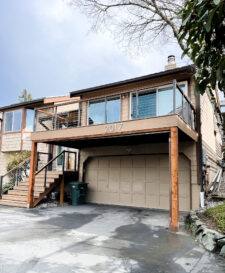
Signs a Birch Point Home Needs Window Replacement, Not Just Repair
Some window problems out here are cosmetic. Others are early warnings that water has already gotten past the glass and into the wall assembly. Knowing the difference matters before you spend money on the wrong fix.
- Fogging or condensation between panes — the seal has failed and the insulated glass unit needs replacing, not just cleaning
- Soft or spongy trim and sill wood, especially on the side of the house facing the water or prevailing wind
- Persistent moss, algae, or black streaking on sills and lower sashes that comes back within weeks of cleaning
- Hardware that's stiff, corroded, or won't latch fully — a common early sign of salt exposure on metal components
- Drafts or a noticeable temperature drop near the window on windy days, even with the sash fully closed
- Visible daylight or gaps around the frame, or caulk that's cracked, shrunk, or pulled away from the siding
Any one of these can be worth a look on its own. Several showing up together on the same wall usually means the window and the flashing behind it are due for a real replacement.
What a Correct Window Replacement Involves Here
In a coastal microclimate like Birch Point, the window unit itself is only part of the job. How it's installed determines whether it holds up. A correct replacement addresses the whole opening, not just the frame.
Moisture Management Comes First
Before a new window goes in, the opening needs a sloped sill pan and properly lapped flashing so any water that reaches the rough opening drains back out — not into the wall cavity. This step matters more here than almost anywhere else in the region, because wind-driven rain pushes water into gaps that a calm-weather install might never expose.
Sealant and Hardware That Match the Environment
We use sealants rated for the movement and moisture cycling a waterfront wall goes through, and we pay attention to hardware finishes that resist salt corrosion better than standard-grade components. It costs a little more up front and saves a callback in three years.
Fastening and Fit
A window that's shimmed and fastened correctly stays square, which keeps weatherstripping compressing evenly and locks aligning. A racked or poorly shimmed frame is one of the most common reasons a "good" window starts leaking or drafting within a couple of seasons.
Choosing Materials for a Salt Air, High-Wind Setting
There's no single "best" window material for every home — it depends on exposure, budget, and how much upkeep you want to take on. Here's how the common options hold up specifically in a Birch Point coastal setting.
| Material | Salt Air Behavior | Maintenance | Best Fit |
|---|---|---|---|
| Vinyl | Resists corrosion well; frame itself doesn't rust | Low — occasional rinsing to clear salt film | Most homes, best value for the exposure |
| Fiberglass | Very stable in temperature swings and salt exposure; minimal expansion/contraction | Low | Homes with the most direct water exposure or wind loading |
| Wood-clad | Exterior cladding protects the wood, but any breach at joints or corners lets moisture reach the wood core | Higher — requires more diligent caulk and finish upkeep near the coast | Homeowners who want a wood interior look and are committed to maintenance |
| Aluminum | Prone to corrosion and pitting in salt air unless heavily treated; also a poor thermal performer | Higher | Not our recommendation for direct waterfront exposure |
We install vinyl and fiberglass most often on Birch Point projects because they hold up with the least ongoing maintenance burden in this specific environment. If you want a wood-clad look, we'll walk through what that upkeep actually requires so there are no surprises — it's a legitimate choice, just one that asks more of the homeowner near open water.
Glass Packages Worth Considering
Beyond the frame, the glass package matters for comfort and condensation control. Double-pane with a low-E coating is the baseline we'd recommend for this area; homes with more direct wind or water exposure often benefit from upgraded gas fills or triple-pane in the coldest, windiest rooms. We'll talk through what actually makes sense for your specific exposure rather than upselling a package you don't need.
Our Process for a Birch Point Job
- On-site assessment — we look at existing window condition, flashing history, and which walls take the most wind and water exposure
- Honest scoping — some windows may need full replacement, others repair; we tell you which is which
- Material and glass selection — matched to your budget and this site's actual exposure, not a one-size template
- Removal and opening prep — old units come out carefully, and we inspect the rough opening and sheathing for hidden moisture damage before anything new goes in
- Flashing and sill pan installation — the step that determines long-term performance more than any other
- Window installation, shimming, and fastening — set square, sealed, and secured
- Exterior trim and sealant finish — using products rated for this climate
- Final walkthrough — operation check, cleanup, and a plain-language rundown of what we did
Maintaining Windows in a Coastal Whatcom County Setting
Even a correctly installed window benefits from a little seasonal attention out here. This isn't about babying the product — it's about not letting salt film and moss get a head start.
- Rinse exterior glass and frames periodically to clear salt residue, especially after storms
- Check and clear sills and tracks of moss or algae before it stains or holds moisture against the frame
- Inspect exterior caulk lines once a year for cracking or separation, particularly on wind-facing walls
- Test locks and hardware seasonally — stiffness is often the first sign of corrosion starting
- Keep gutters and downspouts clear so runoff isn't sheeting down across window heads
Why a Crew That Already Works This Area Matters
Window installation isn't the same job everywhere in Whatcom County, and Birch Point isn't the same as installing a few miles inland. A crew that's worked this stretch of coastline already knows which walls take the worst of the wind-driven rain, how fast moss reestablishes on shaded sills near the water, and which flashing and sealant details actually hold up against salt exposure versus which ones look fine on install day and fail two winters later. That's knowledge you don't get from a general install checklist — it comes from doing the work here, seeing what comes back as a callback, and adjusting.
We're a Blaine-based crew, and Birch Point is part of our regular service area — not a stretch job we take occasionally. That matters when it comes to scheduling around weather windows, sourcing the right materials for coastal exposure, and standing behind the work after the job's done.
What Window Replacement Typically Costs to Consider
Every home and opening is different, so we don't quote sight unseen — but here are the main factors that move the price up or down on a Birch Point project.
| Factor | Why It Matters |
|---|---|
| Window count and size | More or larger openings mean more material and labor |
| Material choice | Vinyl is the most economical; fiberglass and wood-clad cost more up front |
| Existing damage | Rotted sheathing or framing found during removal adds repair scope |
| Exposure level | Walls with the most direct wind/water exposure may warrant upgraded flashing or glass details |
| Access | Waterfront lots and multi-story openings can affect labor and equipment needs |
We'd rather walk your home and give you real numbers than throw out a broad range that doesn't reflect your actual exposure and window count.
Get a Straight Answer for Your Home
If your windows are fogging, sticking, drafting, or just showing their age faster than you expected, it's worth a look before another wet season adds to the damage. We'll walk your home, tell you honestly what needs replacing versus what can wait, and put together a clear estimate — no pressure, no upsell. Fill out the form below to get a free estimate for your Birch Point property.