 Blaine Window
 Roofing Near the Peace Arch: A Different Set of Demands
Homes in the Peace Arch area of Blaine sit about as close to the water and the border as you can get in Whatcom County, and that location shapes what a roof has to survive here. Salt-laden air off the Salish Sea works into fasteners, flashing, and metal components year-round. Driving rain off winter storms doesn't just fall straight down — it gets pushed sideways into eaves, valleys, and vents by wind coming off open water. And the mild, wet stretch that runs from fall through late spring gives moss and moisture months to work into a roof that isn't detailed correctly. None of this means a roof here needs to be exotic. It means the ordinary parts of the job — underlayment, flashing, ventilation, fastener choice — have to be done right every time, because this climate finds every shortcut eventually.
We install roofs across Blaine and the rest of Whatcom County, but the Peace Arch area gets its own approach. Houses this close to the water and to Peace Arch State Park tend to be more exposed to wind-driven rain and salt air than homes further inland, so we lean toward materials and details that specifically resist those two things, not just a generic "coastal Washington" spec.
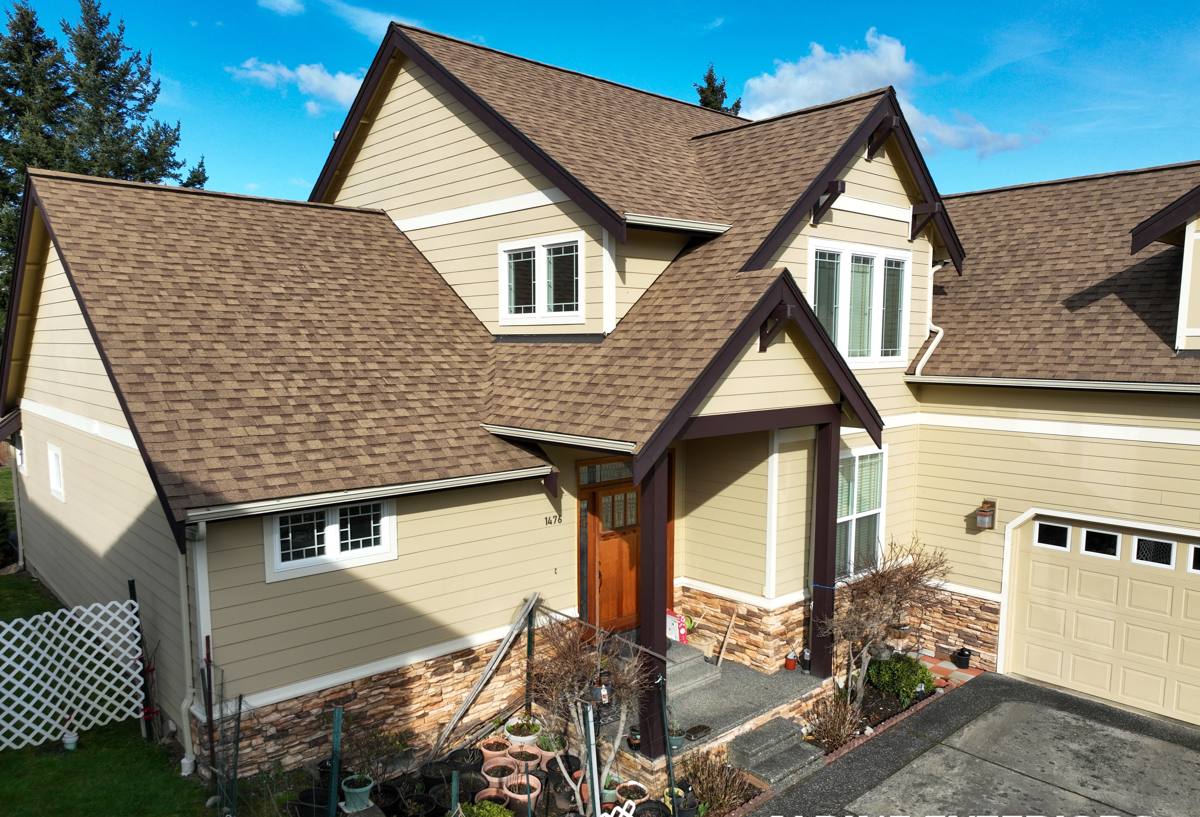
What Peace Arch Homes Actually Need From a New Roof
Salt Air Resistance
Salt air accelerates corrosion on any exposed metal — nails, flashing, vent stacks, gutter hardware. A roof installed with the wrong fastener or flashing metal can start showing rust streaks and weak points years before it should. We spec corrosion-resistant fasteners and flashing metals for homes in this zone, not because code requires it everywhere, but because it's the difference between flashing that lasts the life of the roof and flashing that needs attention in year eight.
Driving Rain Control
Wind-driven rain doesn't respect the simple "water runs downhill" logic that a lot of roofing details assume. It can push under shingle tabs, through poorly lapped underlayment, and into valleys that weren't given enough width. A correct install for this area uses full underlayment coverage, self-adhering membrane at the eaves and valleys, and flashing laps oriented and sized for wind-driven exposure — not just the minimum a shingle manufacturer's spec sheet requires for a calm inland site.
Moss and Moisture Management
Whatcom County's long wet season is exactly what moss needs to establish itself, and once moss gets a foothold on a roof it holds moisture against the surface, lifts shingle edges, and shortens the roof's life. New installation is the best time to build in moss resistance — proper ventilation to keep the deck dry, and where appropriate, zinc or copper strips near the ridge that release trace metal ions with every rain to discourage regrowth.
Comparing Roofing Materials for This Location
| Material | Salt Air Behavior | Moss Resistance | Typical Lifespan Here |
|---|---|---|---|
| Architectural asphalt shingle | Good with corrosion-resistant fasteners and flashing | Moderate — benefits from zinc/copper strips and good airflow | 20–30 years |
| Standing seam metal | Very good with proper coating/finish; avoid dissimilar-metal contact | High — sheds moisture fast, little surface for moss to grip | 40–50+ years |
| Synthetic/composite shingle | Good — non-corroding material body, still needs quality flashing | Moderate to high depending on product | 30–50 years |
| Cedar shake | Requires diligent maintenance in salt/moisture exposure | Low without regular treatment — highest upkeep of the group | 20–30 years with upkeep |
None of these is wrong for a Peace Arch home — the right choice depends on your budget, your roofline, and how much long-term maintenance you want to take on. We'll walk through the honest trade-offs for your specific roof rather than pushing one product line. Cedar shake, for example, can look great here, but it demands more upkeep in this climate than most homeowners want to sign up for, and we'll say so plainly rather than let you find out the hard way.
What a Correct Installation Actually Involves
A new roof is more than laying shingles or panels over the old ones. For this area, the details underneath the visible surface are what determine whether the roof performs for its full expected life:
- Full tear-off to bare deck so we can inspect and repair any rot or soft spots before covering them up
- Deck repair or replacement wherever moisture has already gotten in
- Ice-and-water shield membrane at eaves, valleys, and around every penetration — not just where code minimums require it
- Synthetic underlayment across the full deck for a secondary water barrier under the primary roofing material
- Corrosion-resistant flashing at all walls, chimneys, skylights, and roof-to-roof transitions
- Balanced intake and exhaust ventilation sized to the attic volume, not just a token ridge vent
- Zinc or copper moss-control strips near the ridge on shingle roofs, when appropriate for the design
- Properly lapped drip edge and gutter apron to direct wind-driven rain away from the fascia
Skip any one of these and the roof can still look fine for a few years — the problems this climate causes are slow ones. That's exactly why they're easy to shortcut and expensive to discover later.
Our Process, Start to Finish
1. On-Site Assessment
We walk the roof and the attic, not just the ground-level view. Attic ventilation, deck condition, and existing moisture damage all get checked before we write a scope, because those are the things that determine what the job actually needs.
2. Material and Scope Walkthrough
We go over material options, the flashing and ventilation plan, and a realistic cost range in plain terms — what's driving the price, and where you have real choices versus where the climate here doesn't leave much room to cut corners.
3. Permit and Scheduling
Re-roofing in Blaine requires a permit through the City, and we handle that as part of the job. We also build the schedule around Whatcom County's weather patterns — dry-in work gets prioritized so your home isn't exposed to an open deck when a system rolls in off the water.
4. Tear-Off and Deck Inspection
Old roofing comes off down to the deck, and we address any rot or damage we find before anything new goes down. This is also when we confirm the ventilation plan matches what the attic actually needs.
5. Installation
Underlayment, flashing, ventilation components, and the finish material go in following the sequence and lap patterns built for wind-driven rain exposure — not a generic install order.
6. Final Walkthrough
We go over the finished roof, the ventilation setup, and basic maintenance expectations with you before we call the job done.
Ventilation: The Part Homeowners Usually Don't See
Attic ventilation gets overlooked because it's invisible from the street, but it's one of the biggest factors in how long a roof lasts in this climate. Warm, moist air trapped in an attic condenses on the underside of the deck, which rots sheathing from the inside and keeps the roof surface damper than it needs to be — feeding the exact moss problem this area already fights from the outside. Balanced intake at the eaves and exhaust at the ridge keeps air moving through the attic, which keeps the deck dry and the shingles or panels performing the way they're rated to. We size ventilation to your actual attic, not a one-size formula, because undersized or unbalanced systems are common on older Blaine homes that were built before current ventilation standards.
Keeping a New Roof in Good Shape
A correctly installed roof still benefits from a little attention, especially this close to the water:
- Clear gutters and downspouts at least twice a year — clogged gutters back water up under the eave edge
- Have moss growth removed gently in early stages rather than waiting until it's established and lifting shingles
- Trim back overhanging branches that keep the roof shaded and slow to dry after rain
- Walk the attic once a year and check for daylight, damp insulation, or musty smell — early warning signs of a flashing or ventilation issue
- Have flashing and fastener condition checked after any major windstorm off the water
Why a Crew That Already Works Peace Arch Makes a Difference
A roofing crew that regularly works this specific pocket of Blaine already knows which details matter here — how far wind-driven rain travels up a roof slope near the water, which fastener and flashing choices actually hold up to salt exposure over years rather than months, and how long the moss season really runs in Whatcom County. That's different knowledge than a crew that mostly works drier, more inland jobs and treats this as a standard install. It shows up in the small decisions — how wide a valley is flashed, how much ventilation an attic actually gets, where the moss-control strips go — that don't show up on a spec sheet but do show up in how the roof performs ten and twenty years out.
If you're planning a new roof for a home near the Peace Arch area, we're glad to come take a look, walk the attic and the roofline with you, and put together a straightforward estimate — no pressure, no upsell script, just an honest read on what your roof needs. The form below gets you started.