 Blaine Window
 Why Sandy Point Windows Wear Out Faster Than Most
Sandy Point sits low and close to the water, and that location cuts both ways. It's part of what makes the neighborhood desirable, and it's also what puts extra stress on every window in the house. Homes here take more direct wind off the water than homes set back in town, and that wind carries salt air onto glass, frames, and hardware year-round — not just during storms. Add Whatcom County's long, wet winter season and you get a combination that's harder on windows than almost anywhere else in the county: salt film pitting finishes and corroding metal parts, driving rain testing every seal at the frame, and months of damp, shaded conditions that let moss and algae take hold on north-facing trim and sills.
None of that means windows in Sandy Point need to fail early. It means they need to be selected and installed with that exposure in mind. A window that performs fine on a sheltered lot inland can start showing problems here within a few years — fogged glass, sticking sashes, corroded locks, soft trim — if it wasn't built and installed for salt air and sustained moisture in the first place.
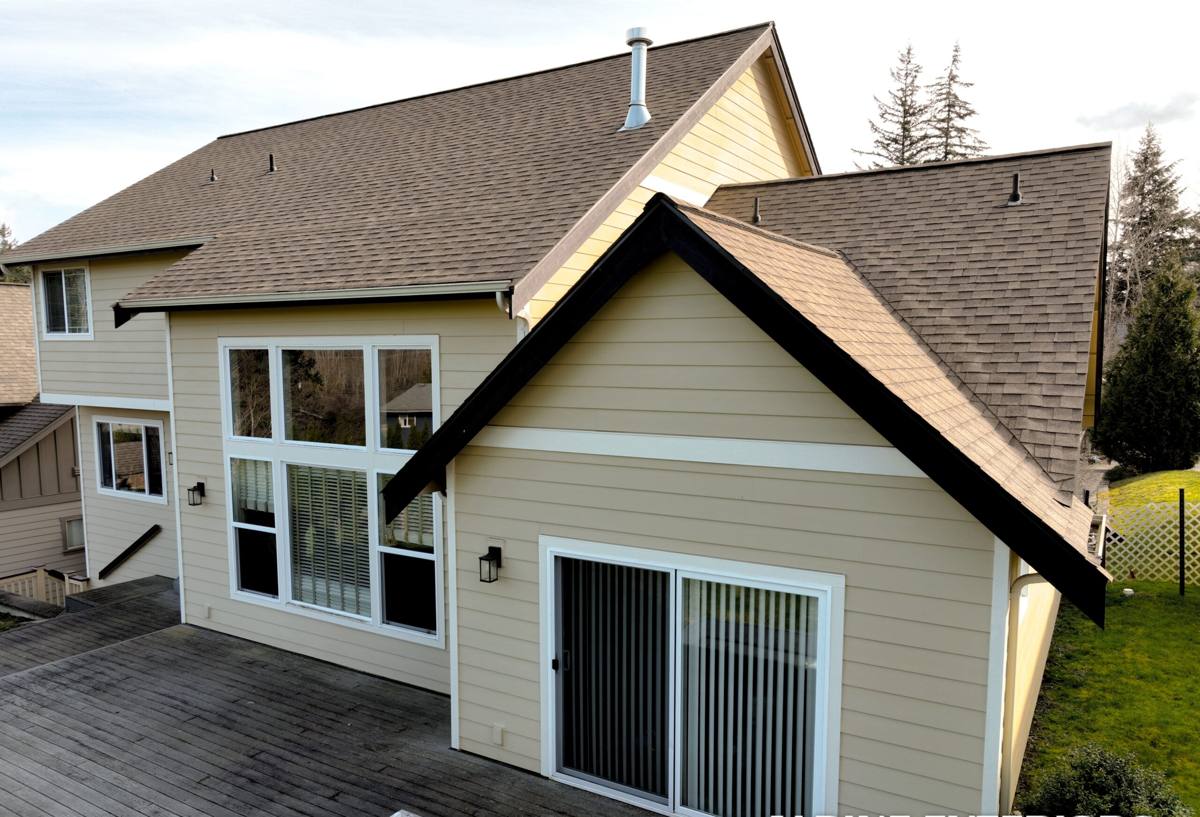
What "Energy-Efficient" Actually Means in This Climate
Energy efficiency isn't a single feature — it's a combination of glass, frame, and installation working together. For a Sandy Point home, that combination has to handle two jobs at once: keeping heat in during the cold, wet months, and keeping wind-driven moisture and salt spray out.
The glass package
Double-pane glass with a low-e coating and an argon or krypton gas fill is the baseline for this area — it cuts heat loss through the glass and reduces the cold, drafty feeling you get standing near an older single or dim double-pane unit. The U-factor (how much heat escapes) and the SHGC (how much solar heat gets in) both matter, but for Blaine's marine climate, U-factor usually carries more weight than it would somewhere sunnier, since the priority is keeping heat in during long overcast stretches.
The frame and seal
Glass is only half the equation. A well-rated window with a poor seal or a frame that's degrading from salt exposure will underperform a modest window installed correctly. This is where a lot of "energy-efficient" replacements disappoint homeowners — the glass numbers look good on paper, but drafts and condensation show up anyway because the frame-to-wall connection wasn't sealed and flashed for this exposure.
Frame Materials: What Holds Up Near the Water
Frame choice matters more in Sandy Point than in most Whatcom County neighborhoods, because salt air and sustained dampness are harder on some materials than others. There's no single "best" frame for every home — it depends on your budget, your home's style, and how much exposure your specific windows get.
| Frame Material | How It Handles Salt Air & Moisture | Maintenance | Typical Trade-Off |
|---|---|---|---|
| Vinyl | Won't corrode or rot; performs well against salt and rain | Low — occasional rinse and cleaning | Limited color options; can't be repainted |
| Fiberglass | Excellent — very stable, resists salt pitting and moisture movement | Low | Higher upfront cost |
| Aluminum-clad wood | Good on the exterior, but hardware and any exposed wood need attention | Moderate — watch for wear points and seal failure | Better look for some homes; more sensitive to installation quality |
| Bare wood | Poor without diligent upkeep — this exposure accelerates rot and finish failure | High — regular repainting/resealing | We don't recommend it for direct waterfront exposure |
We steer most Sandy Point clients toward vinyl or fiberglass on the water-facing sides of the house, simply because it's a lower-maintenance decision — not because wood-framed windows are a bad product. If you want the look of wood on the interior, clad options can give you that without putting bare wood into salt spray.
Signs Your Current Windows Are Losing the Battle
Salt air and moisture damage windows gradually, so it's easy to miss the early signs until a heating bill or a drafty room forces the issue. Walk your windows — especially any facing the water or prevailing wind — and check for these:
- Fogging or a visible haze between the panes (the seal has failed and the gas fill is gone)
- Hardware — locks, cranks, hinges — that's stiff, pitted, or leaving rust streaks on the sill
- Sashes that are hard to open, close, or lock fully
- Cold air noticeably moving near the frame on a windy day
- Soft, discolored, or spongy trim and sills, especially on north- or west-facing walls
- Moss or dark green growth building up in frame corners or on horizontal trim
- Condensation forming on the inside of the glass in cold weather, even with normal ventilation
Any one of these on its own isn't necessarily urgent. Several of them together, or on multiple windows, usually means it's time to start planning replacement before hardware failure or wood rot turns a window project into a wall repair.
What a Correct Installation Actually Involves
In a climate like this, the install matters as much as the window itself. Most of the leaks and drafts we get called to fix in older replacements weren't caused by a bad window — they were caused by a rushed or incomplete installation that didn't account for wind-driven rain.
Flashing and weatherproofing
Every opening gets properly flashed so water is directed out and away from the wall assembly, not into it. This is non-negotiable near the water, where horizontal, wind-driven rain will find any gap in the flashing that a sheltered inland home might never expose.
Fastening and shimming
The window needs to be shimmed square and plumb before it's fastened — an out-of-square frame stresses the seals and sashes from day one, which shows up years later as sticking or premature seal failure.
Interior and exterior sealing
Exterior sealant keeps bulk water out; interior air-sealing (backer rod and low-expansion foam, not just caulk) stops the draft and moisture transfer that drives condensation and heat loss. Skipping either step is the most common reason a "new" window still feels drafty.
How We Work in Sandy Point
We keep the process straightforward, because homeowners in this neighborhood are usually dealing with a real problem — a drafty room, a fogged window, a sticking lock — not shopping for a project.
- On-site assessment: we look at each window's exposure, current condition, and how the rest of the wall assembly is holding up, not just the glass.
- Product recommendation: we walk through frame and glass options suited to that window's specific exposure — a window facing the water gets different consideration than one on a sheltered wall.
- Written estimate: clear pricing, no pressure, and no guesswork about what's included.
- Installation: proper flashing, shimming, and sealing on every unit, with the work area protected and cleaned up daily.
- Final walkthrough: we check operation, seals, and finish work with you before calling the job done.
What Drives the Cost
Every home is different, but the same handful of factors determine most of the price on a Sandy Point window project. Knowing them ahead of time makes it easier to plan and to compare quotes apples-to-apples.
| Factor | Why It Matters Here |
|---|---|
| Frame material | Fiberglass and higher-grade vinyl cost more upfront but hold up better against salt air over time |
| Glass package | Upgraded low-e coatings and gas fills add cost but pay back in comfort and lower heating bills |
| Number and size of openings | Larger or custom-sized units, common in waterfront homes, cost more than standard sizes |
| Condition behind the old window | Rot or moisture damage found once the old unit is out adds repair scope beyond the window itself |
| Access and site conditions | Second-story or tight-access windows near the water can add labor time |
We give straight numbers during the estimate, including calling out anything that could change once we open up an opening and see what's actually behind the old trim.
Why Local Experience Matters for This Project
Windows are one of the few home components where the same product can perform completely differently depending on where it's installed. A crew that mostly works inland Whatcom County jobs may not think twice about flashing details or hardware finish that matter a lot once you're a short walk from the water. Working regularly in Sandy Point and along Blaine's waterfront means we've already seen how salt air, wind exposure, and this area's wet season affect different frame materials, hardware finishes, and installation details — and we build the project around that from the start instead of learning it on your house.
That local familiarity also shows up in smaller ways: knowing which sides of a typical waterfront lot take the worst weather, recognizing early moss and moisture damage before it spreads, and setting expectations honestly about maintenance so there are no surprises a few years down the road.
Get a Straight Answer for Your Home
If your windows in Sandy Point are fogging, sticking, drafty, or just showing their age, it's worth getting a professional look before deciding what to do. We'll walk your windows with you, tell you honestly what's worth fixing versus replacing, and put together a written estimate with no pressure attached. Use the form below to request a free estimate and we'll get in touch to schedule a time.