 Blaine Window
 Homes in the Peace Arch area sit close enough to the water and the border that their roofs take a beating most inland Whatcom County houses never see. Salt air off the water works on metal fasteners and flashing year-round, driving rain doesn't always fall straight down, and a long moss season keeps roofs damp longer than they'd like to be. Roof repair here isn't a smaller version of a Bellingham repair job — it's a different set of failure points, and a repair that ignores them tends to come back within a season or two. This page covers what actually goes wrong with Peace Arch roofs, what a correct repair involves, and how our process works from the first look to the final check.
Why Roofs Fail Differently in Peace Arch
Three conditions do most of the damage out here, and they rarely act alone — they compound each other.
Salt Air and Corrosion
Airborne salt accelerates rust on anything metal: nail heads, flashing, vent stacks, gutter hardware. A fastener that would last decades forty miles inland can start showing rust streaks within a few years this close to the water. Once a fastener corrodes, the seal around it weakens long before the surrounding roofing material shows any wear — which is why a lot of "mystery leaks" we get called out for trace back to a handful of rusted nail heads rather than a failed shingle.
Driving Rain
Rain in this part of Whatcom County frequently comes in sideways off the water rather than falling straight down. That matters because wind-driven rain finds its way into laps, seams, and flashing details that would stay dry in a calmer storm. Roofs repaired with a minimum-standard patch, rather than one that accounts for wind direction, tend to leak again at the same valley or wall transition the next time a storm blows through.
Moss Season
Shaded slopes and the general dampness of this climate support a long moss and algae season, especially on north-facing roof sections. Moss isn't just a cosmetic problem — it holds water against the roofing surface, lifts shingle edges as it grows, and can work its way under laps that weren't sealed with enough margin. A repair that patches the visible damage but leaves moss in place is usually addressing the symptom, not the cause.
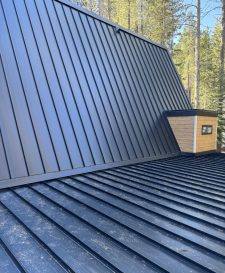
Signs a Peace Arch Roof Needs Repair Now
Some roof problems can wait for a scheduled visit; others shouldn't. Here's how to tell the difference:
- Active dripping or staining on an interior ceiling, especially during or right after a windy rainstorm
- Rust streaks running down from nail heads, flashing, or vent stacks
- Shingles that are cracked, curling, or missing in a specific area rather than spread evenly
- Moss buildup that's thick enough to hold visible moisture against the roof surface
- Soft, spongy decking felt underfoot in one section
- Daylight visible through the roof deck from inside an attic or crawl space
- Granules collecting heavily in gutters after a storm, beyond normal light shedding
- A previous patch or repair that's failed again in the same spot
If more than one of these shows up at once, it's usually a sign the underlying cause — corrosion, a flashing gap, or trapped moisture — hasn't actually been fixed yet, just covered.
Common Repair Types and What They Actually Involve
| Repair Type | What Usually Causes It Here | What Correct Repair Involves |
|---|---|---|
| Flashing repair | Corroded or improperly sealed flashing at chimneys, skylights, vent penetrations, or wall transitions | Removing and replacing the flashing with corrosion-resistant material, integrated with underlayment rather than sealed with caulk alone |
| Shingle replacement | Wind lift from driving rain, granule loss, or storm damage to individual shingles | Matching shingle type and color where possible, and checking the underlayment beneath the damaged area before closing it back up |
| Moss and algae remediation | Long damp season on shaded or north-facing slopes | Careful removal (not aggressive pressure washing that strips granules), followed by addressing the moisture and shade conditions that let it take hold |
| Fastener and hardware repair | Rust from prolonged salt air exposure | Replacing corroded fasteners with marine-rated hardware, not just re-sealing over the existing rusted ones |
| Valley and seam repair | Wind-driven rain finding its way into a poorly lapped or aged seam | Re-lapping or replacing the affected section with attention to water direction, not just patching the visible gap |
What a Correct Repair Looks Like
A repair that only addresses what's visible from the ground or from inside the attic tends to miss the actual cause. Here's what we check on every repair call in this area, whether the job ends up small or larger than expected.
Find the Real Source First
Water travels before it shows up as a stain — a leak that appears over a bedroom ceiling can easily originate several feet away at a flashing point or valley. We trace the path rather than patching the spot directly above the visible damage, since patching the wrong spot means the same leak reappears at the next storm.
Check What's Underneath
Any repair that involves removing shingles or flashing is a chance to look at the underlayment and decking underneath. If we find soft decking or saturated underlayment, we'll tell you before doing anything further — patching over compromised decking just delays a bigger problem.
Match Materials to the Exposure
We use corrosion-resistant fasteners and flashing suited to a marine environment, not standard hardware that will be rusting again within a few years. This costs a little more up front on a small repair but avoids calling us back out for the same fix.
Address Moss at the Cause, Not Just the Symptom
Where moss is part of the problem, we look at what's keeping that section of roof damp — shade from nearby trees, poor airflow, or a low spot that doesn't drain — and flag it, since removing moss without addressing the underlying moisture just buys a season or two before it's back.
Our Repair Process
- Initial assessment. We inspect the roof, trace any leak to its actual source, and check flashing, fasteners, and problem areas rather than just the spot you called about.
- Honest diagnosis. We explain what we found, what's causing it, and what the repair will involve — including if we think a section needs more than a patch.
- Written estimate. You get a clear scope and price before any work starts, with the reasoning behind it.
- Repair work. We replace or repair the affected shingles, flashing, fasteners, or decking to a standard suited for this climate, not a minimum patch.
- Moisture and ventilation check. We confirm nearby ventilation and drainage aren't contributing to the original problem.
- Final walk-through. We go over what was done, what to watch for, and any maintenance that will help the repair hold up.
Repair vs. Replacement: How We Make the Call
Not every roof problem in Peace Arch means a full replacement, and we don't default to recommending one. These are the factors that actually tip the decision one way or the other:
| Factor | Leans Toward Repair | Leans Toward Replacement |
|---|---|---|
| Extent of damage | Isolated to one section, valley, or flashing point | Spread across multiple slopes or recurring in several areas |
| Roof age | Well within expected service life for its material | At or past the manufacturer's rated life for this climate |
| Deck condition | Solid decking found once the damaged area is opened up | Widespread soft spots or rot found during inspection |
| Repair history | First real issue on an otherwise sound roof | Multiple past repairs in different spots, suggesting broader wear |
We'll always tell you honestly which side of that line your roof falls on, even when a smaller repair is the answer.
Why Hire a Crew That Already Works in Peace Arch
A roofer who mostly works drier, more sheltered jobs inland isn't wrong about roofing in general — they're just working from a different set of assumptions. Fastener specs, flashing choices, and moss treatment that hold up fine on a typical inland Whatcom County roof are often undersized for what a roof this close to the water deals with year-round. A crew that's already repaired roofs in Peace Arch and the surrounding Blaine area has seen which details actually fail here, not just which ones fail in general.
That local experience also means we're not guessing at material specs on the fly — we already know which fasteners and flashing hold up against this air, and which moss treatments actually address the shaded, damp spots that keep coming back. That translates into a repair that's built to last in this specific climate, not just wherever the crew's usual jobs happen to be.
Maintaining a Repaired Roof in This Climate
A well-done repair still benefits from some basic upkeep given the conditions here:
- Keep gutters clear so water isn't backing up under roof edges during heavy rain
- Address new moss growth early, before it spreads across a full slope
- Trim back tree cover that keeps a section of roof shaded and slow to dry
- Have flashing points checked after major windstorms, especially ones with rain out of an unusual direction
- Don't ignore a small leak or stain — it's easier and cheaper to trace and fix early than after it's spread
If you're dealing with a leak, storm damage, or a roof that just needs an honest look, we're happy to come take a look. Reach out for a free, no-pressure estimate using the form below.