 Blaine Window
 Point Roberts: Part of Blaine's Territory, Cut Off by Water and a Border
Point Roberts sits at the tip of a peninsula that belongs to Whatcom County and the United States, but it isn't connected to the rest of Washington by land. To reach it by road, you leave Blaine, cross into Canada, drive across a corner of British Columbia, and cross back into the U.S. at the Point Roberts border station. That geography isn't just a curiosity — it puts homes here on a spit of land surrounded on three sides by water, fully exposed to wind and spray coming off Boundary Bay and the Strait of Georgia in a way that more sheltered parts of Blaine simply aren't.
That exposure matters for siding. A wall assembly that holds up fine a few miles inland can fail years early out here if it wasn't built and installed with this specific climate in mind.
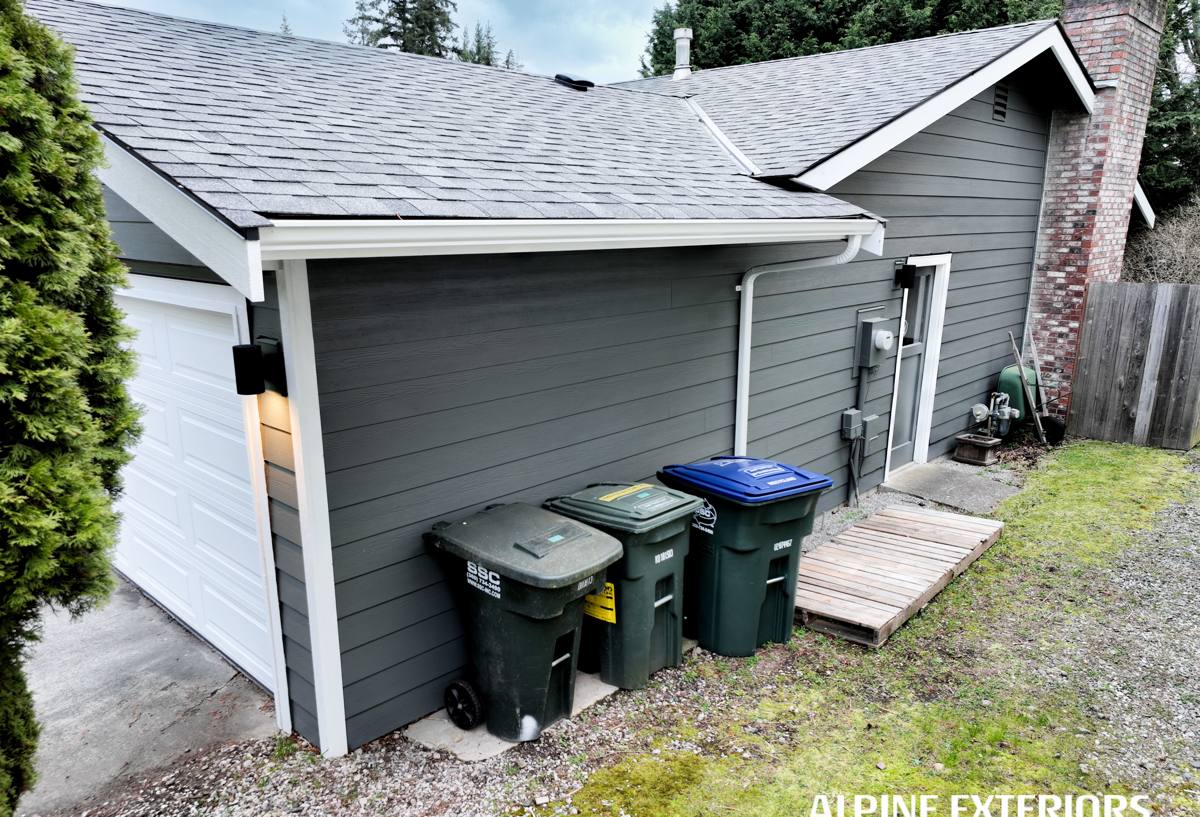
What Salt Air, Driving Rain, and a Long Moss Season Do to Siding
Three things define the wear pattern on Point Roberts homes, and each one attacks siding differently.
Salt air is a slow, steady corrosive. It works into exposed metal fasteners and flashing, breaks down caulk and paint film faster than inland exposure, and accelerates any weak point in a wall assembly. Fasteners and flashing that would last decades elsewhere can start showing rust streaks and failure well ahead of schedule if the wrong materials were used.
Driving rain off the water doesn't fall straight down — wind pushes it sideways, into laps, joints, and trim edges that a calmer climate would never test. Siding here needs real water management behind it, not just a surface that sheds water when it's raining straight down.
Moss season in this part of Whatcom County runs long — roughly fall through spring, sometimes longer on shaded or north-facing walls. Constant dampness lets moss and algae take hold on any siding surface, and on wood-based products that moisture doesn't stay on the surface — it gets absorbed into the material itself, which is where rot starts.
Why We Install James Hardie Fiber Cement — and Only Hardie
We don't install vinyl, LP SmartSide, cedar, or primed spruce siding. That's not a knock on every homeowner who has one of those products on their house — it's a standard we set for our own work after weighing how each of those materials actually performs over time in this climate versus what we're willing to put our name behind.
Wood-based and wood-derived siding — cedar, primed spruce, engineered wood products like LP SmartSide — all share a vulnerability: they're organic material, and organic material that stays damp for months at a time is exactly what rot and fungal growth need. Vinyl doesn't rot, but it can't take the direct impact and UV/salt exposure over decades the way fiber cement can, and it doesn't offer the fire resistance of a cement-based product.
James Hardie fiber cement is manufactured from cement, sand, and cellulose fiber. It's non-combustible, it doesn't feed mold or fungal growth, and it holds its factory-applied ColorPlus finish under UV and salt exposure far longer than field-applied paint holds up on wood trim. It comes backed by a real, transferable product warranty — not a pro-rated one that shrinks the longer you own the house.
The Right Hardie Product for a Marine Exposure
HZ5 — Engineered for This Climate
James Hardie makes climate-specific product lines, and the Pacific Northwest — with its wet winters and freeze risk — calls for the HZ5 line, engineered for exactly this kind of moisture exposure. It's not a one-size-fits-all product; the formulation and installation specs are built around the weather it has to survive.
Lap Siding vs. Panel Siding
HardiePlank lap siding is the traditional horizontal-board look and remains the most common choice for full re-sides. HardiePanel vertical siding is used more selectively — as an accent, on gable ends, or on homes going for a more modern look. Which one makes sense depends on the home's existing lines and how much of the exterior is being replaced versus matched to existing trim.
ColorPlus Factory Finish
ColorPlus finish is baked on at the factory under controlled conditions, which gives it far better adhesion and UV/fade resistance than field-applied paint. It still needs cut edges sealed at every field cut per Hardie's installation spec — that detail is easy to skip and is one of the first things that fails if it's missed.
What a Correct Siding Installation Involves Here
Fiber cement performs the way it's supposed to only if it goes on correctly. In a marine climate like Point Roberts, a few details matter more than they would somewhere drier and calmer.
- A continuous weather-resistive barrier (WRB), properly lapped shingle-style so water is always directed outward, never into a seam
- A rainscreen drainage gap behind the siding, so any moisture that does get past the surface can drain and the wall can dry instead of trapping water against the sheathing
- Flashing at every horizontal break, window and door head, and roof-to-wall intersection — the points wind-driven rain finds first
- Corrosion-resistant fasteners suited to a salt-air environment, driven per Hardie's nailing pattern and fastener spec, not just "close enough"
- Manufacturer-specified gaps at butt joints and trim, sealed with the correct sealant — fiber cement is designed to manage some movement and drainage, and caulking every joint solid works against that
- Sealed field-cut edges before installation, every time, not just on the pieces that are easy to reach
Our Point Roberts Installation Process
- On-site assessment. We look at the existing siding and, once it's off, the sheathing underneath — homes on the peninsula that have had wood or aging vinyl siding for years sometimes have hidden moisture damage that needs to be addressed before new siding goes on, not covered up by it.
- Removal and sheathing check. Old siding comes off, and we inspect and repair sheathing as needed before anything new goes back on.
- WRB and flashing. The weather barrier and all flashing details go in first, since this is the layer that actually keeps water out long-term — the siding itself is the second line of defense.
- Hardie installation. Panels or planks go on to James Hardie's installation spec and applicable code, with attention to fastening, gaps, and clearances.
- Finish work. Caulk at the appropriate joints, paint touch-up at any field-cut edges or trim, and site cleanup.
- Final walkthrough. We go over the finished work with you before calling the job done.
How Fiber Cement Compares for This Climate
| Factor | James Hardie Fiber Cement | Vinyl | Wood / Engineered Wood (LP-style, cedar) |
|---|---|---|---|
| Moisture & rot resistance | Cement-based, doesn't rot or feed fungal growth | Doesn't rot, but seams and J-channels can trap moisture behind the surface | Absorbs moisture; primary failure point in wet marine climates |
| Salt air durability | Factory finish holds up well under UV and salt exposure | Can become brittle over time; color can fade | Paint film breaks down faster; exposed grain absorbs salt-laden moisture |
| Fire resistance | Non-combustible | Combustible, can melt/warp under heat exposure | Combustible |
| Ongoing maintenance | Occasional rinse; no repainting on a normal schedule | Low, but repairs can require full-panel replacement | Regular repainting/resealing and rot inspection |
| Warranty structure | Long-term, transferable product warranty | Varies widely by manufacturer and grade | Typically limited or none on the material itself |
Why a Crew That Already Works Point Roberts Matters
Point Roberts isn't a place a contractor can just show up to like any other job site in Blaine. A few things are different, and they matter to how smoothly your project goes.
The border is part of every workday. Every crew truck and every material delivery bound for Point Roberts has to cross into Canada and back into the U.S. — twice, each direction. That means proper documentation for crew and vehicles, timing around border wait times, and sourcing and staging materials so a shipment doesn't get held up mid-project. A crew that's done this before builds it into the schedule instead of discovering it the hard way on your job.
Permitting runs through the county, not a local town hall. Point Roberts is unincorporated, so building permits go through Whatcom County rather than a city office. A crew that has already pulled permits for Point Roberts work knows that process instead of learning it for the first time on your project.
Wind exposure varies by elevation and orientation on the peninsula in ways that only show up from actually working houses out there — which walls take the worst of the driving rain, where moss builds up fastest, and where a little extra attention to flashing and drainage pays off over the life of the siding.
Keeping Hardie Siding Looking Right in This Climate
One of the practical advantages of ColorPlus-finished fiber cement here is how little upkeep it asks for. A gentle rinse now and then — especially on shaded or north-facing walls where moss and salt film tend to build up first — keeps the surface clean without any special treatment. It's worth a quick look at caulking around joints and penetrations every year or two, since that's the one component that ages faster than the siding itself in a salt-air environment. Beyond that, there's no repainting cycle to plan around; touch-up is only needed if a cut edge or trim piece gets damaged.
If you're planning a siding project on Point Roberts or elsewhere in the Blaine area, we're glad to take a look and talk through what your home actually needs. Reach out for a free, no-pressure estimate using the form below.