 Blaine Window
 Windows Built for the California Creek Microclimate
California Creek sits close enough to Semiahmoo Bay and the open water of Whatcom County that homes here take a different kind of beating than houses ten miles inland. Salt-laden air moves in off the water, Pacific storms bring driving rain that hits windows sideways instead of straight down, and the mix of tree cover and persistent dampness keeps moss and algae growing on anything that stays wet too long. Stock, off-the-shelf windows are engineered for average conditions. Homes in this part of Blaine don't get average conditions — they get a longer wet season, more corrosive air, and more wind exposure than a builder-grade window is typically rated to handle over the long term.
That's the case for custom windows here: not custom because it sounds upscale, but because the openings, the exposure, and the materials all need to be matched to this specific spot rather than pulled off a shelf.
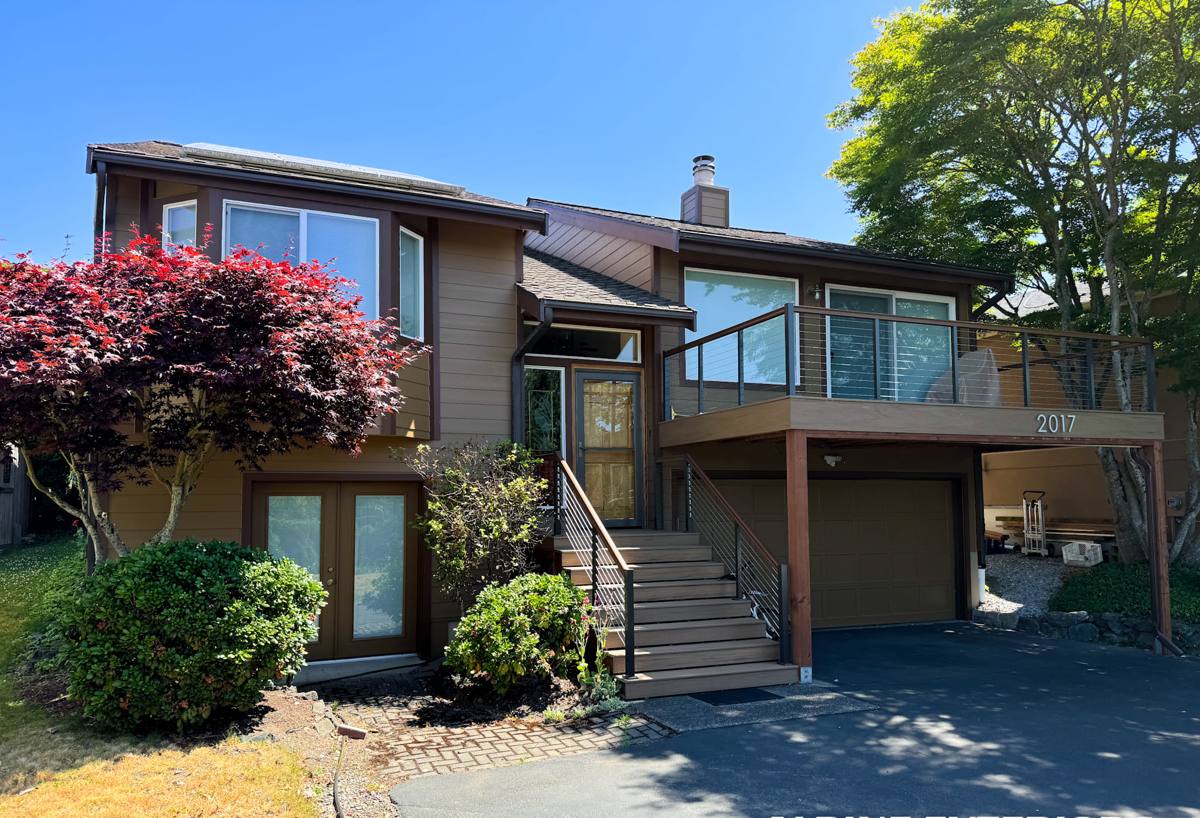
What "Custom" Actually Means for This Area
Custom doesn't automatically mean expensive or elaborate. It means the window is specified — size, frame material, glass package, and installation detail — for the actual opening and actual exposure, instead of forcing a standard size to fit.
Common reasons a California Creek home needs custom sizing
- Older construction with openings that were never built to modern standard dimensions
- Additions or remodels where the new window has to match rooflines, siding courses, or trim that a stock size won't line up with
- Homes with mixed cladding (wood, fiber cement, vinyl) where the window has to integrate cleanly with more than one material
- Waterfront or near-waterfront lots where larger openings are used to take advantage of the view, but need extra structural and weatherproofing attention
- Wood-framed farmhouses and older ranch homes common in this part of Whatcom County, where original openings are rarely a modern standard size
Custom sizing also matters because a poorly fitted window — even a good-quality one — is only as good as the gap around it. Shimming a too-small window into a too-large opening, or trimming an opening down to fit a stock size, creates weak points exactly where wind-driven rain is most likely to find them.
The Three Things Windows Have to Survive Here
Salt air and corrosion
Proximity to the bay means airborne salt settles on everything, including window hardware. Cheap fasteners, unprotected aluminum components, and low-grade weatherstripping degrade faster here than they would twenty miles inland. It shows up as pitted or stiff hardware, corroded screws, and seals that fail years ahead of schedule.
Driving rain
Wind off the water doesn't let rain fall straight — it drives it sideways into siding and window openings. A window can be watertight in a lab test and still leak in the field if the flashing and sill pan details around it aren't built for wind-driven water. This is where most window failures around here actually originate: not in the window unit itself, but in the installation detail around it.
Moss, algae, and constant dampness
Shaded lots, tree cover, and a long wet season mean anything organic-friendly — bare wood, certain trim profiles, north-facing surfaces that never fully dry — will grow moss or algae over time. On windows, that means wood components need real protection or need to be avoided in favor of materials that don't feed growth, and sightlines and sills need to be designed so water actually sheds instead of sitting.
Choosing a Frame Material for This Exposure
There's no single "best" window material for every home — it depends on budget, the home's style, and how much maintenance the homeowner wants to take on. For a property near the water in Whatcom County, here's how the common options actually perform:
| Frame Material | Salt Air / Corrosion | Moisture & Moss Resistance | Maintenance |
|---|---|---|---|
| Vinyl | Good — won't corrode, though hardware quality still matters | Good — doesn't feed moss, sheds water well | Low — occasional cleaning |
| Fiberglass | Very good — dimensionally stable, resists pitting | Very good — dense surface resists organic growth | Low — durable finish, minimal upkeep |
| Aluminum-clad wood | Good on the exterior face if cladding is intact; wood core needs protection | Fair — depends heavily on seal quality at joints | Moderate — watch cladding seams over time |
| Bare wood | Poor without diligent upkeep — hardware and finish both suffer | Poor — most susceptible to moss and rot in shaded, damp spots | High — regular refinishing required |
| Aluminum (uncoated/mill finish) | Poor — prone to pitting and corrosion near salt air | Fair | Moderate to high |
Our default recommendation for California Creek properties is vinyl or fiberglass for most homes, and aluminum-clad wood where the homeowner wants a specific interior wood look and understands the added upkeep. We don't push bare wood or uncoated aluminum in this exposure — not because those products can't work anywhere, but because this particular combination of salt air, shade, and rain makes them a poor match for a homeowner who wants to install once and not think about it again for decades.
Getting the Installation Right
The window unit itself is maybe half the job. The other half — the part that actually determines whether the window leaks, drafts, or fogs in five years — is the installation detail around it.
What a correct installation includes
- A properly formed sill pan that directs any water that does get past the window back outside, not into the wall cavity
- Flashing tape and house wrap integration in the correct shingle-lap order, so water is always directed outward and downward
- Backer rod and quality sealant at the perimeter, sized and installed for the gap actually present — not just caulked over
- Insulation in the gap between the frame and rough opening, without over-packing, which can bow the frame and affect operation
- Correct shimming so the window is plumb, level, and square, so sashes operate smoothly and seals compress evenly
- Interior and exterior trim reinstalled or replaced to fully seal and finish the opening
Skipping or rushing any one of these is how a good window ends up with a bad reputation. In this area specifically, the sill pan and flashing sequence matters more than average because of how much wind-driven rain the walls take on.
How We Approach a California Creek Window Project
1. On-site assessment
We look at each opening individually — condition of the existing frame, evidence of past water intrusion, how exposed the wall is to prevailing wind and rain, and what's happening with the surrounding siding and trim. Windows on the weather-facing side of a home often need more attention to flashing detail than windows on a sheltered side, even on the same house.
2. Material and glass selection
We walk through frame material trade-offs based on the home's style and the homeowner's maintenance preference, plus the glass package — most homeowners in this area benefit from a double-pane, low-E, argon-filled unit as a baseline, with upgrades available for extra sound dampening or additional efficiency where it makes sense for the specific room.
3. Accurate measurement and ordering
Because so many openings here are non-standard, we measure precisely and order to the actual opening rather than the nearest stock size.
4. Installation with full weatherproofing detail
Sill pan, flashing, insulation, and sealant done in the correct order — not shortcuts that look fine at handoff and fail two winters later.
5. Cleanup and walkthrough
We clean up the work area and walk the homeowner through operation, locks, and any maintenance recommendations specific to the materials installed.
Why Local Experience in This Specific Area Matters
A crew that already works around California Creek and the greater Blaine area has already seen how homes here age — which sides of a house take the worst weather, which older trim details tend to trap moisture, and which materials actually hold up once they've been through a few full Whatcom County winters instead of just a showroom. That's different from general window knowledge. It's knowing, for example, that a window facing the water side of a property needs a more careful flashing job than the same window facing a sheltered courtyard, or that a shaded north wall under fir trees is going to need a low-maintenance frame material regardless of what the homeowner originally had in mind.
It also matters for permitting and code compliance — window replacement and especially structural changes to openings typically require a permit through the local jurisdiction, and a contractor who regularly works in the area already knows the process instead of learning it project by project.
Living With Custom Windows in a Marine Climate
Even well-chosen, well-installed windows benefit from a little seasonal attention in this environment. None of it is complicated, but skipping it is how avoidable problems start.
Simple upkeep that pays off here
- Rinse frames and glass periodically to remove salt residue, especially on wind-exposed sides of the house
- Check weep holes (the small drainage openings at the bottom of the frame) to make sure they're clear of debris, moss, or paint
- Look at caulking and sealant annually for cracking or separation, particularly after a hard winter
- Trim back vegetation that keeps a window or wall shaded and damp longer than necessary
- Operate hardware (locks, cranks, hinges) a few times a year even on windows that aren't used often, to keep moving parts from seizing
Homes with fiberglass or vinyl frames generally need the least of this. Homes with wood or wood-clad frames need more consistent attention to keep finishes intact before moisture gets a foothold.
Get a Straight Answer for Your Home
Every property around California Creek faces this weather a little differently depending on tree cover, sun exposure, and which direction the walls face. If you're planning a window replacement or a custom install for an addition or remodel, we're happy to take a look, walk the openings with you, and give you an honest read on what your home actually needs — no pressure, no upsell. Reach out for a free estimate using the form below.