 Blaine Window
 Why Point Roberts Is Harder on Windows Than Most of Whatcom County
Point Roberts sits on a small peninsula bordered by water on three sides — Boundary Bay to the east, the Strait of Georgia to the west. That location means homes here take wind-driven rain and salt-laden air more directly and more often than most inland properties elsewhere in Whatcom County. Salt spray settles on glass, hardware, and frame surfaces even on days without direct rain, and it doesn't wash off on its own the way ordinary dust does.
Add in the long, damp moss season that the whole Pacific Northwest deals with, and you get a specific combination of stresses: constant low-grade moisture, salt-driven corrosion on metal parts, and organic growth that holds water against wood and vinyl surfaces longer than it should sit there. Windows that would hold up fine twenty miles inland can show real wear here in half the time — pitted locks and hinges, soft or discolored sills, seals that give out early, glass that fogs between the panes.
None of that means windows on Point Roberts need to be exotic or overbuilt. It means the product choice, the installation detail, and the maintenance plan all need to account for a coastal, marine-exposed site instead of treating it like a standard suburban replacement job.
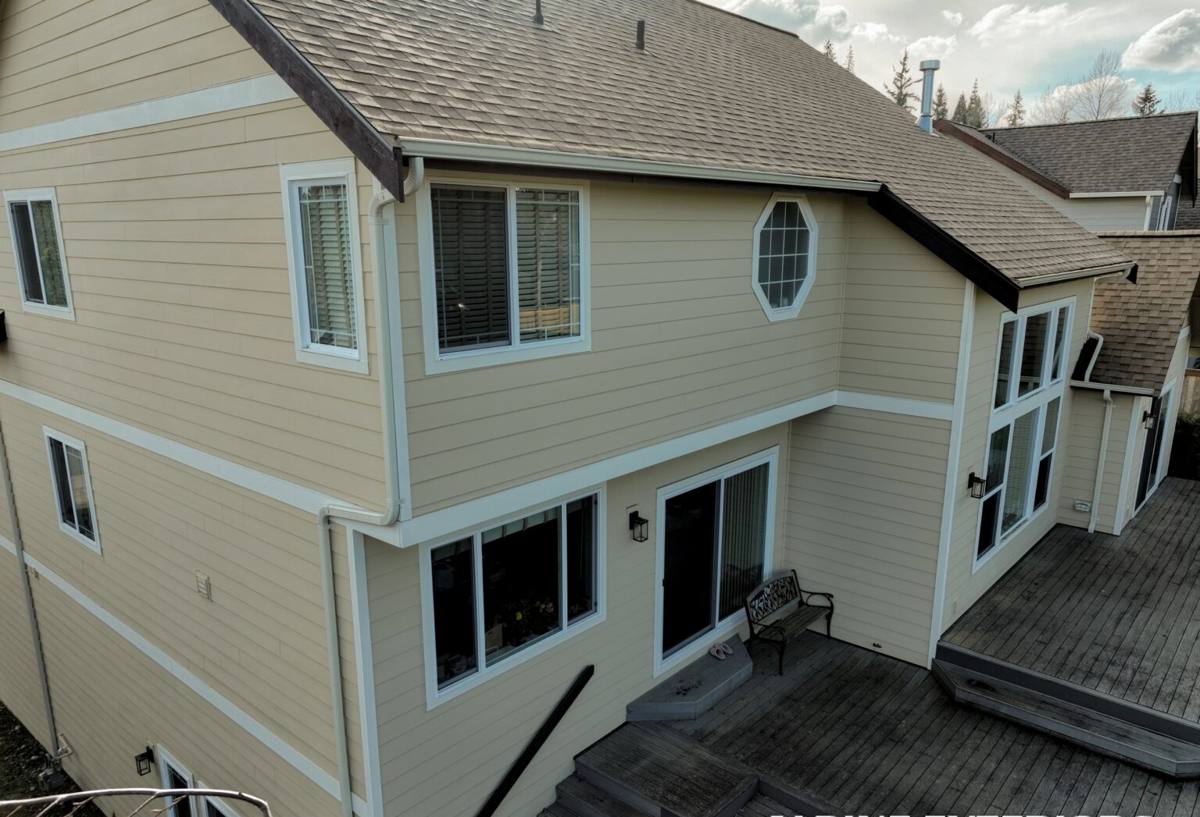
What "Energy-Efficient" Actually Means in This Climate
Glass Packages
Most homes here benefit from dual-pane glass with a low-E coating and argon gas fill as the baseline, with triple-pane worth considering on walls that face open water or prevailing wind directly. Low-E coatings reduce heat loss through the glass without darkening the room noticeably, which matters in a region that already sees limited winter daylight.
U-Factor Over Solar Gain
In sunnier, hotter climates, contractors talk a lot about solar heat gain coefficient (SHGC) — how much solar heat a window lets in. On the Blaine and Point Roberts side of Washington, the bigger factor is usually U-factor, which measures how well the window resists heat loss overall. Our marine climate is mild but persistently damp and windy, so keeping conditioned air in and drafts out matters more than blocking sun.
Air Infiltration Rating
A window can have great glass and still perform poorly if the frame and installation let air leak around the edges. On an exposed peninsula, wind-driven infiltration is often the real source of a drafty room, not the glass itself. This is why we weigh air infiltration ratings alongside U-factor rather than focusing on glass specs in isolation.
Signs Your Current Windows Are Losing the Fight
- Visible fog or moisture trapped between the panes of a double-pane window (a failed seal, not a cleaning issue)
- Frames that have swollen, warped, or stick when opening and closing
- Corroded, stiff, or hard-to-turn locks and hinges, especially on window walls facing the water
- Moss, algae, or dark staining building up on sills and lower frame edges
- A noticeable draft or cold spot near the window even with it fully closed
- Heating bills that have crept up without a clear reason elsewhere in the house
Any one of these on its own might just mean a repair or a re-caulk. Several of them together, especially on an older home's water-facing side, usually mean the windows are past the point where patching makes sense.
What a Correct Installation Involves Here
Window replacement in a marine-exposed location isn't just "remove old, set new." The details that get skipped on an easy inland job are exactly the ones that matter most on Point Roberts:
- Flashing and weatherproofing sequence — installed in the correct shingle-style order so water is always directed outward, never trapped behind the new window
- Sealants rated for coastal exposure — standard caulk breaks down faster under constant salt and moisture cycling than a marine-grade product
- Corrosion-resistant fasteners and hardware — stainless or coated fasteners instead of standard steel, which will rust and stain a frame from the inside out
- Proper insulation of the gap between the window unit and the rough opening, without overpacking it in a way that bows the frame
- Sill and drainage detail that lets any water that does get past the outer seal drain back out instead of sitting against wood or sheathing
Skip any one of these and the window can look fine for a year or two while moisture works its way in behind the trim — which costs far more to fix later than it would have to do right the first time.
Choosing Frame Materials for Salt Air and Moisture
There's no single "best" frame material for every home — it depends on how exposed the window is, the look you want, and your maintenance tolerance. Here's how the common options actually hold up in this specific climate:
| Frame Material | Salt Air / Corrosion Resistance | Maintenance | Notes for This Area |
|---|---|---|---|
| Vinyl | Good — won't rust or corrode | Low; occasional rinse and track cleaning | Reliable, budget-friendly default for most Point Roberts homes |
| Fiberglass | Excellent — very stable in wet, salty conditions | Low | Strong long-term choice for water-facing walls; higher upfront cost |
| Wood / Wood-clad | Fair — vulnerable if the exterior clad or paint fails | Higher; needs regular inspection and refinishing | Best reserved for sheltered elevations, not direct water exposure |
| Aluminum | Poor to fair without marine-grade coating | Moderate; watch for pitting and corrosion over time | We recommend it sparingly here and only with proper coatings |
We won't push a homeowner toward the flashiest option if it's the wrong fit for a west-facing wall that takes rain head-on. Our job is to match the material to the exposure, not the other way around.
Our Process, Start to Finish
The process is straightforward, but we adjust the details based on where on the property the windows sit:
- On-site assessment — we look at each window's exposure (water-facing vs. sheltered), current condition, and how the existing opening was framed and flashed originally
- Product and glass selection — matched to that specific wall's exposure rather than a single spec applied to the whole house
- Installation — full removal of the old unit, inspection of the rough opening and sheathing for hidden moisture damage before anything new goes in, then flashing, sealing, and setting the new window to manufacturer spec
- Walkthrough and cleanup — we confirm operation, seals, and finish work with you before we consider the job done
- Warranty documentation — clear paperwork on what's covered, for how long, and what maintenance (if any) is required to keep it valid
Why a Crew That Already Works Point Roberts Matters
Point Roberts is geographically separated from the rest of Whatcom County — reaching it by road means crossing the Canadian border twice. That's a logistical reality for any contractor working here, not just a technicality. Crews and material deliveries need to plan around border crossings, and that affects scheduling in ways that don't come up on a typical Blaine or Bellingham job.
A crew that regularly works the peninsula already has that logistics figured out — what documentation is needed for tools and materials crossing the border, how to plan a job so a delay doesn't strand a half-finished window opening, and how to build a realistic timeline instead of an optimistic one. A crew that's never worked here before is learning all of that on your project, which usually shows up as missed appointments or delays waiting on materials that didn't clear as expected.
There's also a practical familiarity with the housing stock itself — a lot of homes on the peninsula started as seasonal cottages and were later insulated and updated for year-round or extended use. Knowing that going in changes what we look for behind an old window opening before we ever cut into it.
Maintenance That Extends Window Life on the Peninsula
Even a well-installed, high-quality window benefits from a little seasonal attention in a salt-air climate. A short annual routine goes a long way:
- Rinse salt residue off frames, tracks, and hardware with plain water a few times a year, more often on water-facing walls
- Clear moss and algae from sills and window wells before it has a chance to hold moisture against the frame
- Check weatherstripping each fall for compression or gaps before the wet season sets in
- Keep weep holes (the small drainage openings along the bottom of the frame) clear of debris
- Inspect exterior caulking annually and re-seal any cracked or separated joints promptly
None of this is time-consuming, but it's the difference between a window that reaches its full expected lifespan and one that starts failing early because moisture had a place to sit.
What Affects the Cost of a Window Project
| Cost Factor | Why It Matters |
|---|---|
| Number and size of windows | Larger openings and whole-house projects have more material and labor per unit, but often better per-window pricing |
| Frame material | Fiberglass and quality vinyl carry different price points than basic aluminum or wood |
| Glass package | Double vs. triple pane, and coating options, shift cost per unit |
| Full-frame vs. retrofit | Full-frame replacement (removing down to the rough opening) costs more than a pocket/retrofit install but is often the right call on an aging or water-damaged opening |
| Site access | Upper-story or hard-to-reach windows take more time and equipment |
| Old window removal and disposal | Straightforward for most homes, but adds a line item to the estimate |
We'd rather walk you through these factors honestly on-site than throw out a broad number that doesn't reflect your actual home. Costs vary enough between a small retrofit job and a full-frame, whole-house replacement that a real number only comes from seeing the windows in question.
If your windows are showing wear, running up your heating bill, or you're just planning ahead for a home on this stretch of the coast, we're glad to take a look and give you a straightforward, no-pressure estimate. Use the form below to get started.