 Blaine Window
 Point Roberts Decks Face a Different Set of Problems
Point Roberts sits out on its own point of the Salish Sea, and that location cuts both ways. It gives homeowners some of the best water views in Whatcom County, and it also means decks here take a beating that decks ten miles inland never see. Salt-laden air off the water accelerates corrosion on hardware and fasteners. Driving rain off the strait finds every gap in flashing and decking. And a long, damp moss season coats horizontal surfaces in a slick green film that, if ignored, holds moisture against wood and finishes for months at a time.
A deck that would hold up fine in a drier, more sheltered part of the county can fail early out here — not because the design was bad, but because it wasn't built with this specific environment in mind. That's the whole premise of this page: what actually needs to be different about a deck built for Point Roberts, and why.
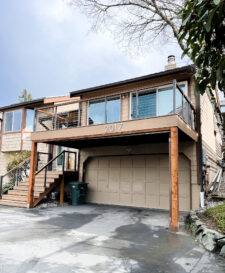
What Salt Air and Driving Rain Actually Do to a Deck
Salt Air and Metal
Ordinary galvanized fasteners and hardware corrode noticeably faster within a mile or two of saltwater. Screw heads rust and streak the decking around them, joist hangers weaken at the exact points carrying structural load, and railing hardware seizes up or stains the surface it's mounted to. This isn't a maybe — it's a predictable, cumulative process, and it's one of the most common reasons an older deck out here starts looking rough well before the wood itself is actually failing.
Driving Rain and Water Intrusion
Rain that comes in sideways off open water doesn't behave like a normal downpour. It gets pushed up under ledger boards, behind rim joist flashing, and into any seam that wasn't detailed to shed water actively rather than just sit under it. Framing lumber and structural connections that stay damp for extended stretches are where rot starts — almost always out of sight, at the ledger-to-house connection or under the decking where nobody's looking until there's a soft spot.
Moss and Surface Moisture
Moss doesn't just look bad. It holds water against whatever it's growing on, blocks a surface from drying between rains, and turns decking into a genuine slip hazard, especially on stairs. In a long moss season, any deck that doesn't drain and dry well becomes a maintenance problem fast, regardless of what material it's built from.
What a Correctly Built Deck Needs Here
- Corrosion-resistant fasteners and structural hardware rated for coastal exposure, not standard interior-grade galvanized
- Ledger flashing and house-connection detailing that actively sheds water rather than relying on caulk alone
- Joist spacing and drainage gaps sized to let the deck surface actually dry between rain events
- Decking material chosen with moss and mildew resistance as a real factor, not an afterthought
- Railing systems and hardware that won't corrode, streak, or seize within a few seasons
- Footings and structural framing sized for the load and set below frost depth, same as anywhere else in the county
None of this is exotic. It's mostly a matter of choosing the right-grade materials and building the details — flashing, fastener selection, drainage — with the actual climate in mind instead of defaulting to whatever's standard for a drier site.
Choosing a Decking Material for This Environment
There's no single right answer here — it depends on budget, how much upkeep you want to do, and how the deck will be used. What matters is going in with clear eyes about how each option actually performs in salt air and a long wet season, not just how it looks in a showroom.
| Material | Moisture & Salt Air Behavior | Maintenance | Typical Lifespan |
|---|---|---|---|
| Pressure-treated wood | Needs sealing to resist moisture; can cup or check if finish is neglected | Re-seal every 1-2 years; regular moss/mildew cleaning | 15-20 years with upkeep |
| Cedar | Naturally rot-resistant but still needs periodic finish; grays without treatment | Re-seal or stain every 1-2 years | 15-20 years with upkeep |
| Composite decking | Won't rot or splinter; some boards can trap surface moisture if drainage is poor | Periodic washing to keep moss/mildew from taking hold | 25-30+ years, warranty-backed |
| PVC / capped polymer | Best moisture and salt resistance of the group; fully synthetic | Occasional washing | 25-30+ years, warranty-backed |
Composite and PVC decking cost more up front than wood, but the maintenance burden and re-sealing cycle for wood adds up over a deck's life — especially in an environment that's actively working against a wood finish nine months out of the year. Wood is still a legitimate choice for homeowners who like the look and don't mind the upkeep. We'll walk through the honest trade-offs for your project rather than push one product across the board.
Design Choices That Matter Specifically Out Here
Orientation and Wind Exposure
Where the deck sits relative to prevailing wind and rain direction affects how much driving rain it actually takes on, and that influences everything from railing style to whether a partial cover or windscreen makes sense. We look at the specific site, not a generic layout.
Drainage Underneath
A deck built low to grade or over poorly draining ground stays damp longer and grows moss faster. Grading, gap spacing, and sometimes a simple under-deck drainage system make a real difference in how much moss and mildew maintenance you're signing up for.
Railings and Hardware Finish
Cable rail, aluminum, and powder-coated steel all handle salt air differently. We'll talk through which railing hardware actually holds its finish out here versus what looks good for a season and then starts showing corrosion streaks.
Why Location Matters for Who Builds Your Deck
Point Roberts is a Whatcom County community, but it's geographically separated from the rest of the county and the U.S. mainland — reaching it means crossing the border, both ways, for every trip. That's not a small detail when it comes to a construction project. Materials, tools, and crew all have to cross that same route on the same schedule, and a lot of contractors either won't take on Point Roberts jobs at all or price them high to cover the extra time and hassle of border crossings for every delivery and every workday.
A crew that already works this area on a regular basis has that logistics problem solved — materials get staged and ordered with the crossing in mind, crews plan their day around it instead of getting surprised by it, and there's no learning curve costing you time or money on your project. That familiarity also extends to knowing which materials and details actually hold up here, because we've seen what fails and what doesn't.
Permitting
Point Roberts is unincorporated Whatcom County, so deck projects here typically go through the county's standard building permit process, same as elsewhere in Whatcom County. Requirements depend on the size, height, and attachment details of the deck. We handle the permit process as part of the job so you're not the one chasing paperwork.
Our Process
1. On-Site Consultation
We walk the site with you, look at sun and wind exposure, existing drainage, and how the house connects to grade. This is where material and design decisions actually get made — not guessed at from a distance.
2. Design and Material Selection
You get a clear rundown of material options with honest cost and maintenance trade-offs for your specific site, plus a straightforward quote before anything is ordered.
3. Permitting
We submit and manage the permit paperwork through the county so the project is built to code from the start.
4. Construction
Framing, flashing, and fastener choices are all handled with this climate in mind — not defaulted to whatever's standard for a drier site. Materials and crew scheduling account for the border crossing so the job stays on track.
5. Final Walkthrough
We go over the finished deck with you, including basic care guidance so it stays looking good through the wet season instead of needing early rescue work.
Keeping a Point Roberts Deck Looking Good Year-Round
Whatever material you choose, a little regular attention goes a long way against moss and salt residue in this environment:
- Sweep or rinse the deck surface periodically through the wet season to keep moss from getting established
- Rinse salt residue off railings and hardware after storms or high-wind days off the water
- Keep gutters and downspouts near the deck clear so runoff isn't dumping extra water onto the surface
- Check fastener heads and hardware annually for early rust streaking, and address it before it spreads
- Re-seal or re-stain wood decking on schedule rather than waiting until the finish has already failed
- Trim back overhanging vegetation that keeps sections of the deck shaded and slow to dry
None of this is complicated, but skipping it in a climate this active is how a deck that should last decades starts needing repairs after a handful of years.
Get a Free Estimate
If you're planning a new deck or replacing one that's showing its age, we're happy to come take a look and talk through what makes sense for your site and budget — no pressure, no obligation. Fill out the form below to get started.