 Blaine Window
 Why Peace Arch Roofs Age the Way They Do
The Peace Arch area sits right at the edge of Semiahmoo Bay and the Strait of Georgia, which means homes here take a different kind of beating than roofs even a few miles inland in Whatcom County. It isn't one dramatic storm that does the damage — it's the steady combination of salt-laden air, wind-driven rain that finds its way sideways under poorly lapped materials, and a moss season that can run eight months out of the year in a wet stretch. A roof that would hold up fine in a drier climate can fail early here if it wasn't built with this specific exposure in mind.
Salt Air and Metal Components
Salt air accelerates corrosion on anything metal — fasteners, flashing, drip edge, valley metal, and vent boots with metal collars. On a lot of older Peace Arch roofs, we find the shingles themselves are still in decent shape, but the flashing and exposed nail heads have corroded to the point where they're the actual source of leaks. A correct replacement uses corrosion-resistant fasteners and flashing rated for coastal exposure, not standard-grade materials that were never meant to sit a few blocks from saltwater.
Moss, Shade, and Trapped Moisture
Between the tree cover common in this part of Blaine and the long damp season, moss isn't a cosmetic issue — it's a moisture problem. Moss holds water against the roofing material far longer than open air would, which speeds up granule loss on asphalt shingles and can work its way under laps and around fasteners over time. Roofs with north-facing slopes or heavy tree shade see this first and worst.
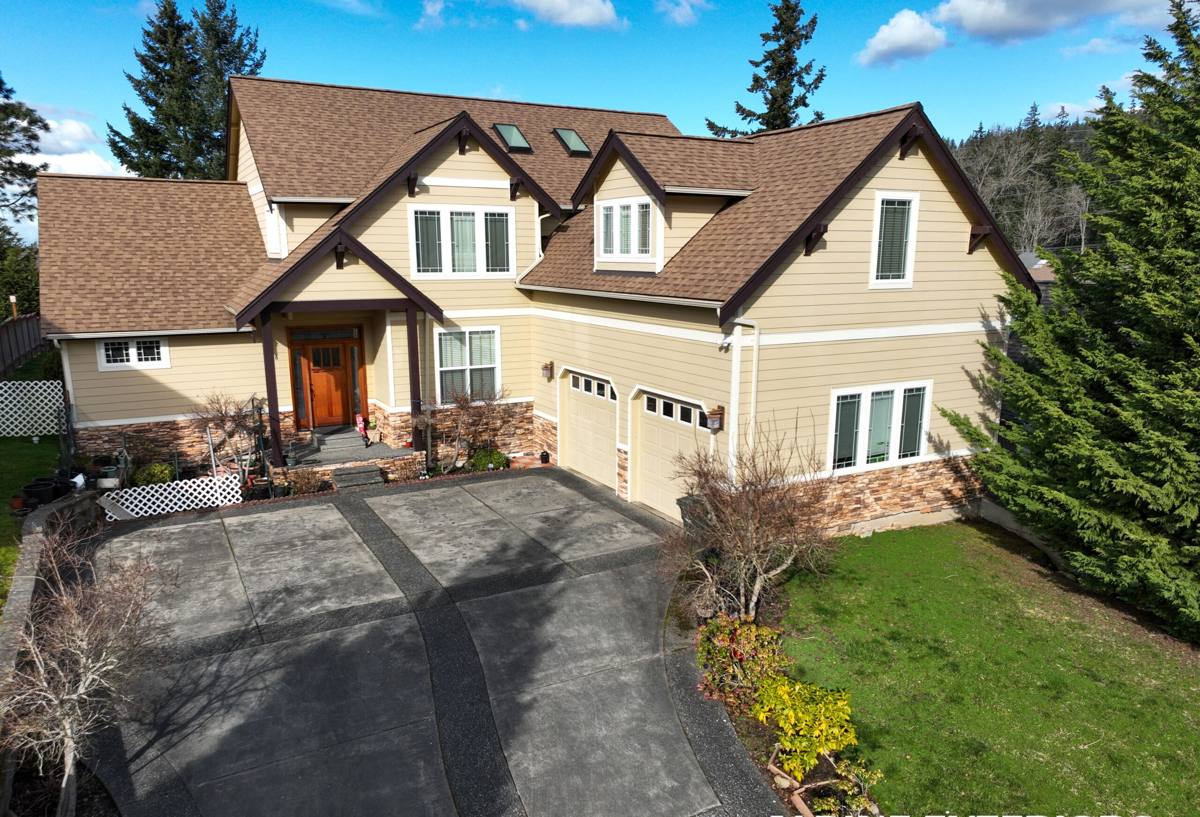
Signs a Peace Arch Roof Needs Replacing, Not Just Patching
Not every roofing problem calls for a full replacement, and we'll tell you plainly if a repair is the more honest answer. But there's a point where patching stops making sense — where you're spending money to delay the inevitable instead of fixing it. Watch for:
- Granule loss heavy enough that you can see bare, shiny patches on shingles from the ground
- Curling, cracking, or lifted shingle edges, especially on slopes that get the most wind and rain exposure
- Persistent moss or algae staining that comes back within a season of cleaning
- Soft spots or sagging in the roof deck when walked or inspected from the attic
- Daylight visible through the roof deck or attic sheathing from inside
- Multiple active leaks, or leaks that show up in a new spot each time it rains hard
- A roof approaching or past the manufacturer's expected lifespan for this climate, even if it "looks okay" from the street
If you're only seeing one or two of these and the roof is otherwise sound, a targeted repair or partial re-roof may genuinely be enough. We'll walk the roof and tell you which situation you're actually in before we ever talk about a full replacement.
What a Correct Roof Replacement Involves Here
A roof replacement done right in a marine climate like Blaine's isn't just stripping old shingles and nailing down new ones. The parts you don't see are what determine whether the roof lasts fifteen years or thirty.
Full Tear-Off and Deck Inspection
We remove the existing roofing down to the deck rather than layering over it. That's the only way to actually see the condition of the sheathing underneath — rot, soft spots, and water staining are common findings on older Peace Arch homes, particularly around chimneys, skylights, and valleys where water has been finding its way in slowly for years. Any damaged decking gets replaced before anything new goes down; nothing gets covered up.
Underlayment Built for Wind-Driven Rain
Standard felt underlayment is a minimum, not a standard we rely on here. We use synthetic underlayment for its tear resistance and water shedding, with self-adhering ice-and-water membrane at the vulnerable points — eaves, valleys, around penetrations, and along rake edges where wind-driven rain is most likely to push water sideways under the roofing material.
Flashing Details
Flashing failure is the single most common cause of leaks we find in this area, more than shingle wear itself. Chimneys, sidewalls, skylights, and valleys all get new, properly lapped flashing as part of a replacement — not a reuse of the old pieces, even if they still look intact. Corrosion isn't always visible from the surface until it's already let water through.
Ventilation That Matches the Climate
Attic ventilation matters as much here as anywhere in the Pacific Northwest — a roof deck that can't breathe traps moisture, which speeds up rot and, in cold snaps, contributes to ice damming at the eaves. We check intake and exhaust balance as part of every replacement and correct it where the existing setup falls short.
Choosing Roofing Materials for This Climate
There's no single "best" roofing material for every Peace Arch home — the right choice depends on your roof's pitch, sun and shade exposure, and how long you plan to stay in the house. Here's how the common options actually compare for a coastal Whatcom County property:
| Material | Moisture & Moss Resistance | Salt Air Durability | Typical Lifespan Here | Maintenance |
|---|---|---|---|---|
| Architectural asphalt shingle | Good with proper ventilation; moss needs periodic cleaning | Good when paired with corrosion-resistant flashing | 20–30 years | Low to moderate |
| Standing seam metal | Excellent — sheds water and resists moss buildup | Very good with coastal-rated coatings and fasteners | 40–50+ years | Low |
| Synthetic/composite shingle | Very good; resists moisture absorption | Good | 30–40 years | Low |
For most Peace Arch homes we still recommend a quality architectural shingle — it balances upfront cost, appearance, and durability well for this climate. Metal earns its higher price tag on homes with heavy tree cover or steep, hard-to-maintain slopes where moss control is a constant fight. We'll give you an honest read on which fits your specific roof rather than pushing whatever has the best margin.
What Affects the Cost of a Replacement
Every roof is priced on its own specifics, but the factors that move the number up or down are consistent:
- Roof size and pitch — steeper roofs take longer and require more safety setup
- Number of layers to remove — some older homes have two or more layers of shingles stacked
- Deck condition — rotted sheathing found during tear-off adds material and labor
- Material choice — asphalt, synthetic, and metal carry different material and installation costs
- Roof complexity — valleys, dormers, chimneys, and skylights all add flashing work
- Access — tree cover, steep lots, and tight driveways common in this area can affect equipment staging
We walk every roof in person and give a written estimate that breaks these out, so you know what you're paying for and why — not a single number with no explanation behind it.
Our Process, Start to Finish
- On-site inspection — we walk the roof and attic, check the deck where accessible, and document existing damage before quoting anything
- Written estimate — a clear scope of work and pricing, including material options, with no pressure to decide on the spot
- Scheduling around weather — we plan tear-off days around dry windows, since an open roof deck can't sit exposed to Blaine's rain
- Tear-off and deck repair — full removal of old roofing, with any damaged sheathing replaced and documented
- Underlayment and flashing installation — the moisture-management layer that does the real work over the life of the roof
- New roofing installation — installed to manufacturer specifications so the warranty stays intact
- Site cleanup — magnetic nail sweep and full debris removal before we consider the job done
- Final walkthrough — we go over the finished roof with you and answer any questions before wrapping up
Why a Crew That Works This Area Regularly Matters
A roof replacement is only as good as the crew's understanding of what this specific climate does to it over time. A crew that regularly works in and around Blaine already knows which slopes in this area tend to hold moss, which flashing details fail first under sustained wind-driven rain, and how to schedule a tear-off around the Pacific Northwest's unpredictable dry windows without leaving a deck exposed overnight. That's knowledge you don't get from a general contractor passing through once. It also means we're accountable locally — if a question comes up after the job, we're not far away and not hard to reach.
After the Roof Is On: Keeping It That Way
A well-built roof still needs basic upkeep in this climate to hit its full lifespan. A few habits go a long way:
- Have gutters cleared regularly — clogged gutters back water up under the roof edge, especially with the leaf and needle drop common here
- Address moss early with a gentle, roof-safe treatment rather than pressure washing, which can strip granules and shorten shingle life
- Trim back overhanging branches to reduce shade, debris buildup, and physical abrasion on the roofing surface
- Schedule a quick visual inspection after major windstorms to catch lifted shingles or displaced flashing early
None of this requires a large budget or constant attention — it's mostly about not letting small, normal wear turn into a hidden moisture problem.
Get an Honest Look at Your Roof
If your roof is showing wear, or you just want an honest opinion on how much life it has left, we're happy to take a look. The estimate is free, there's no pressure attached to it, and if a repair is genuinely the better answer than a full replacement, we'll tell you that instead. Fill out the form below to schedule a time for us to come out and walk your roof.