 Blaine Window
 Roofing in Nooksack Has Its Own Set of Problems
Nooksack sits far enough inland from Blaine's shoreline that homeowners sometimes assume salt air isn't part of their roofing equation. It still is. Whatcom County's marine weather pattern doesn't stop at the water's edge — the same wet, mild, overcast air mass that soaks Blaine rolls east across the whole county, carrying moisture, low sun angles, and heavy tree cover into Nooksack's mix of open farmland and wooded lots. Add in shaded roof planes from mature conifers and you get a roofing environment that's demanding in its own right, even without direct coastal spray.
What that means in practice: roofs here don't usually fail from one big event. They fail slowly, from months of the roof surface staying damp, moss taking hold in the shaded and north-facing sections, and fasteners and flashing corroding faster than they would in a dry climate. A roof replacement done right in Nooksack has to plan for that reality from the start — not just match what's already up there.
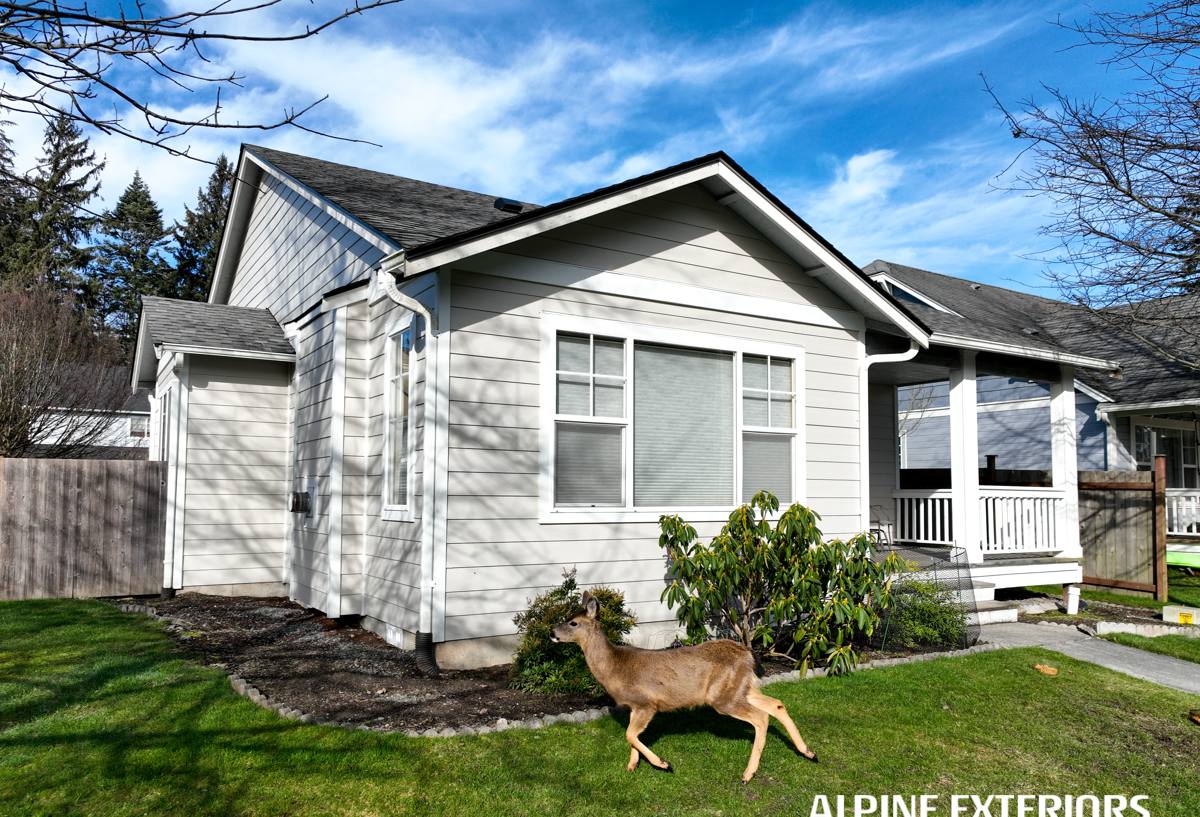
What the Regional Climate Actually Does to a Roof
Moss and Organic Growth
Moss is the most visible problem and the most misunderstood. It's not just cosmetic — moss holds moisture against the shingle surface long after the rest of the roof has dried out, which accelerates granule loss and, on older roofs, can work its way under shingle tabs and lift them. Nooksack's mix of shaded rooflines and long wet seasons gives moss exactly the conditions it needs to spread year over year if it isn't addressed.
Driving Rain and Wind-Driven Moisture
Storms moving through the county often come with enough wind to drive rain sideways, which pushes water into places a roof designed only for straight-down rainfall isn't built to handle — under shingle tabs, around poorly sealed flashing, into exposed nail heads. This is why underlayment choice and flashing detail work matter more here than in drier climates.
Temperature Swings and Freeze-Thaw
Whatcom County doesn't get brutal winters, but it does get repeated freeze-thaw cycles through the colder months. Water that's worked its way into a crack or seam can freeze, expand, and widen that opening, then thaw and let more water in. Over several winters, a minor flaw becomes a real leak point.
Signs a Nooksack Roof Needs Replacing, Not Patching
- Moss or algae streaking that returns within a season or two of cleaning, especially on shaded slopes
- Granules collecting in gutters or at downspout outlets, indicating the shingle surface is wearing thin
- Curling, cupping, or cracked shingles, particularly on south- and west-facing sections that see the most sun and heat cycling
- Soft spots or sagging in the roof deck, which usually means water has reached the sheathing
- Daylight visible through the attic roof boards, or staining on attic insulation and rafters
- Flashing around chimneys, vents, or skylights that's rusted, lifted, or resealed with visible caulk patches
- A roof approaching or past the manufacturer's expected service life for its material and local exposure
A single one of these doesn't always mean full replacement — but two or more together, especially on a roof over 15-20 years old, usually points toward replacement being the more cost-effective path than continuing to patch.
What a Correct Roof Replacement Involves
A roof replacement is more than swapping old shingles for new ones. Done properly, especially in a climate like this one, it's a full system:
Tear-Off and Deck Inspection
Full removal of the old roofing down to the deck, not an overlay. This is the only way to actually see what's underneath — soft or delaminated sheathing, hidden water staining, or past repair shortcuts don't show up until the old material is off. Any damaged decking gets replaced before anything new goes down.
Ice and Water Barrier at Vulnerable Points
Valleys, eaves, and areas around penetrations get a self-adhering waterproof membrane underneath the primary underlayment. These are the spots where wind-driven rain and ice damming cause the most damage, and they're worth the extra material.
Underlayment
A synthetic underlayment across the full deck adds a second line of defense against the wind-driven rain this region sees regularly. It also protects the deck during the install itself if weather rolls in mid-project.
Flashing
New flashing at chimneys, skylights, sidewalls, and roof-to-wall transitions — not caulk over old flashing. Flashing failures are one of the most common causes of "mystery leaks" on roofs that otherwise look fine.
Ventilation
Proper intake and exhaust ventilation keeps the attic space closer to outdoor temperature and humidity, which reduces condensation, extends shingle life, and helps prevent the trapped moisture that feeds moss and mildew from the underside.
Field Material and Finish
Shingles, starter strips, and ridge caps installed to manufacturer nailing and exposure specs — the details that determine whether a roof holds up to sustained wind and rain rather than just looking finished on install day.
Roofing Material Comparison for This Climate
| Material | Moss Resistance | Wind/Rain Performance | Typical Lifespan | Notes for This Area |
|---|---|---|---|---|
| Architectural asphalt shingle | Moderate (better with algae-resistant granules) | Good when properly installed | 25-30 years | Most common choice; balances cost and performance well in Whatcom County conditions |
| 3-tab asphalt shingle | Lower | Fair | 15-20 years | Budget option; shows wear from moisture and wind faster than architectural shingles |
| Metal roofing | High | Excellent | 40-50+ years | Sheds moisture and resists moss well; higher upfront cost, fewer contractors install it correctly |
| Cedar shake | Low without regular maintenance | Fair | 20-30 years with upkeep | Attractive but demands consistent moisture maintenance in this climate; we're upfront about that tradeoff |
We install what fits the home, the budget, and the homeowner's tolerance for maintenance — not a one-size answer. For most Nooksack homes, algae-resistant architectural asphalt shingles hit the right balance of cost, appearance, and performance against local moss and rain patterns. Metal is worth a serious look for homes with heavy shade or a history of repeat moss problems.
Our Process
- On-site inspection. We walk the roof (or use a drone where pitch or access requires it), check the attic from inside, and look at flashing, ventilation, and deck condition — not just the shingle surface.
- Written estimate. A clear scope covering tear-off, deck repair allowances, materials, and labor, with material options explained so you're choosing based on real tradeoffs, not guesswork.
- Scheduling around weather. We plan install windows with realistic buffer for Whatcom County's rain patterns rather than promising a date we can't hold to.
- Tear-off and deck repair. Full removal, deck inspection, and replacement of any compromised sheathing before new material goes down.
- Installation. Underlayment, ice and water barrier, flashing, ventilation, and field material installed to spec.
- Cleanup and magnetic sweep. Full site cleanup, including a nail sweep of the yard and driveway.
- Final walkthrough. We review the finished roof with you and answer questions before calling the job done.
What Drives the Cost
| Factor | Why It Matters |
|---|---|
| Roof size and pitch | More surface area and steeper pitches mean more material and labor time |
| Number of layers to remove | Tearing off multiple old layers adds disposal and labor cost |
| Deck condition | Rotted or soft sheathing found during tear-off requires repair before install can continue |
| Material choice | Asphalt, metal, and cedar carry different material and labor costs |
| Roof complexity | Valleys, dormers, chimneys, and skylights each add flashing work and time |
| Access | Steep sites, tree cover, or limited driveway access can affect setup and staging time |
We don't quote a roof over the phone. Every estimate is based on what we actually see on your roof and in your attic, so the number you get reflects your home, not a generic average.
Why a Crew That Already Works Nooksack Matters
A roofing crew that regularly works Whatcom County knows how local moisture and moss patterns behave on real roofs, not just in a training manual. That shows up in small decisions — where to add extra ice and water barrier even when it's not strictly required, which flashing details tend to fail first on shaded roof planes, how much ventilation a given attic actually needs given the surrounding tree cover. Those are judgment calls built from doing this work in this climate repeatedly, and they're the difference between a roof that looks right on install day and one that still performs well ten wet seasons later.
If you're weighing a roof replacement for a home in the Nooksack area, we're glad to take a look and walk you through what we see — no pressure, no obligation. Reach out for a free estimate using the form below.