 Blaine Window
 Roofing for California Creek's Coastal Climate
California Creek sits close enough to the Salish Sea that homes here deal with a mix most inland Whatcom County roofs never see: salt-laden air drifting in off the water, long stretches of driving rain, and a shoulder season where moss gets a head start in every shaded valley and north-facing slope. A roof that works fine in a drier, more sheltered part of the county can still struggle here. Metal roofing has become a common choice for homeowners in this area for good reason, but it only performs as advertised when it's specified and installed correctly for these exact conditions.
This page covers what California Creek homes actually need from a metal roof, what a correct installation includes, and how we approach the job when we're out here.
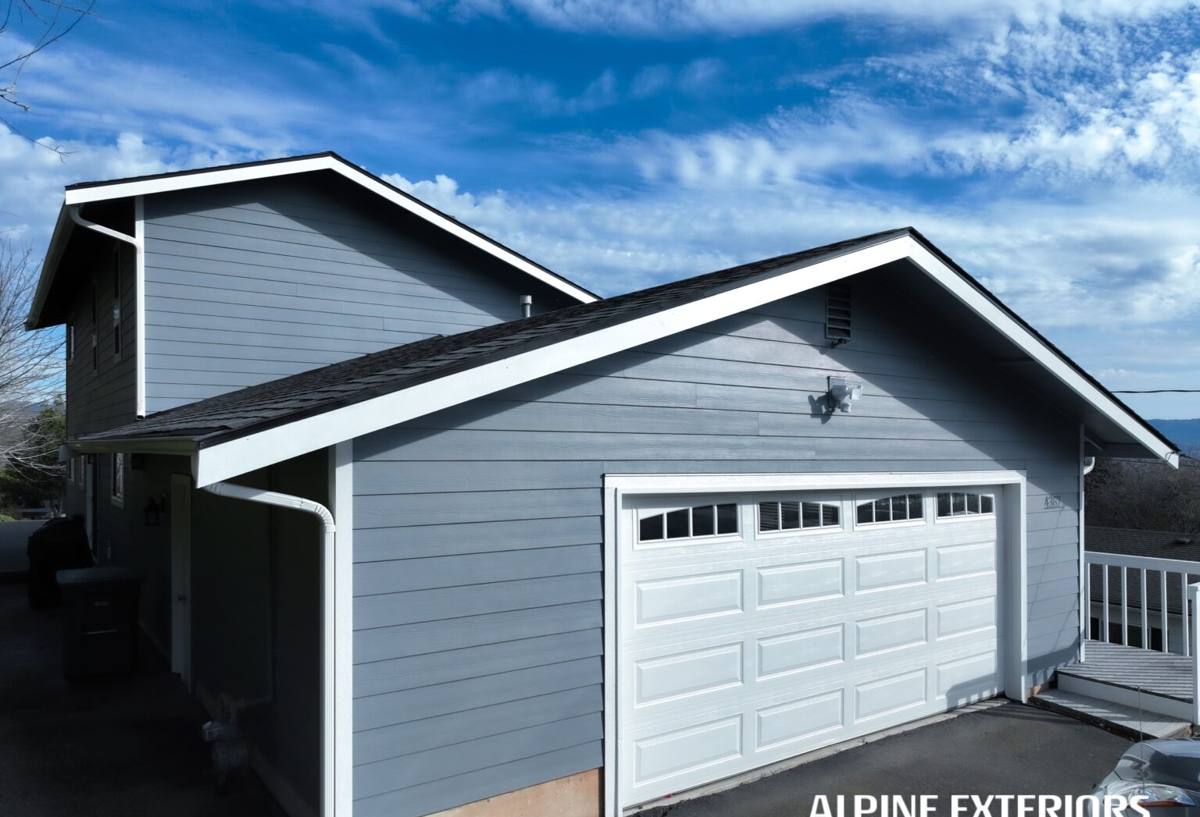
What Salt Air and Coastal Moisture Do to a Roof Over Time
Salt air doesn't just sit on the surface of a roof — it works its way into fasteners, flashing seams, and any exposed cut edge of metal. Over years, that accelerates corrosion in materials or coatings that aren't rated for a marine-influenced environment. Combine that with the driving, sideways rain this area gets during winter storms, and you have water being pushed uphill under shingles and into laps that would stay dry in a calmer climate.
Then there's moss. Blaine's long, wet, mild season is close to ideal moss-growing weather, and it doesn't need much shade or debris to get started. On traditional roofing, moss holds moisture against the surface and lifts material at the edges, which is exactly the failure point salt air and wind-driven rain are already probing. On a metal roof, moss has almost nothing to grip, which is one of the main reasons it's become a popular fit for this stretch of the county.
Why This Matters More Here Than Inland
A roof spec that's perfectly adequate in a protected inland neighborhood can be undersized for a property with more open exposure to weather coming off the water. Fastener grade, flashing material, and underlayment choice all need to account for salt exposure and wind-driven rain, not just standard Whatcom County rainfall totals.
Why Metal Roofing Fits This Environment
Metal roofing isn't the right answer for every home or every budget, but for California Creek's combination of salt air, rain, and moss, it addresses the three problems directly:
- Sheds water fast. Steep-sloped metal panels move rain off the roof quickly instead of letting it sit, which matters when storms are driving rain sideways under normal circumstances.
- Very little for moss to hold onto. A smooth, hard, continuous panel surface gives moss almost no foothold compared to the textured, layered surface of shingles.
- Long service life when specified correctly. A properly coated and installed metal roof can significantly outlast asphalt shingles in this climate, which matters given how much labor goes into any full roof replacement.
- Lower long-term maintenance burden. Fewer moss treatments, fewer granule losses, less concern about wind-lifted edges during winter storms.
That said, metal roofing is unforgiving of installation mistakes. Panels that aren't fastened, flashed, and ventilated correctly can trap condensation, telegraph oil-canning waviness, or develop leaks at penetrations faster than a shingle roof would. The material advantage only shows up when the installation matches it.
Panel Types and Materials: What Actually Differs
Not every "metal roof" is built the same way, and the differences matter more in a salt-air environment than they would somewhere drier and further inland.
| Option | How It's Attached | Best Fit For | Coastal Considerations |
|---|---|---|---|
| Standing seam steel | Concealed clips, no exposed fasteners | Homes wanting the longest service life and cleanest look | No exposed fastener heads means fewer points for salt corrosion to start |
| Exposed-fastener steel | Screws driven through the panel face | Budget-conscious projects, outbuildings, some main homes | Fastener seals and washers need regular inspection near the water |
| Aluminum panel systems | Standing seam or exposed fastener | Properties with the most direct salt exposure | Naturally corrosion-resistant, doesn't rust even if the coating is scratched |
| Stone-coated steel | Interlocking panels resembling shingle or tile | Homeowners wanting a traditional look with metal's durability | Coating and edge detailing quality varies significantly by manufacturer |
For homes with the most direct exposure to salt air, we typically steer the conversation toward aluminum or a marine-grade coated steel with a fully concealed fastener system. It's not that exposed-fastener panels can't work here — plenty do — but they ask more of the homeowner in terms of periodic inspection than a concealed-fastener system does.
What a Correct Metal Roofing Installation Involves
The panels get most of the attention, but most metal roof failures we get called out to inspect trace back to what's underneath or around the panels, not the panels themselves. A correct job for this climate includes:
- A high-temperature, self-adhered underlayment at eaves, valleys, and penetrations — standard felt underlayment isn't enough protection against wind-driven rain
- Proper deck inspection and repair before panels go down, since covering rotten or spongy sheathing with metal just hides a problem
- Fasteners and clips rated for coastal/marine exposure, not standard interior-grade hardware
- Flashing details at every valley, chimney, skylight, and wall intersection — this is where the majority of leaks originate on any roof type
- Correct panel overlap and fastening pattern for the specific wind exposure of the site, not a generic one-size spec
- Adequate attic or roof-deck ventilation to prevent condensation from forming on the underside of the metal
- Careful handling to avoid scuffing or scratching factory coatings, since a compromised coating is where corrosion starts first in salt air
Skipping any one of these doesn't usually cause an immediate problem — it shows up two, five, or ten years later as a leak, a corroded fastener, or a section of panel that's started to lift. That's part of why metal roofing has a reputation for being either excellent or disappointing, with not much in between; the difference is almost always the installation, not the material.
How We Approach a California Creek Metal Roof
Assessment
We start by looking at the whole picture, not just the roof surface: deck condition, existing ventilation, how exposed the property is to wind and salt air, tree cover and moss history, and what's driving the replacement — age, storm damage, moss, or a leak that's already showing up inside.
Panel and Material Selection
We walk through the tradeoffs in plain terms — standing seam versus exposed fastener, steel versus aluminum, coating options — based on your budget and how exposed the specific property is, rather than defaulting to one system for every job.
Tear-Off and Deck Prep
Old roofing comes off, the deck gets inspected, and any soft or damaged sheathing is repaired before anything new goes down. This step gets skipped by roofers trying to move fast, and it's the single most common source of early failures.
Installation
Underlayment, flashing, and panels go in following the fastening and overlap spec appropriate to the site's wind and rain exposure — not a generic manufacturer minimum.
Walkthrough and Cleanup
We review the finished roof with you, cover basic care and what (if anything) to watch for, and make sure the property is cleaned up — old material, fasteners, and debris hauled off.
Maintenance in a Salt Air, Moss-Prone Climate
Metal roofing is genuinely low-maintenance compared to shingles, but "low" isn't "none," especially this close to the water:
- Rinse off accumulated salt spray and debris periodically, especially on roofs with more open exposure toward the water
- Keep gutters and valleys clear so water isn't pooling against panel edges or fascia
- Trim back overhanging branches to reduce moss spores and debris buildup, particularly on shaded slopes
- Have exposed fasteners checked every few years if your roof uses that system, since washer seals are the first thing to wear
- Address any scratched or chipped coating promptly rather than waiting, since exposed bare metal is where salt-driven corrosion starts
Why It Matters Who Installs It
Metal roofing rewards experience with this specific climate. A crew that mostly works drier, more sheltered inland jobs may not default to marine-grade fasteners, may under-spec the underlayment at valleys, or may not think through ventilation the way a roof exposed to salt air and driving rain actually needs. None of those choices show up as a problem on install day — they show up years later.
Working regularly in and around Blaine and Whatcom County's coastal neighborhoods means we're used to specifying for salt exposure and wind-driven rain as a default, not an upgrade, and we've seen firsthand what does and doesn't hold up out here over time.
If you're weighing a metal roof for a California Creek property, we're happy to take a look, walk through your options honestly, and put together a straightforward estimate — no pressure, no pushy sales pitch. Use the form below to get started.