 Blaine Window
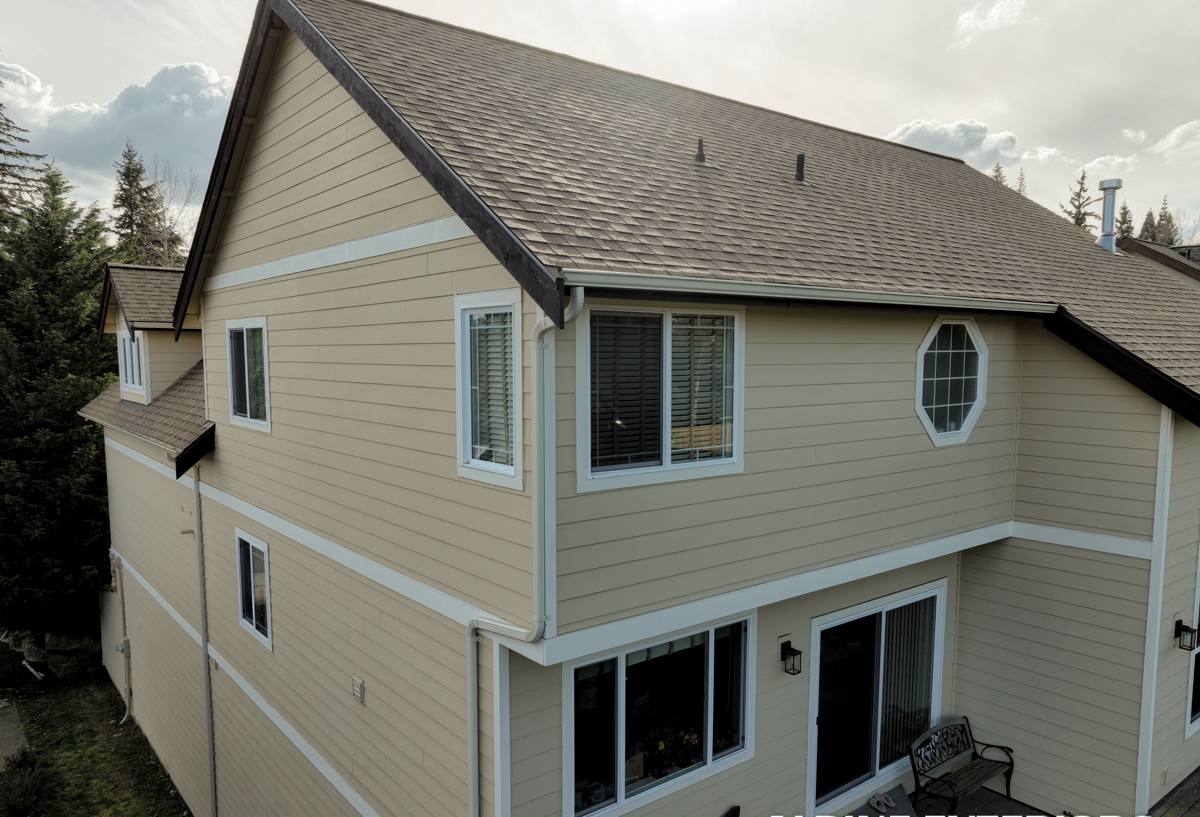
 A new roof in Lynden has to earn its keep over a lot of wet weather. This part of the Nooksack River valley sits inland from Blaine and the open water, but it's still inside the same marine-influenced weather system that governs exterior work across northern Whatcom County: damp air moves up the valley most of the year, rain tends to come in sideways rather than straight down, and mild, overcast stretches give moss a long season to work on any roof plane that stays shaded. New roof installation here isn't a bigger version of the same job done anywhere else — the details that get skipped on an easy, dry-climate roof are exactly the details that fail first on a Lynden roof. This page covers what a full roof replacement in Lynden actually involves, how we approach the job, and what to expect from first call to final walk-through.
Why New Roof Installation in Lynden Is Different
Three conditions drive most of the roofing failures we see in this valley, and a correctly installed new roof is built around all three, not just the one that's easiest to picture.
Salt Air
Lynden isn't a waterfront town, but salt-carrying marine air still moves up the valley from Puget Sound and the Strait, and it reaches fasteners, flashing, and vent hardware whether a house sits on the water or twenty miles inland. Standard, non-rated fasteners and flashing can start showing rust and pitting years before a homeowner expects it. It's a slow, invisible failure until it shows up as a stain on the ceiling or a leak at a nail head.
Driving Rain
Rain that moves through this valley is frequently wind-driven rather than falling straight down, which pushes water sideways into valleys, chimney flashing, and roof-to-wall transitions that would stay dry under a calmer rain event. A roof built to a bare minimum-code standard tends to leak first at exactly those spots, which is also where a rushed re-roof cuts the most corners.
Long Moss Season
Mild temperatures and frequent moisture give moss and algae a long growing season on any shaded or slow-draining roof plane, and Lynden's mix of farmland, tree lines, and mature residential lots means plenty of roofs get extended shade somewhere on the structure. Moss isn't cosmetic — it holds water against the roofing material, lifts shingle edges, and works its way under laps that weren't sealed with this climate in mind.
Signs a Lynden Home Has Reached Full Replacement
Not every roof problem calls for a full tear-off, but these are the signals that usually point toward replacement rather than another round of patching:
- Shingles cupping, curling, or losing granules across large sections rather than one isolated spot
- Moss that returns within a season of cleaning, especially on north-facing or shaded slopes
- Rust staining at fasteners, flashing, or metal vent stacks
- Soft or spongy decking underfoot, or sagging visible from the ground or driveway
- Daylight visible through the roof deck from inside the attic
- Leaks appearing in more than one location during a wind-driven rain event
- A roof at or past its material's rated service life for this level of exposure
- A history of repeated patch repairs on the same roof plane
If a roof is showing two or more of these at once, replacement is usually the more honest answer than another repair — we'll tell you plainly which situation you're actually in.
Choosing a Roofing System for This Climate
There's no single best material for every Lynden home — pitch, shade exposure, and how long you plan to stay in the house all factor in. The table below is a general comparison; actual performance depends as much on installation quality as on the product itself.
| Material | Relative Material Cost | Moss & Moisture Behavior | Realistic Lifespan Here |
|---|---|---|---|
| Architectural asphalt shingle | $ | Good with proper ventilation and moss-resistant granules; standard fasteners corrode faster in this air | 20-30 years |
| Standing seam metal | $$$ | Excellent; smooth surface sheds moss and wind-driven rain well when specified with a coastal-rated finish | 40-60 years |
| Cedar shake | $$ | Absorbs moisture readily; needs airflow underneath and regular upkeep to resist rot and moss | 20-30 years with active maintenance |
| Composite/synthetic shingle | $$ | Resists moisture well; performance varies by product quality | 30-50 years |
We'll go over which option fits a given roof's pitch, shade exposure, and budget at the estimate rather than steering every homeowner toward the same product. A steep, sun-exposed roof on one side of a Lynden street and a shaded, low-slope roof under mature trees on the other don't always call for the same answer.
What a Correct New Roof Installation Involves
The visible shingle or panel layer is the smallest part of what determines how a new roof holds up here. Most leaks and premature failures trace back to what's underneath or around it.
Tear-Off and Deck Inspection
A full tear-off lets us see the actual condition of the roof deck — soft spots, rot, or old water damage that a layover job would simply bury under new material. Any damaged sheathing is replaced before anything new goes down; installing a new roof over a compromised deck just shortens the life of the new material.
Underlayment and Ice-and-Water Shield
Given how much wind-driven rain this valley sees, underlayment isn't an afterthought on our jobs. A synthetic underlayment with strong water resistance goes down across the full deck, with self-adhered ice-and-water membrane at eaves, valleys, and other spots where water and debris tend to collect. That gives the roof a second line of defense if wind-driven rain ever gets past the primary roofing surface.
Flashing
Flashing at chimneys, skylights, vent penetrations, and roof-to-wall transitions is where the majority of leaks on an older roof actually start. We use corrosion-resistant flashing suited to this air and take the time to integrate it with the underlayment properly, rather than relying on sealant alone to keep water out.
Ventilation
Correct intake and exhaust ventilation keeps the roof deck drier, discourages the conditions moss needs to take hold, and protects the underside of the roof from condensation damage during the long stretches of elevated humidity this region gets. Ventilation gets calculated for the specific roof, not assumed from a rule of thumb.
Fasteners and Hardware
Standard fasteners rust faster in this air than most homeowners expect. We spec corrosion-resistant fasteners and hardware rated for a consistently damp, salt-influenced climate, since a fastener failure years down the road is hard to trace back and easy to prevent up front.
Our New Roof Installation Process
- On-site assessment. We inspect the existing roof, deck condition, ventilation, and problem areas, and take accurate measurements for the estimate.
- Material selection. We go over the options that fit the home's pitch, shade exposure, and budget, with honest trade-offs for each rather than a single default recommendation.
- Permitting. We pull the required permit before work begins, so the job is inspected and documented rather than done off the books.
- Tear-off day. The old roofing comes off down to the deck, damaged sheathing gets identified and replaced, and the deck is prepped for underlayment.
- Dry-in. Underlayment, ice-and-water shield, and flashing go down first, so the house is protected from weather even before the finish roofing is installed.
- Finish installation. Shingles or panels, ridge and hip details, and ventilation components go in to the manufacturer's specification.
- Cleanup and walk-through. We clear debris and fasteners from the property, walk the finished roof with you, and go over warranty paperwork before we consider the job done.
Preparing Your Home for Installation Day
A little preparation on your end keeps the job moving and protects the parts of your property that aren't roofing:
- Move vehicles out of the driveway and away from the house for the duration of the project
- Take down wall art, mirrors, or shelving on interior walls near the roofline — tear-off vibration can occasionally jar loose items
- Cover or move patio furniture, grills, and anything stored close to the exterior walls
- Let us know about sensitive landscaping near the drip line so we can plan tarps and debris containment around it
- Keep pets indoors or away from the work area during active tear-off and material delivery
- Plan for noise and crew activity on-site for the duration of the install, typically a small number of working days depending on roof size and weather
Permits, Warranties, and Timeline
A new roof installation in Lynden requires a building permit, and we handle that as part of the job rather than leaving it to the homeowner. Weather also plays a real role in scheduling — we work around forecasted rain rather than tearing off a roof into an open sky when a wet system is inbound, which occasionally means shifting a start date to protect the house.
| Warranty Type | What It Covers | Who Backs It |
|---|---|---|
| Manufacturer (material) warranty | Defects in the shingle, panel, or underlayment product itself | The material manufacturer |
| Workmanship (labor) warranty | Installation errors — flashing, fastening, sealing, and general craftsmanship | Our crew |
Both matter. A strong material warranty means little if a leak traces back to a flashing detail the installer got wrong, and a strong workmanship warranty means little if the shingles themselves fail early. We'll go over what each warranty actually covers, and for how long, before you sign off on a material choice.
Why a Crew That Already Works Lynden Matters
A crew that installs roofs across this part of Whatcom County through every season sees how salt air, wind-driven rain, and moss actually behave on real houses over years, not just how a product performs on a data sheet. That shows up in practical decisions on install day: which roof orientations in a farmland-and-tree-line town like Lynden need extra ice-and-water shield because of shade, how much ventilation a given attic actually needs versus a textbook estimate, and which flashing details are worth the extra time so you're not dealing with a callback two winters later. Blaine Window Co works roofs, siding, and windows throughout Whatcom County, and we bring the same climate-specific standards to a Lynden roof that we do everywhere else we work — nothing gets scaled back because a job is inland instead of waterfront.
Beyond the Roof
Roofing is one piece of how a Lynden home handles this climate, but the same moisture and moss pressure that wears on a roof also wears on siding, trim, and windows nearby. If a tear-off turns up moisture damage at a wall-to-roof transition, deteriorating fascia, or a window that was never flashed correctly, we can address it as part of the same project instead of sending you to find a second contractor for a problem we already found.
If your Lynden home needs a new roof, or you're not sure yet whether it needs repair or full replacement, we're glad to take a look and give you a straightforward, honest read on what it actually needs. Reach out using the form below to schedule a free, no-pressure estimate.