 Blaine Window
 Deck Repair Built for Lynden's Weather, Not a National Checklist
A deck in Lynden doesn't fail the way a deck fails in Arizona or even in a drier part of the Pacific Northwest. Out here, the problem is rarely sun damage or UV fading first — it's moisture that never fully leaves. Whatcom County sits under a long wet season, and even in the stretches between storms, humidity and shade keep wood decks damp longer than most manufacturers' maintenance schedules assume. Lynden sits a bit further inland than Blaine's shoreline, so you get less of the direct salt air that eats at fasteners and hardware right on the water, but you still get the driving rain, the long moss season, and the freeze-thaw cycles that come with winter cold snaps. The result is decks that look fine from the yard but have soft framing, corroding hardware, or trapped moisture doing damage where nobody's looking.
This page is specifically about repairing decks for homes in and around Lynden — not a generic "deck repair" rundown. If you're trying to figure out whether your deck needs patch work or a rebuild, what a contractor should actually be doing under your boards, and why local experience matters more than a low bid, this is written for that decision.
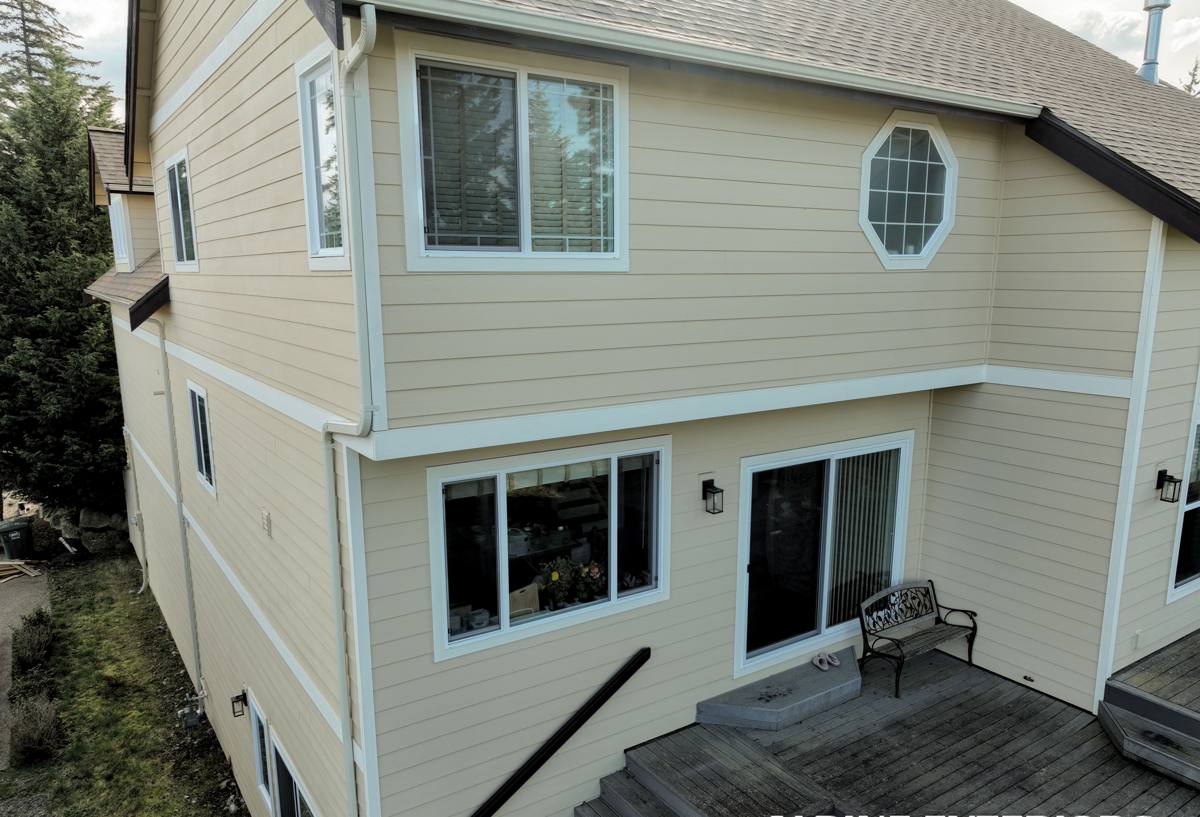
Why Decks Age Faster Here Than the Warranty Sticker Suggests
Most decking and hardware warranties are written around average national conditions. Whatcom County isn't average. A few things specific to this area shorten deck life if they're not accounted for during original construction or repair:
- Extended damp season: Wood that stays wet for weeks at a time decays faster than wood that gets wet and dries out quickly, even if total rainfall numbers look similar to other regions.
- Moss and algae growth: Shaded decks and north-facing sides develop moss that holds moisture directly against the decking surface, accelerating rot in exactly the spots you'd never notice from a quick look.
- Freeze-thaw cycling: Winter cold snaps freeze water that's worked into cracks or fastener holes, expanding them and loosening connections over several seasons.
- Fastener corrosion: Even away from direct salt exposure, persistent moisture corrodes under-spec screws and nails faster than dry-climate installations, especially where the original fasteners weren't rated for exterior ground-contact use.
None of this means a deck in Lynden is doomed — it means the repair has to account for how the wood actually behaves here, not how a spec sheet says it should behave in ideal conditions.
Signs Your Lynden Deck Needs Repair
Some damage is obvious. A lot of it isn't, especially where boards overlap framing or where the deck meets the house. Walk your deck and check for these before assuming a quick sand-and-reseal will fix things:
- Boards that feel spongy, springy, or noticeably softer underfoot than the rest of the deck
- Visible gaps, cracks, or splintering along board edges, especially near fastener holes
- Dark staining or discoloration where the deck attaches to the house (the ledger board)
- Rust streaks running down from screws, nails, or metal connectors
- Railings or posts that wobble more than a light push should cause
- Persistent moss or algae that keeps returning even after cleaning
- Stairs that feel less solid than they used to, or noticeably uneven
- Any gap or separation where the deck meets the house siding or foundation
If you're seeing more than one or two of these, it's worth getting an actual inspection rather than guessing. Surface symptoms often point to a smaller problem than what's underneath, and sometimes to a bigger one.
The Ledger Board Deserves Special Attention
The ledger board — where the deck attaches to the house — is the single most common source of serious deck failure, and it's also the hardest place for a homeowner to inspect without pulling boards. Water that gets behind flashing at this connection can rot both the ledger and the house framing behind it without any visible sign from the deck surface. Any deck repair worth doing checks this connection directly rather than assuming it's fine because the rest of the deck looks okay.
What a Correct Deck Repair Actually Involves
A repair that only replaces the boards you can see is a cosmetic fix, not a structural one. A proper repair works from the ground up:
1. Structural Inspection First
Before any board comes off, we check the framing: joists, beams, posts, footings, and the ledger connection. Surface rot on decking boards is common and often minor. Rot in the framing underneath is the thing that actually determines whether a repair is safe to build on top of.
2. Address the Framing, Not Just the Surface
Any joist, beam, or post showing soft spots, rot, or insect damage gets replaced or properly sistered — not patched over. New decking installed on top of compromised framing just hides the problem for a season or two before it resurfaces, usually worse.
3. Fastener and Hardware Upgrades
If the original build used undersized or non-rated fasteners, a repair is the right time to correct that — exterior-rated, corrosion-resistant hardware sized for the actual load, not whatever was on hand during the original build.
4. Flashing and Water Management
Proper flashing at the ledger board and anywhere water can collect isn't optional in this climate. It's usually the difference between a repair that lasts and one you're redoing in a few years.
5. Decking, Railing, and Stair Replacement
Only after the structure underneath is sound does it make sense to install new decking boards, refresh railings, or rebuild stairs — matching your existing material where that's the right call, or discussing alternatives where it isn't.
Repair or Replace? How We Help You Decide
Not every deck problem calls for a full rebuild, and not every deck is worth patching. The right call usually comes down to how much of the structural framing is affected versus how much is limited to the surface.
| Situation | Usually Points To |
|---|---|
| Surface rot or splintering on a handful of boards, framing solid | Targeted board and fastener repair |
| Soft or rotted joists, beams, or posts | Structural repair to framing, decking on top can often be reused or partially replaced |
| Ledger board rot or water damage behind the siding | Structural repair required regardless of how the rest of the deck looks |
| Widespread rot across most boards and framing, deck over 20-25 years old | Full rebuild is often more cost-effective than repeated repairs |
| Footings settling, heaving, or undersized for current code | Rebuild from the foundation up |
We'll always tell you honestly which category your deck falls into, including when a repair is the smarter financial choice and when it isn't.
Decking Material Considerations for This Climate
When boards need full replacement, homeowners usually ask whether to stick with wood or move to a composite product. There's no universally right answer — it depends on your budget, how much upkeep you want to take on, and how the rest of the deck is holding up.
- Wood decking costs less upfront and is straightforward to repair board-by-board later, but it needs regular cleaning, sealing, and moss treatment in this climate to hold up well.
- Composite decking resists moisture and moss better with less maintenance, but it costs more upfront and isn't always a simple match if you're only replacing part of an older wood deck.
Our position is straightforward: we'll tell you the honest maintenance trade-offs of each rather than pushing whichever product has a better margin. If moss and moisture have been a recurring problem on your deck, that's a real factor worth weighing regardless of which material you choose.
Our Deck Repair Process
- On-site inspection. We check the decking, framing, ledger connection, hardware, and footings — not just what's visible from the top.
- Honest assessment. You get a clear picture of what's structural versus cosmetic, and what repair or replacement options actually make sense for your deck.
- Written estimate. No surprise scope changes once work starts unless we find something during demo that genuinely wasn't visible beforehand — and if that happens, we explain it before doing anything.
- Repair work. Framing and structural issues get fixed first, then hardware, flashing, decking, and railings.
- Final walkthrough. We check the work with you before calling the job done.
Permits and Code in Whatcom County
Depending on the scope of the repair — especially anything involving structural framing, footings, or railing height changes — permitting may apply. Requirements vary based on the specifics of the project and the jurisdiction covering your property near Lynden. We handle that conversation as part of the estimate process so you're not left guessing whether your repair needs sign-off.
Why Hire a Crew That Already Works in Lynden
Deck repair looks similar on paper everywhere, but the details that matter — how moss builds up on shaded northern exposures, how long framing stays wet after a typical multi-day rain system, which fastener specs actually hold up through a Whatcom County winter — come from working on decks in this specific area, season after season. A crew that mostly works elsewhere and treats Lynden as a drive-by job is more likely to miss the moisture and framing issues that don't show up until a year or two later. Local experience means catching those problems during the repair, not after.
Keeping Your Repaired Deck in Good Shape
A quality repair still needs some upkeep to get its full lifespan out of this climate:
- Clean moss and algae off the surface at least once a year, more often on shaded sections
- Reseal or restain wood decking on the schedule appropriate to the product used
- Keep gutters and downspouts clear so runoff isn't draining directly onto or under the deck
- Check the ledger board area annually for early signs of water intrusion
- Sweep standing water and debris off the surface after storms rather than letting it sit
None of this is complicated, but it's the difference between a repair that lasts fifteen-plus years and one that starts showing the same problems again in three or four.
Get a Straight Answer About Your Deck
If you're not sure whether your Lynden-area deck needs a repair, a rebuild, or nothing more than a good cleaning, we're happy to take a look and give you a straight answer. Reach out for a free, no-pressure estimate using the form below.