 Blaine Window
 Roof Repair Built for Grandview's Climate
Grandview sits close enough to the water and open farmland around Blaine that roofs here take a different kind of beating than roofs twenty miles inland. Salt-laden air off the Strait works on metal fasteners and flashing year-round. Driving rain, pushed sideways by wind off the water, finds every gap a roof has been hiding. And the long, wet moss season that runs from fall through spring doesn't just look bad — it holds moisture against shingles and shakes for months at a time. A roof repair here isn't just patching a leak; it's addressing the specific combination of salt, wind-driven water, and organic growth that Whatcom County roofs deal with every year.
We work on roofs throughout the Grandview area regularly, which means we're not guessing at what's going on when we show up. We've seen how the local weather pattern ages a roof, and we know which repairs actually hold up out here versus which ones are just a temporary patch that fails again in a season or two.
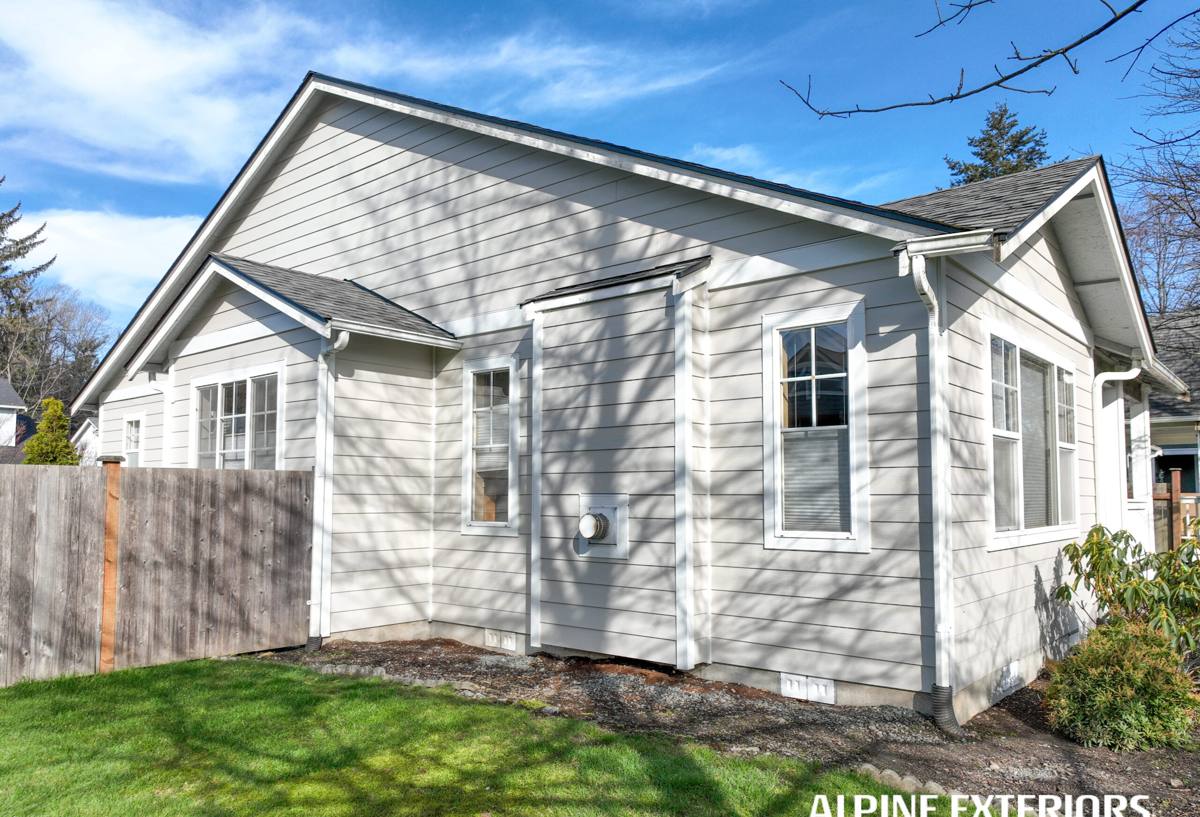
What Grandview Homes Need From a Roof Repair
Every roof repair should solve the actual problem, not just the symptom. That means a few things matter more here than they might in a drier climate:
- Flashing that resists salt corrosion — cheap or under-gauge flashing pits and fails faster this close to the water, and flashing failure is one of the most common causes of roof leaks we find.
- Sealant and fastener choices rated for coastal exposure — standard fasteners can corrode and back out over a few wet seasons, leaving a repair that looks fine but isn't actually holding.
- Moss and debris removal done correctly — moss holds water against the roofing material and, over time, lifts shingle edges and breaks the granule surface down. Removing it the right way (not pressure-washing it off, which can strip granules and force water under shingles) matters as much as the repair itself.
- Attention to wind-driven rain paths — valleys, penetrations, and eave edges are where sideways rain gets pushed under roofing material that would otherwise be fine in a straight-down rain.
Common Roof Problems We Find in Grandview
Moss and Organic Growth
This is the single most common issue we see on roofs in the area. Moss thrives in the shaded, damp conditions common under tree cover and on north-facing slopes. Left alone, it holds moisture against the roofing surface, works into shingle laps, and eventually contributes to premature wear and leaks. A repair visit almost always includes an honest look at how much moss is present and whether removal and treatment should happen alongside the repair itself.
Flashing Failure
Flashing around chimneys, skylights, vents, and roof-to-wall transitions is one of the most common leak points on any roof, and salt air accelerates the corrosion that eventually opens up small gaps. A pinhole in flashing is enough to let water track along framing and show up as a stain on a ceiling far from where the actual leak is.
Wind-Damaged or Lifted Shingles
Sustained wind off the water can lift shingle tabs, break seals, or crack shakes over time. Once a shingle's seal is broken, wind-driven rain gets underneath it far more easily on the next storm, which is why a single storm event often shows up as a leak weeks or months later.
Clogged or Failing Gutters and Drainage
Roof repair and drainage go hand in hand. A roof that's shedding water correctly but draining into a clogged or undersized gutter system will still end up with water intrusion at the eaves and fascia. We look at drainage as part of any repair, not as a separate problem.
Our Roof Repair Process
1. Assessment
We start with a full look at the roof, not just the spot where the leak is showing up inside. Leaks often travel along framing before they show a stain, so the source can be several feet from where the damage appears indoors. We check flashing, penetrations, valleys, shingle condition, and the extent of any moss or debris buildup.
2. Honest Explanation
We tell you what we found, what's causing it, and what the actual repair options are — including if a small, targeted repair is genuinely enough, or if the roof is showing signs that a bigger conversation makes sense. We don't upsell a full roof when a repair will do the job, and we don't downplay a problem that needs more than a patch.
3. The Repair
Depending on what we find, this can include replacing damaged shingles or shakes, re-flashing a penetration or valley, resealing and refastening lifted material, or removing moss and treating the area to slow regrowth. We match materials and technique to what the rest of the roof needs so the repair blends in and performs the same way the surrounding roofing does.
4. Cleanup and Check
We clear debris, remove old material, and do a final check of the repair area before we leave. If the repair was tied to moss or drainage issues, we'll also flag anything worth keeping an eye on going forward.
Repair vs. Replacement: How We Help You Decide
Not every roof problem in Grandview needs a full replacement, and not every leak can be fixed with a patch. The table below covers the general factors we weigh — every roof is different, and the right call depends on the specific conditions we find during the assessment.
| Factor | Leans Toward Repair | Leans Toward Replacement |
|---|---|---|
| Age of roofing material | Well within expected lifespan | Near or past the material's typical service life |
| Extent of damage | Isolated to one area or penetration | Spread across multiple sections of the roof |
| Underlying deck condition | Solid, no rot or sagging | Soft spots, rot, or visible sagging |
| Moss/organic growth | Surface-level, recently developed | Long-term growth with material breakdown underneath |
| Repair history | First or infrequent repair | Repeated repairs to the same area |
A roof that's had several repairs to the same spot is usually telling you something — either the underlying issue was never fully addressed, or the material is simply reaching the end of what it can reasonably do. We'll always give you a straight answer on which category your roof falls into.
Why Hiring a Crew That Works Grandview Regularly Matters
A roofer who works this specific stretch of Whatcom County regularly has an advantage that isn't just familiarity — it's pattern recognition. We know what a five-year-old roof with north-facing moss exposure typically looks like versus a roof of the same age that's had better sun and drainage. We know which flashing details tend to fail first in this climate, and which repairs are worth doing well the first time because a corner-cut version won't survive the next few wet seasons.
That local pattern recognition also means faster, more accurate assessments. We're not learning the regional weather behavior on your roof — we've already seen how it plays out on roofs like yours nearby.
Maintenance Steps That Extend a Repair's Lifespan
A good repair lasts longer when the roof around it is kept in reasonable shape. A few things worth doing on a regular basis in this climate:
- Have moss and debris cleared before it builds up thick enough to hold standing moisture against the roofing material.
- Check and clean gutters at least twice a year, more often if the property has heavy tree cover.
- Have flashing points inspected periodically, especially after a significant windstorm.
- Trim back overhanging branches that keep sections of the roof shaded and damp.
- Address small leaks early — a small, contained repair is almost always less invasive and less costly than one that's been left to spread into the decking.
What to Expect When You Call Us
We'll ask a few questions about what you're seeing — where the leak or damage is showing up, how long it's been happening, and any relevant roof history you know. From there we schedule an on-site assessment, walk you through what we find in plain language, and give you a clear scope and cost range before any work starts. There's no pressure to agree to more than the actual problem calls for.
If you're dealing with a leak, visible moss buildup, or damaged shingles on a home in the Grandview area, we're happy to take a look and give you an honest read on what it needs. Reach out for a free, no-pressure estimate using the form below.