 Blaine Window
 Deck Repair Built for Birch Bay's Weather, Not a Generic Climate
Birch Bay decks work harder than decks almost anywhere else in Whatcom County. They sit close to open water, take salt-laden wind straight off the bay, and spend a good chunk of the year damp under low grey skies. A deck repair approach that works fine in a dry inland town will fail here in a few seasons. Ours doesn't, because it's built around what actually happens to wood, fasteners, and finishes in this specific microclimate.
This page covers deck repair specifically — not full rebuilds, not new construction. If your deck is structurally sound but showing wear, damage, or early rot, this is the service that gets it back to solid and buys you years before you'd ever need to think about replacement.
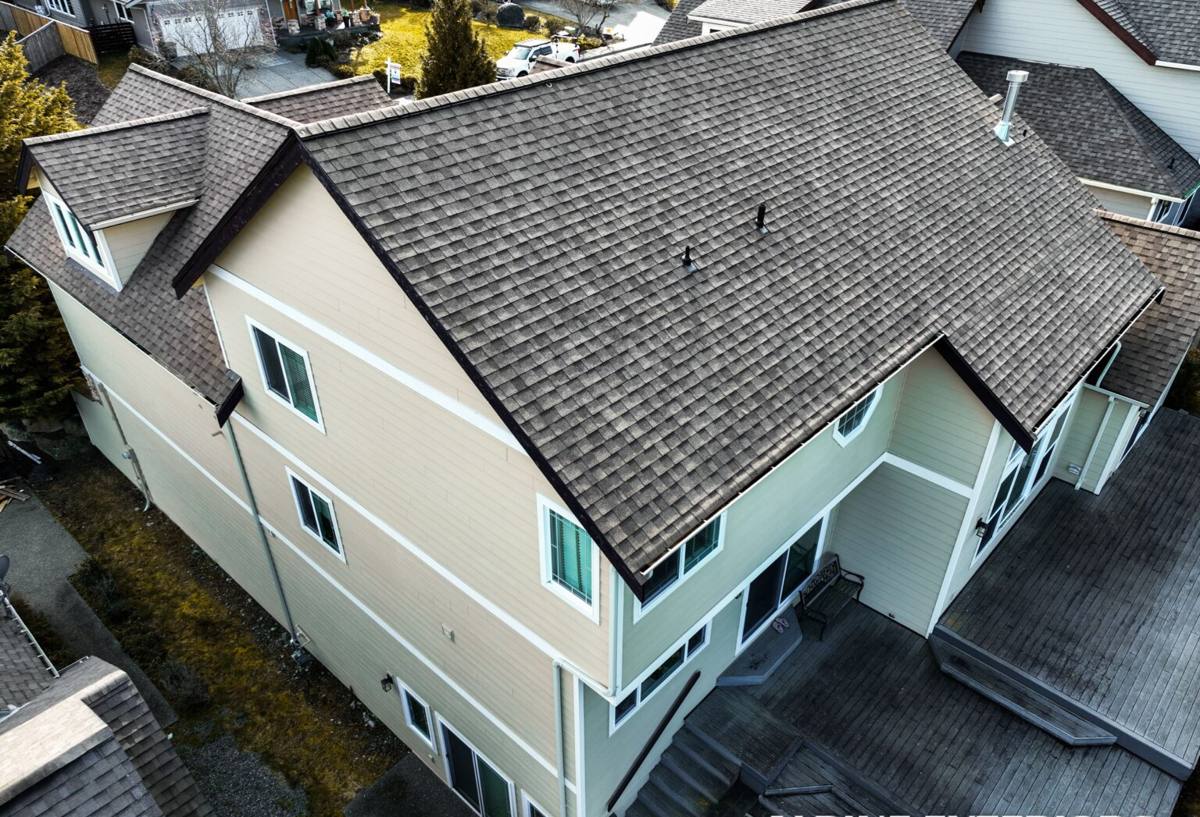
What Salt Air, Driving Rain, and Moss Season Do to a Deck
Salt Air
Airborne salt from the bay settles on every exterior surface, including your deck. It accelerates corrosion on any exposed metal — nail heads, screw tips, joist hangers, railing hardware — long before the wood itself shows real damage. A deck that "looks fine" on the surface can have fasteners quietly rusting and losing their grip underneath.
Driving Rain
Wind-driven rain doesn't just fall on a deck, it gets pushed sideways into seams, under boards, and behind ledger boards and rim joists. Water that gets forced into a joint stays there longer than water that simply lands and runs off, which is exactly the condition that rots wood from the inside out — often invisible from above until a board finally gives.
Moss Season
Whatcom County's long wet stretch gives moss and algae months to establish themselves on any deck surface that doesn't dry out quickly. Beyond looking bad, moss holds moisture directly against the wood and turns a walking surface slick and genuinely dangerous, especially on stairs and sloped sections.
None of these three forces is dramatic on its own. Together, and repeated year after year, they're what turns a well-built deck into one that needs real repair work by year eight or ten instead of year twenty.
Signs Your Deck Needs Repair — Not Just a Cleaning
A pressure wash and a coat of stain can hide a lot, which is part of the problem — it's easy to mistake a deck that needs structural attention for one that just needs cosmetic care. Look for these before you assume a cleaning will fix it:
- Boards that feel spongy, springy, or soft when you walk on them, especially near the house or around posts
- Rust streaks bleeding out from screw heads or bolts
- Gaps or movement where the deck framing meets the house (the ledger board connection)
- Railings or posts that wobble or flex under hand pressure
- Persistent moss or dark staining that comes back within weeks of cleaning
- Visible daylight or soft wood where joists or beams are hidden from view
- Stair stringers that feel uneven or have started to separate from their fasteners
If you're seeing any of the structural items — soft framing, ledger movement, wobbly railings — that's a repair call, not a maintenance one. Surface issues like staining or moss are worth mentioning too, since they're often an early warning sign for what's happening underneath.
What a Correct Deck Repair Actually Involves
Structural Assessment First
Before any board gets replaced, a proper repair starts by checking what's holding the deck up: the ledger connection to the house, the posts and footings, the joists, and the beam. Coastal decks fail from the framing out, not the surface in, so this is the part that actually determines whether a repair will hold.
Fastener and Hardware Replacement
Given how quickly salt air degrades ordinary hardware, any repair worth doing includes replacing corroded fasteners with hardware rated for exterior, coastal use — not just matching what was there before if what was there before is what failed.
Surface Repair
Individual boards get replaced where they've split, cupped, or rotted, matching the existing decking as closely as possible. Where moss and algae have taken hold, the surface gets properly cleaned and treated, not just power-washed and left to re-grow.
Drainage and Airflow
A lot of repeat rot problems come down to water that has nowhere to go and no airflow to dry it out. Where it makes sense, part of a good repair is improving how water sheds off the deck and how air moves underneath it, so the same failure doesn't show back up in two years.
Repair vs. Replace: How to Think About the Decision
Not every deck problem calls for a full replacement, and not every deck can be reasonably repaired. This is generally how the decision breaks down:
| Factor | Repair Usually Makes Sense | Replacement Usually Makes Sense |
|---|---|---|
| Framing condition | Joists and beams are sound; damage is limited to a few members | Widespread soft or rotted framing throughout the structure |
| Ledger connection | Solid, properly flashed, no ongoing water intrusion | Failing, improperly flashed, or showing chronic leaks into the house |
| Surface boards | Isolated boards damaged; majority still sound | Most boards cupped, split, or rotted across the deck |
| Age of structure | Under 15-20 years, built to a reasonable standard | Original construction quality or code compliance is questionable |
| Budget goal | Extend usable life at a fraction of replacement cost | Want a different footprint, material, or design |
We'll give you a straight answer on which side of that line your deck falls on. Most decks we see in Birch Bay are repairable — the salt air and rain damage tends to be concentrated in predictable spots rather than spread evenly across the whole structure.
Our Deck Repair Process
- On-site assessment — we walk the full deck, check the framing from underneath where accessible, test railings and stairs, and identify every problem area, not just the one you called about.
- Honest scope and estimate — you get a clear breakdown of what needs structural attention versus what's cosmetic, so you can prioritize if budget is a factor.
- Repair work — framing and fastener repairs first, then surface board replacement, then finish work like cleaning, sealing, or staining as needed.
- Final check — we walk the deck again once work is done to confirm everything is solid, level, and secure before we call it finished.
Materials We Use, and Why
For coastal repair work, we lean toward stainless steel or heavy hot-dip galvanized fasteners and hardware rather than standard-grade coated screws, because the standard-grade options are exactly what tends to fail first in salt air. It costs a bit more up front but it's the difference between a repair that lasts and one you're calling us about again in three years.
For decking material, whether we're matching existing wood or discussing a partial upgrade to composite in a repair area, the right call depends on your existing deck, your budget, and how much upkeep you want going forward. Wood is more affordable to patch and repair but needs regular maintenance to hold up to this climate. Composite costs more per board but sheds moisture differently and resists moss better, which matters a lot given how long Birch Bay's wet season runs. We'll walk you through the honest trade-offs for your specific deck rather than push one option.
Maintenance Checklist to Protect Your Repair
A repair holds up a lot longer with a little seasonal attention. This is a reasonable routine for a Birch Bay deck:
- Sweep debris and standing water off the deck regularly through fall and winter
- Clean moss and algae off the surface as soon as it appears, not after it's established
- Check railings and stair treads for movement once or twice a year
- Look underneath the deck periodically for water pooling or standing moisture
- Re-seal or re-stain wood decking on the schedule recommended for the product you have
- Keep gutters and downspouts near the deck clear so runoff isn't draining onto it
- Address small issues — a loose board, a rust spot on a fastener — before they spread
Why a Crew That Already Works Birch Bay Matters
Deck repair in a marine environment isn't the same trade as deck repair fifty miles inland. A crew that regularly works Birch Bay and the rest of the Blaine area already knows which fastener grades hold up here, where water tends to collect on local deck designs, and how aggressive the moss growth gets by mid-winter. That's not something you can fully substitute with a general handyman or an out-of-area contractor working on assumptions instead of experience.
We're based in Blaine, and Birch Bay decks are work we do regularly — not a special case we have to figure out on the fly. That local familiarity shows up in faster, more accurate assessments and repairs that account for the conditions your deck is actually going to face, not generic ones.
If you've got a deck in Birch Bay that needs an honest look, we're happy to come take a look and give you a straightforward, no-pressure estimate. There's no obligation — just a clear picture of what your deck needs and what it would take to fix it right. Use the form below to get started.