 Blaine Window
 Ferndale Decks Take a Different Kind of Beating
Ferndale sits close enough to the water and to Whatcom County's wet weather patterns that a deck here ages differently than one built forty miles inland. Salt-laden air off the Strait of Georgia and Puget Sound corridor works on metal fasteners and connectors year-round, not just during storms. Driving rain off the water pushes moisture sideways into places a deck was never designed to shed it. And the long stretch of gray, damp months every fall through spring gives moss, algae, and lichen months of uninterrupted growing time on any surface that doesn't dry out fast.
None of that means a deck can't last in Ferndale. It means the build has to account for those three things from the start — material selection, fastener choice, framing details, and drainage all get decided differently here than they would in a dry climate. A deck that would hold up fine in Spokane or Boise can fail early here if it's built the same way.
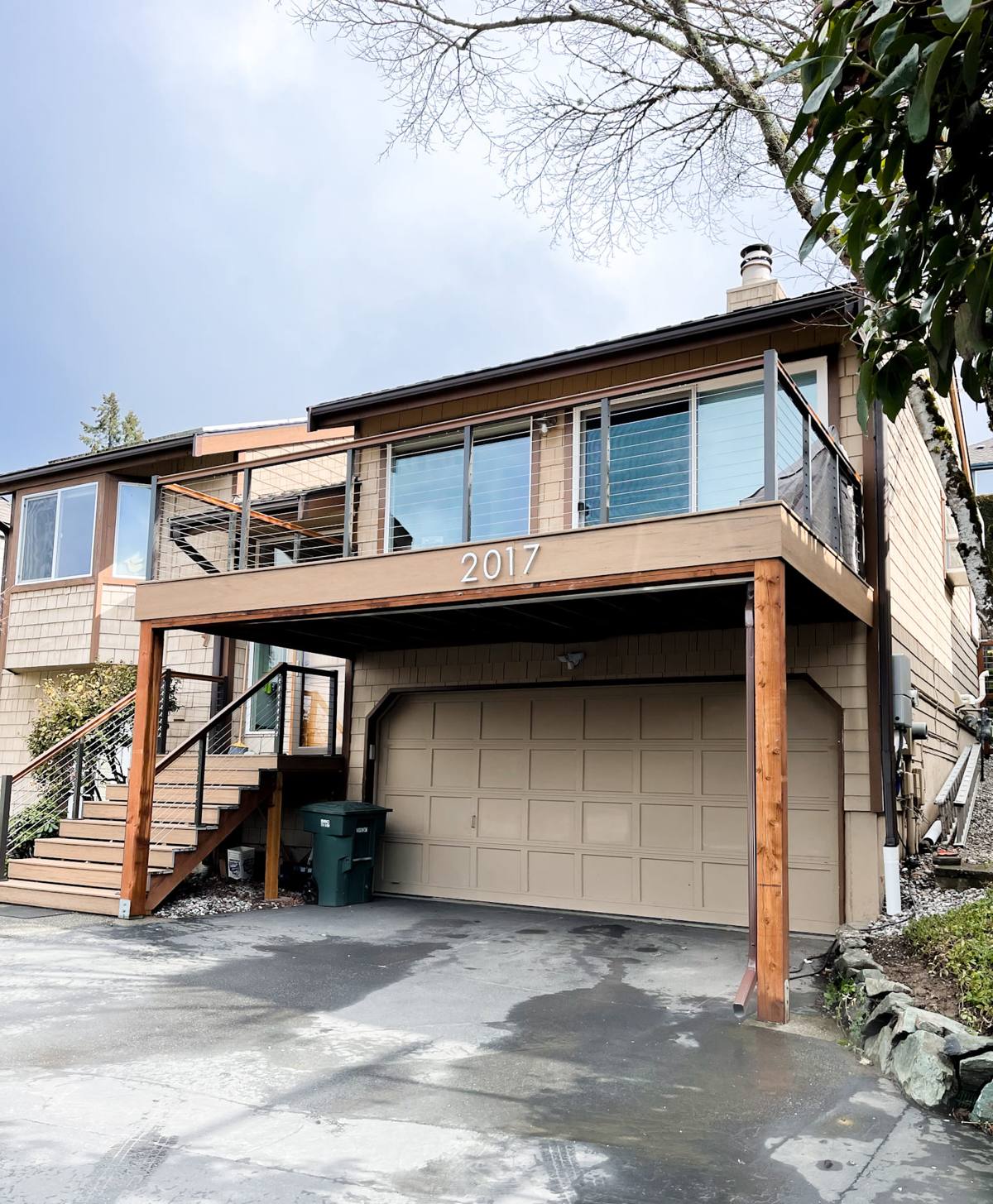
What "Built Right" Means for This Climate
Moisture Has to Have Somewhere to Go
The single biggest driver of early deck failure in this part of Whatcom County isn't the wood itself — it's water that gets trapped instead of shedding. Ledger boards attached without proper flashing, joists sitting flush against siding, decking installed with no gap for airflow, and post bases that sit in standing water all shorten a deck's life dramatically, regardless of what species or brand of decking sits on top.
Salt Air Changes What Hardware You Use
Standard galvanized fasteners corrode faster near the water than most homeowners expect, and once a fastener starts rusting, it stains the wood around it and weakens the connection. We spec stainless steel or high-grade coated fasteners and structural connectors rated for coastal exposure on every Ferndale deck we build — it costs a little more up front and saves a full re-fastening job down the road.
Moss Doesn't Care How New the Deck Is
Moss and algae need shade, moisture, and time — Ferndale's winters supply all three. A deck built with tight board spacing, poor drainage underneath, or heavy overhead tree cover will grow moss within a season or two no matter what it's made of. Good deck design fights moss with airflow and drainage, not just surface cleaning after the fact.
Decking Material Options, Weighed Honestly
There's no single "best" decking material for Ferndale — there's a best fit for your budget, your maintenance appetite, and how much sun or shade the deck actually gets. Here's how the common options really compare in this climate:
| Material | How It Handles Rain & Moss | Maintenance | Typical Lifespan Here |
|---|---|---|---|
| Pressure-treated fir/pine | Sheds water fine if sealed regularly; moss grows quickly if neglected | Annual cleaning, re-sealing every 1-2 years | 15-20 years with upkeep |
| Cedar | Naturally moisture- and rot-resistant; still needs cleaning to stop surface moss | Cleaning and oil/sealer every 1-2 years | 20-25 years with upkeep |
| Composite decking | Won't rot, but can grow surface algae/moss film in shaded, damp spots | Occasional wash-down, no sealing needed | 25-30+ years, manufacturer-warrantied |
| PVC decking | Fully moisture-proof surface; least prone to moss staining | Lowest — wash-down only | 25-30+ years, manufacturer-warrantied |
Composite and PVC cost more up front but trade ongoing maintenance for material cost — for homeowners who don't want to re-seal a deck every year or two, that trade generally pays off in this climate. For homeowners who like the look and feel of real wood and don't mind the upkeep, cedar is the strongest wood option we install here specifically because of its natural resistance to the moisture Ferndale gets so much of.
Framing and Substructure: Where Most Deck Problems Actually Start
Homeowners tend to focus on the decking surface, but the framing underneath is what determines whether a deck is still safe in fifteen years. In a climate this wet, we pay particular attention to:
- Footings set below frost depth and sized correctly for the soil conditions on the lot
- Post bases that hold posts up off standing water, never buried or set flush in concrete that traps moisture against the wood
- Joist hangers and structural connectors in stainless or coastal-rated coating, not standard galvanized
- Proper ledger flashing where the deck attaches to the house, so water is directed away from the band joist and siding
- Joist spacing and blocking that meets current code for the decking material chosen, since composite and wood have different span requirements
A deck can look finished and still be built on undersized or poorly protected framing — the problems just don't show up for a few years. That's why we treat the substructure as the part of the job that matters most, even though it's the part that ends up invisible once the decking goes down.
Designing Around Whatcom County's Wet Season
Drainage Under and Around the Deck
Where a deck sits low to the ground, water and organic debris can collect underneath with nowhere to go, creating exactly the damp, shaded conditions moss and rot both need. Grading the ground under the deck, adding gravel or a drainage layer where needed, and keeping the underside ventilated all reduce how much moss and mildew develop over the wet months.
Board Gapping and Airflow
Decking boards need consistent gaps for water to drain through and air to circulate underneath. Boards installed too tight — a common shortcut — trap moisture between them, and that's usually the first place moss and algae take hold on an otherwise well-built deck.
Sun Exposure and Layout
Where possible, we factor in how much direct sun different parts of a deck actually get through the year. Fully shaded corners under trees or close to the house will always need more attention than open areas, and knowing that ahead of time helps set realistic maintenance expectations rather than surprises down the road.
Fasteners, Flashing, and the Corrosion Question
This is worth calling out on its own because it's the detail most often skipped on lower-bid deck jobs. Standard exterior screws and joist hardware are rated for general outdoor use, not for the level of airborne salt and moisture Ferndale properties see. Over a few years, corroding fasteners can streak the decking, loosen structural connections, and force a costly repair that has nothing to do with the decking material itself. We use stainless steel or coastal-rated fasteners and connectors as standard practice here — not an upsell, just the correct spec for this location.
Our Deck Building Process
Every deck we build in Ferndale follows the same process, adjusted for the specific lot, sun exposure, and how the deck will be used:
- On-site assessment of grade, drainage, sun/shade pattern, and how the deck will attach to the house
- Design and material discussion — honest trade-offs on wood vs. composite vs. PVC based on your budget and maintenance preference
- Permit application and review with Whatcom County or the City of Ferndale as applicable
- Footings and framing built to span and connector specs for the chosen decking material, with coastal-rated hardware throughout
- Ledger flashing and waterproofing at the house connection
- Decking installation with correct board gapping for drainage and airflow
- Final walkthrough covering care and maintenance specific to the material installed
Permits and Code in This Area
Most decks over a certain height or attached to the house require a permit and inspection through the local jurisdiction, and requirements can differ slightly between unincorporated Whatcom County and the City of Ferndale. We handle the permit application and coordinate inspections as part of the build, so the finished deck is code-compliant and documented — which matters both for safety and for resale down the line.
Why It Matters That We Already Work in Ferndale
A deck built by a crew unfamiliar with this area's conditions can look identical to one built by a local crew on installation day — the difference shows up two or three winters later, when the corrosion-prone hardware starts staining the decking, or the moss takes over a section that was never designed to drain properly. Working regularly in Ferndale and the surrounding Whatcom County communities means we've already seen how salt air, driving rain, and the long moss season affect decks over time, and we build against those specific problems from day one rather than discovering them after the fact.
If you're planning a new deck or replacing one that's showing its age, we're happy to take a look at your property and talk through what makes sense for your budget, your sun exposure, and how you actually plan to use the space. Reach out for a free, no-pressure estimate using the form below.