 Blaine Window
 Dakota Creek Roofs Work Harder Than Most
Dakota Creek sits close enough to the water and to open farmland that roofs here take a different kind of beating than roofs ten miles inland. You've got salt-laden air moving in off Semiahmoo Bay and the Strait of Georgia, long stretches of driving rain through fall and winter, and a moss season that can run eight months out of the year on shaded, north-facing slopes. None of that is dramatic on its own. It's the combination, year after year, that wears a roof down faster than the shingle warranty label suggests it should.
We've replaced enough roofs in this part of Whatcom County to know what actually fails first out here: fasteners that corrode faster than inland, underlayment that gets asked to do more work because moss holds moisture against the deck, and flashing details that were fine when installed but were never built for this level of sustained wet weather. A correct roof for Dakota Creek isn't a different product than what goes on a house in Bellingham — it's the same materials installed with more attention to the details that matter here.
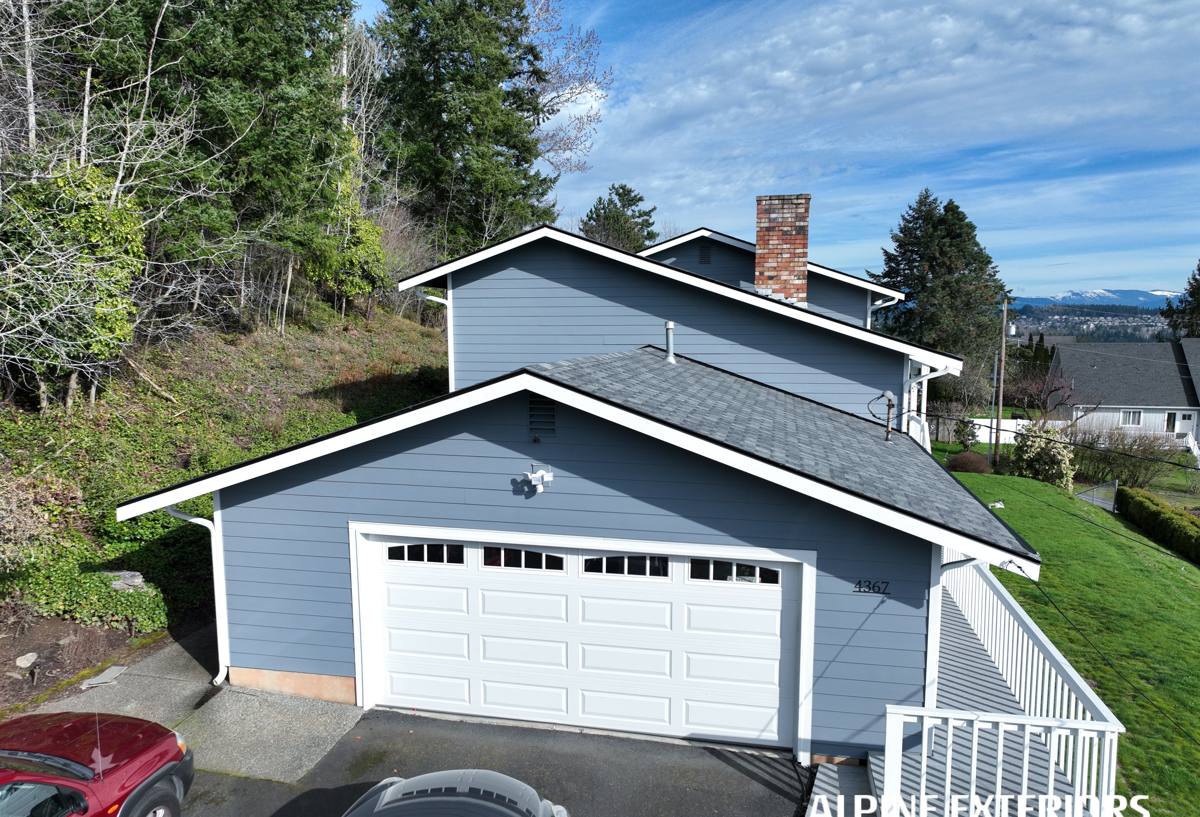
What Salt Air and Moss Actually Do to a Roof
Salt Air
Airborne salt doesn't just sit on the surface — it works into metal fasteners, flashing seams, and any exposed hardware over time. Galvanized nails and low-grade flashing corrode faster near the water than they do a few miles inland. This is a fastener and flashing quality issue more than a shingle issue, which is why we don't cut corners on either.
Driving Rain
Whatcom County rain rarely falls straight down. Wind off the water pushes it sideways, which means it finds its way under poorly lapped shingles, undersized flashing, and roof penetrations that weren't sealed with enough overlap. A roof that would hold up fine in a calmer climate can leak here simply because the rain comes in at an angle the original install didn't account for.
Moss
Moss loves shaded, north-facing roof slopes and the moisture that collects under tree cover, which describes a lot of Dakota Creek lots. Moss isn't just cosmetic — its root structure lifts shingle edges and holds water against the roofing material long after the rain stops, which accelerates granule loss and, eventually, deck rot underneath.
Signs a Dakota Creek Roof Needs Replacement, Not Another Repair
- Granules collecting in gutters or at downspout outlets, especially after a hard rain
- Shingles that are curling, cupping, or have visibly lifted edges
- Moss or dark streaking covering more than a small patch, particularly on shaded slopes
- Daylight visible through the roof deck from inside the attic
- Soft or spongy spots underfoot during an inspection walk
- Flashing around chimneys, vents, or skylights that's rusted, cracked, or pulling away
- A roof approaching or past 20-25 years old, even if it "looks okay" from the ground
- Repeated interior water stains that keep reappearing after patch repairs
One or two of these on their own might mean a targeted repair is enough. Several at once, especially on an older roof, usually means repair costs are about to start outpacing what a full replacement would run — and a full replacement lets us fix the underlying issues instead of patching around them.
What a Correct Roof Installation Actually Involves
A roof replacement is more than swapping old shingles for new ones. In a climate like this, the layers underneath the shingles matter as much as the shingles themselves.
Tear-Off and Deck Inspection
We remove the old roofing down to the deck rather than layering over it. This is the only way to actually see what's underneath — soft spots, rot, or damage that's been hidden for years often only shows up once the old material is off. Any compromised decking gets replaced before anything new goes down.
Underlayment
This is the roof's real waterproofing layer, and it matters more here than in drier climates. We use synthetic or ice-and-water underlayment sized to the actual exposure of the roof, with extra protection at eaves, valleys, and any low-slope sections where wind-driven rain is most likely to find a way in.
Flashing
Flashing around chimneys, skylights, vent pipes, and wall intersections is where most roof leaks actually start — not in the field of the shingles. We install new flashing at every penetration rather than reusing old pieces, and we pay close attention to step flashing at wall transitions, which is a common weak point on older Whatcom County homes.
Ventilation
Proper intake and exhaust ventilation keeps the attic dry and keeps moisture from condensing against the underside of the deck — which matters in a climate where the air outside is often nearly as damp as the air you're trying to keep out. Poor ventilation shortens the life of a roof no matter how good the shingles are.
Material Options for Dakota Creek Homes
There's no single "right" material for every house — it depends on your roof's slope, sun and shade exposure, budget, and how long you plan to stay in the home. Here's how the common options actually compare for a coastal Whatcom County property.
| Material | Typical Lifespan | How It Handles This Climate | Maintenance Reality |
|---|---|---|---|
| Architectural Asphalt Shingle | 25-30 years | Solid performer when installed with proper underlayment and flashing; good algae-resistant options available | Periodic moss removal on shaded slopes; standard gutter care |
| Standing Seam Metal | 40-50+ years | Excellent shedding of driving rain; moss has a harder time gripping a smooth metal surface | Low; occasional fastener and seam checks |
| Composite/Synthetic Shake | 30-40 years | Good moisture resistance without the upkeep of real wood shake | Low to moderate |
| Cedar Shake | 20-30 years with upkeep | Attractive but requires real diligence in a wet, moss-prone climate | High — regular treatment and moss control needed to hit full lifespan |
For most Dakota Creek homes we recommend a quality architectural asphalt shingle with an algae-resistant rating, or standing seam metal for homeowners planning to stay long-term or dealing with a heavily shaded, moss-prone roof. We're honest about cedar shake in this climate: it can look great, but it demands more ongoing maintenance here than in a drier region, and we'll tell you that upfront rather than sell you something that needs more babysitting than you signed up for.
Our Installation Process
- On-site inspection — we walk the roof (not just look from the ground) and check the attic for ventilation, moisture, and structural issues before quoting anything
- Written estimate — clear scope, material options, and a real number, not a range that balloons once work starts
- Scheduling around weather — we plan tear-off days around forecast windows so your roof deck isn't exposed during a rain event
- Tear-off and deck repair — old material removed, deck inspected and repaired as needed
- Underlayment and flashing installation — the waterproofing layer that does the real work
- Roofing material installation — installed to manufacturer spec, with attention to fastening patterns appropriate for coastal wind exposure
- Ventilation check — intake and exhaust confirmed adequate for the attic space
- Final walk-through and cleanup — magnetic sweep for stray nails, full site cleanup, and a walk-through so you know what was done
Cost Factors Worth Understanding
Roof replacement pricing varies a lot based on real, specific factors — not just square footage. Here's what actually moves the number on a Dakota Creek home:
| Factor | Why It Matters |
|---|---|
| Roof size and number of layers being removed | More tear-off labor and disposal cost |
| Roof pitch and accessibility | Steeper or harder-to-access roofs require more safety setup and time |
| Deck condition | Rot or soft decking found during tear-off adds material and labor to replace it |
| Number of penetrations | Chimneys, skylights, and vents each need individual flashing work |
| Material choice | Asphalt, metal, and composite shakes carry different material and labor costs |
| Ventilation upgrades | Adding or correcting intake/exhaust vents if the current setup is inadequate |
We don't quote a number until we've actually seen the roof. Anyone offering a firm price over the phone for a full replacement is guessing, and that guess usually turns into change orders once they're up there.
Why Local Experience in Dakota Creek Matters
A crew that's worked roofs across Blaine and the surrounding Whatcom County coastline already knows which slopes on which orientations tend to hold moss, which flashing details fail first in wind-driven rain, and how much underlayment overlap actually holds up here versus what the minimum code requirement is. That's not something you get from a crew that mostly works drier inland climates and treats coastal jobs the same way. It shows up in the small decisions — where extra ice-and-water shield goes, how step flashing gets tied into siding, what fastener spec makes sense this close to salt air — and those small decisions are usually what separates a roof that lasts 25 years from one that starts leaking at year twelve.
If your roof is showing wear, or you just want an honest read on how much life it has left, we're glad to take a look. The estimate is free, there's no pressure attached to it, and you'll get a straight answer about whether you need a full replacement, a repair, or just a maintenance plan to get more years out of what you've got. Fill out the form below to get started.