 Blaine Window
 Why Point Roberts Windows Take a Different Kind of Beating
Point Roberts sits on its own peninsula, surrounded by water on three sides, cut off from the rest of Whatcom County by the international border. That geography is part of what makes it a special place to live — and part of why the windows on Point Roberts homes work harder than windows almost anywhere else in the county. Salt-laden air blows in off the water more or less constantly. Wind-driven rain hits siding and window assemblies at angles that a sheltered inland home never sees. And the same cool, moist marine air that keeps lawns green year-round also keeps north-facing trim, sills, and glazing damp long enough for moss and algae to take hold.
None of that means custom windows on Point Roberts have to fail early. It means the product selection, the flashing detail, and the sealant work all need to account for conditions that a generic "install some windows" job usually doesn't plan for. That's the whole focus of this page: what a correctly done custom window job looks like for a Point Roberts home, and why it's worth hiring a crew that already understands the peninsula.
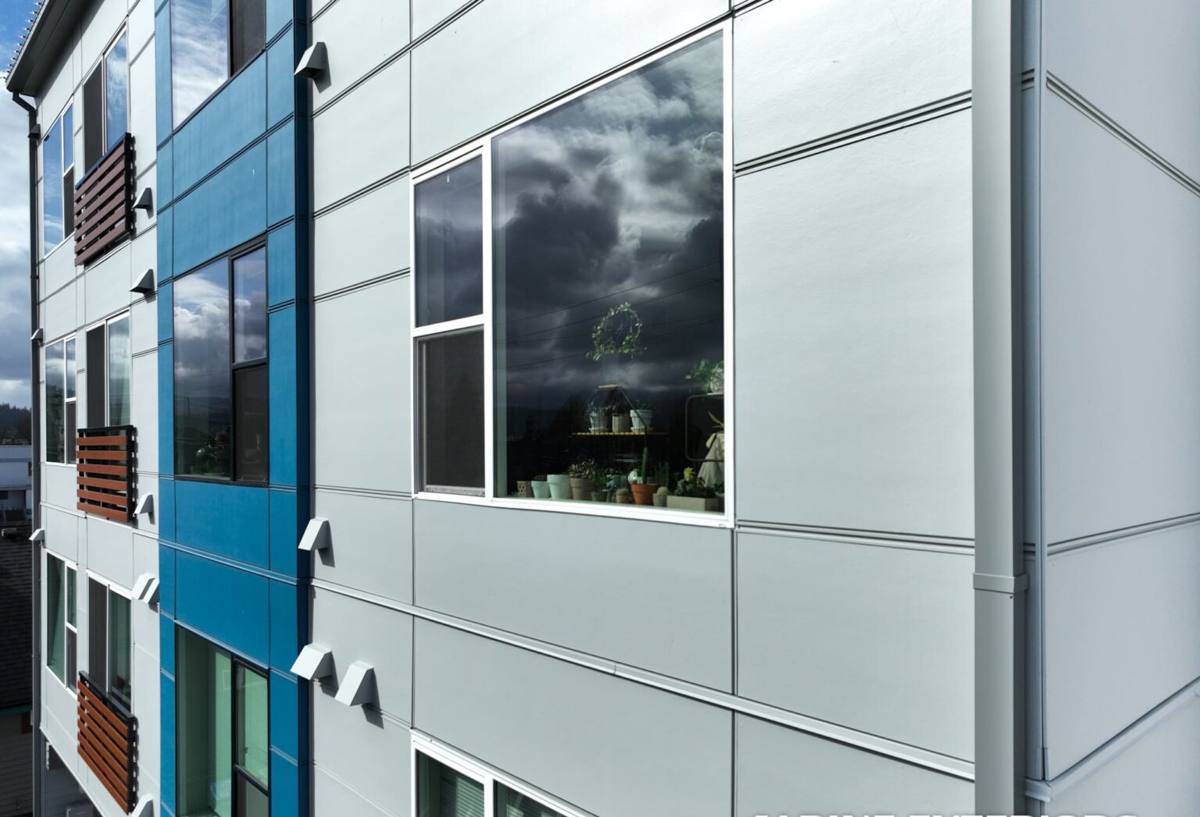
What Salt Air, Rain, and Moss Actually Do to a Window
Salt Air
Airborne salt is corrosive to exposed metal — hinges, cranks, screws, and especially older aluminum frames or unprotected fasteners. Over years, it can pit hardware, discolor finishes, and work its way into any gap where two materials meet. It doesn't ruin a window overnight, but it shortens the life of anything that wasn't specified with coastal exposure in mind.
Wind-Driven Rain
A window that sheds rain fine in still weather can still leak under wind pressure if the flashing and sill pan weren't done right. Wind-driven rain gets pushed sideways and even slightly upward under trim and siding laps, which is exactly the kind of load a proper flashing sequence is designed to handle and a shortcut installation is not.
Moss and Algae Season
The long stretch of cool, damp weather that Whatcom County sees most of the year gives moss and algae plenty of time to establish on shaded sills, mulled window stacks, and anywhere water sits instead of draining. Beyond the cosmetic issue, trapped moisture behind moss growth can slowly degrade caulking, wood trim, and paint or stain finishes.
What a Correct Custom Window Job Involves Here
"Custom" on a page like this doesn't mean exotic — it means windows sized, specified, and installed to fit a specific opening and a specific home's exposure, rather than pulled off a shelf in a stock size and forced into place. For Point Roberts, that generally means paying close attention to a few things most installers in drier, more sheltered parts of the state don't have to think about as hard:
- Frame material chosen for marine exposure, not just price or looks
- Corrosion-resistant hardware and fasteners, not standard-grade
- A full sill pan and flashing system, not just caulk around the perimeter
- Weep holes and drainage paths kept clear and functional, not blocked by trim or sealant
- Sealant and backer rod rated for UV and constant moisture cycling
- Glazing package matched to the home's sun exposure and heating setup
Frame Material: What Actually Holds Up
There's no single "best" window material for every home — it depends on budget, the look you want, and how much upkeep you're willing to do. But in a coastal, high-moisture environment like Point Roberts, the trade-offs matter more than they would inland.
| Frame Material | Coastal/Salt Air Behavior | Maintenance | Typical Cost Range |
|---|---|---|---|
| Vinyl | Doesn't corrode; UV-stable modern formulations hold color well | Low — occasional cleaning | Lower |
| Fiberglass | Excellent — very stable in temperature swings and moisture, resists salt pitting | Low | Mid to upper-mid |
| Aluminum-clad wood | Good exterior protection if cladding and flashing are done right; interior wood still needs care | Moderate | Upper |
| Bare wood | Requires diligent finish maintenance to resist moisture and moss in this climate | High | Upper |
We'll talk through which of these fits your home and budget honestly — including telling you when a lower-maintenance option is the smarter long-term call for a shaded, water-facing elevation, even if it's not the option you originally had in mind.
Our Process for a Point Roberts Project
1. On-Site Assessment
We look at each opening individually — orientation to prevailing wind and rain, existing flashing condition, any signs of past moisture intrusion or moss buildup, and how the home is currently venting or trapping humidity. Point Roberts homes vary a lot in age and construction, so this step isn't a formality.
2. Measuring and Product Selection
Openings get measured precisely rather than assumed to match a catalog size. We talk through frame material, glazing package, and hardware finish based on that specific wall's sun and weather exposure, not a one-size answer for the whole house.
3. Scheduling Around the Border
Point Roberts is only reachable by road through Canada, or by water. That means crew time, material deliveries, and weather windows all need to be planned with the crossing in mind — something a crew that doesn't regularly work the peninsula often underestimates until it costs the project a day.
4. Removal and Flashing
Old windows come out carefully to protect surrounding siding and trim. Any water damage or compromised sheathing found during removal gets flagged and addressed before the new window goes in — not covered over.
5. Installation
Sill pan, back dam, and a proper flashing sequence go in before the window itself, then the window is set, shimmed, and fastened to spec, sealed with weather-appropriate sealant, and checked for square and smooth operation.
6. Final Check and Walkthrough
We walk the finished openings with you, confirm operation, and go over any care specific to the material chosen — particularly for wood or clad-wood units where finish maintenance keeps moss and moisture from gaining a foothold.
Why a Blaine-Based Crew That Works Point Roberts Regularly Matters
Point Roberts isn't a place you can treat like any other stop on a route through Whatcom County. Getting a crew and materials there means crossing an international border, which takes planning that most window companies based further inland simply haven't built into how they schedule jobs. A crew that already works the peninsula regularly knows how to time deliveries, how much buffer to build into a schedule, and what documentation or lead time the crossing requires — so your project doesn't stall waiting on logistics that should have been sorted out before day one.
There's also the exposure itself. A contractor who's done several jobs on Point Roberts has seen firsthand which details actually matter on this specific stretch of coastline — where wind-driven rain tends to find weak flashing, which elevations hold onto moss longest, and which hardware finishes actually hold up over a few winters of salt air. That's not something you can fully substitute with a generic install checklist.
Signs Your Point Roberts Home May Need New or Repaired Windows
- Visible moss or dark staining building up on or around window trim
- Drafts or noticeable cold spots near the frame in windy weather
- Fogging or moisture between panes on double- or triple-glazed units
- Wood trim that's soft, discolored, or peeling near the sill
- Hardware that's corroded, sticking, or difficult to operate
- Visible daylight or gaps around the frame perimeter
- Water staining on interior drywall or trim below or beside a window
Any one of these on its own might be minor. Several together, especially on a wall that faces prevailing wind and rain, usually means it's worth having someone look at the window system as a whole rather than patching the symptom.
Questions Worth Asking Before You Hire
Whoever you choose to do this work, a few questions will tell you quickly whether they've actually thought through a coastal, cross-border job like this:
- How do you handle scheduling and material delivery for a Point Roberts project specifically?
- What flashing and sill pan detail do you use, and why?
- What frame and hardware materials do you recommend for a water-facing wall, and what would you steer me away from here?
- What does the warranty cover, and who's responsible for it — you, or the manufacturer?
- Can you walk me through what happens if you find hidden water damage once the old window is out?
A contractor who answers these clearly and specifically, rather than with a generic sales pitch, is one who's actually done this work in this environment before.
If you're weighing new windows or a repair on a Point Roberts home, we're happy to take a look and give you a straight read on what's going on — no pressure, no obligation. Use the form below to request a free estimate.