 Blaine Window
 Building a Deck That Actually Holds Up in Sumas
Sumas sits up against the Whatcom County line in a stretch of the county that gets more than its share of fog, standing moisture, and long gray stretches where nothing quite dries out. A deck out here isn't just a weekend carpentry project — it's an exterior structure that has to shed water, resist rot, and stand up to salt-laden air blowing in off the Strait for years without turning into a maintenance headache. We build decks for homes in this part of Whatcom County regularly, and the lessons are consistent: the decks that fail early almost always fail because of moisture, not because of bad lumber or bad hardware by itself. Get the framing, flashing, and drainage right from the start, and the rest of the deck's life gets a lot easier.
This page is about one thing specifically — custom deck construction for homeowners in and around Sumas. Not a general overview of decks everywhere, but what actually matters when you're building one that has to survive this particular climate.
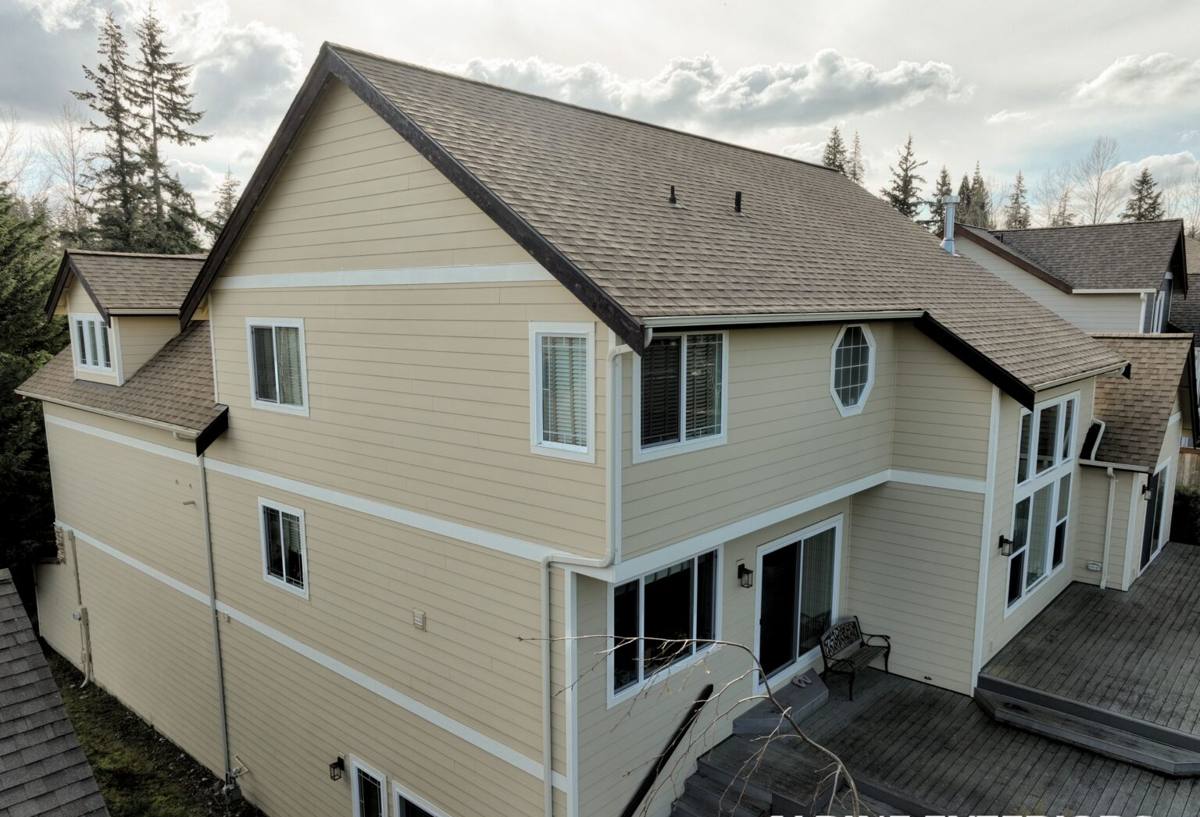
What Sumas's Climate Actually Does to a Deck
Three things drive almost every deck problem we see in this area:
- Salt air: Even well inland from the water, coastal Whatcom County air carries enough salt to accelerate corrosion on the wrong fasteners and hardware. Cheap or mismatched metal rusts and stains long before the wood around it fails.
- Driving rain: Wind-driven rain doesn't just fall straight down — it gets pushed sideways under railings, into ledger connections, and into any gap that isn't properly flashed or sealed.
- A long moss season: Cool, damp, low-light stretches for much of the year mean anything that stays wet, stays wet. Moss and algae take hold fast on decking that doesn't drain and dry between rains, and once established they hold moisture against the wood surface even longer.
None of these are exotic problems. They're the same three forces that shape good deck-building practice anywhere in the Pacific Northwest — but Sumas gets a concentrated dose of all three, which is why cutting corners here shows up faster than it would somewhere drier.
Where We See Decks Fail Early
The recurring pattern isn't dramatic. It's a ledger board bolted to the house without proper flashing, letting water track behind the siding for years before anyone notices rot. It's joists spaced too tight with no gap for airflow, so the underside never fully dries. It's decking boards laid tight against each other with no drainage gap, so water pools and moss gets a foothold within a season or two. Each of these is preventable at the framing stage — and expensive to fix after the fact.
Choosing the Right Decking Material for This Climate
There's no single "best" decking material — there's a best material for your budget, your maintenance appetite, and how much sun and shade the deck actually gets. In a moss-prone climate like this one, shaded decks under trees or on the north side of a house need extra consideration regardless of material.
| Material | Moss/Moisture Resistance | Maintenance | Typical Lifespan |
|---|---|---|---|
| Cedar | Naturally rot- and insect-resistant, but surface needs upkeep | Annual cleaning, periodic sealing/staining | 15–25 years with upkeep |
| Pressure-treated pine/fir | Good with proper drainage; treatment protects core, not surface | Regular sealing, cleaning to prevent surface mildew | 15–20 years with upkeep |
| Composite decking | Very good — non-porous, doesn't absorb water like wood | Periodic washing to keep surface algae/pollen film off | 25–30+ years, backed by manufacturer warranty |
| Tropical hardwood (ipe, etc.) | Excellent natural density and rot resistance | Oiling to maintain color; low rot maintenance | 25+ years |
Composite decking has become a common choice for homeowners here specifically because it doesn't wick moisture into the board the way wood does, which matters when a deck sits under tree cover or gets shaded most of the day. That said, composite isn't maintenance-free — algae and pollen film still build up on the surface and need periodic washing, and it's a higher upfront cost. Wood decking, done right with proper gapping, drainage, and a realistic maintenance schedule, still performs well and is the right call for plenty of homeowners who want that look and are willing to keep up with it. We'll walk through the honest trade-offs for your specific site rather than pushing one material across the board.
Framing and Structure: Where the Deck's Lifespan Is Really Decided
The decking surface is what you see, but the framing underneath is what determines whether the deck is still solid in fifteen years. A few specifics we build to on every job:
Ledger Attachment and Flashing
Where a deck attaches to the house, the ledger board connection is the single most common source of hidden water damage. Proper flashing — installed so water sheds outward and away from the house wall rather than tracking behind the siding — is non-negotiable on an attached deck. This is the detail that's invisible once the deck is finished and the one that causes the most expensive damage when it's skipped.
Footings and Posts
Footings need to be sized and set to local frost depth and soil conditions, not just "deep enough to look right." Posts should sit on standoff hardware that keeps end grain off concrete and out of standing water, rather than being buried or set directly against wet footing surfaces.
Joist Spacing and Airflow
Tight joist spacing might feel sturdier, but airflow underneath the deck is part of how it dries out between rain events. We frame for proper spacing and, where the deck sits low to grade, make sure there's enough clearance for air to move rather than trapping moisture underneath.
Fasteners and Hardware
Given the salt air in this part of the county, we use corrosion-resistant fasteners and structural hardware rated for exterior, coastal-adjacent exposure — not generic interior-grade screws or unrated brackets. Mismatched metals (the wrong screw in the wrong hardware) can actually accelerate corrosion through galvanic reaction, so we keep fastener and hardware types consistent throughout the structure.
Our Deck-Building Process
- Site walk and design: We look at sun exposure, drainage, tree cover, and how the deck ties into your home's existing structure before drawing anything up.
- Material and layout discussion: Honest trade-offs on wood versus composite, railing style, and layout based on how you'll actually use the space.
- Permitting: We handle the permit process with Whatcom County where required — attached decks and elevated structures typically need one, and skipping it can create problems at resale.
- Framing: Footings, ledger flashing, joists, and structural connections built to hold up in this climate, not just to pass a quick glance.
- Decking, railing, and finish work: Surface installation with proper gapping for drainage, plus railing and any stairs or built-ins.
- Walkthrough: We go over basic maintenance — what to clean, what to check seasonally — so the deck actually reaches the lifespan it's built for.
Fighting Moss Before It Starts
You can't eliminate moss risk entirely in this climate, but good building practice cuts it down significantly. A few things that make the biggest difference:
- Proper gapping between decking boards so water drains through instead of sitting on the surface
- Adequate airflow underneath the deck so the underside dries between rain events
- Decking material and finish suited to how shaded the deck actually is — a heavily shaded north-facing deck needs different treatment than one in full sun
- Railings and structural framing kept clear of overhanging vegetation where possible
- A realistic seasonal cleaning routine — even the best-built deck benefits from a rinse and occasional cleaning before moss gets a foothold
We design and build with these factors in mind from the start rather than treating moss resistance as an afterthought.
Permits and Whatcom County Requirements
Deck projects in Whatcom County typically require a building permit, particularly for decks attached to the house or elevated above a certain height. Requirements can shift, and exact thresholds and fees are worth confirming directly with the county before work starts. As part of our process, we handle the permit application and inspection scheduling so you're not left navigating that on your own.
Why a Crew That Already Works in Sumas Makes a Difference
A deck built by a crew that's used to working in warmer, drier parts of the state — or that's building its first project anywhere near the Strait — is more likely to underestimate what this climate does to a structure over time. Framing details that would be fine in a dry climate aren't sufficient here. A crew that already builds regularly in Whatcom County brings a working understanding of how salt air, driving rain, and a long moss season interact with materials and hardware, and builds accordingly from the first footing.
There's also a practical side: local crews know local suppliers, understand the county's permitting process, and aren't learning the area's weather patterns on your project. That familiarity shows up in fewer surprises and a deck that's built to the conditions it will actually face, not generic conditions.
Questions to Ask Before You Hire a Deck Builder in Sumas
- Are you licensed, bonded, and insured to work in Washington State?
- Will you pull the required permit, or is that left to me?
- What fastener and hardware grade do you use given the salt air out here?
- How do you flash and waterproof the ledger board connection to the house?
- What's your recommendation for decking material given my site's sun and shade conditions?
- What maintenance should I expect in year one, year five, and beyond?
If you're planning a new deck or replacing one that's showing its age, we're happy to take a look at your property and talk through what makes sense for your site, your budget, and this climate. Estimates are free and there's no pressure — just a straight look at what the job actually involves.