 Blaine Window
 Window Installation in Custer, Built for Whatcom County Weather
Custer sits a few miles inland from the water, but it's still squarely inside the same marine weather system that shapes every home along this stretch of Whatcom County. Homes here deal with the same driving rain, damp air, and long moss season as houses closer to the Strait of Georgia, even if direct salt exposure is a bit lighter than it is right on the waterfront in Blaine or Birch Bay. That combination of moisture and time is hard on windows, and it's why installation quality matters more here than it would in a drier climate. A window that's slightly out of level or under-flashed might cause no visible problem for a year or two in Arizona. In Custer, the same mistake usually shows up as a soft spot in the wall framing before the homeowner even notices the leak.
This page covers what window installation actually involves for a Custer home, what local conditions demand from the work, and how we approach it.
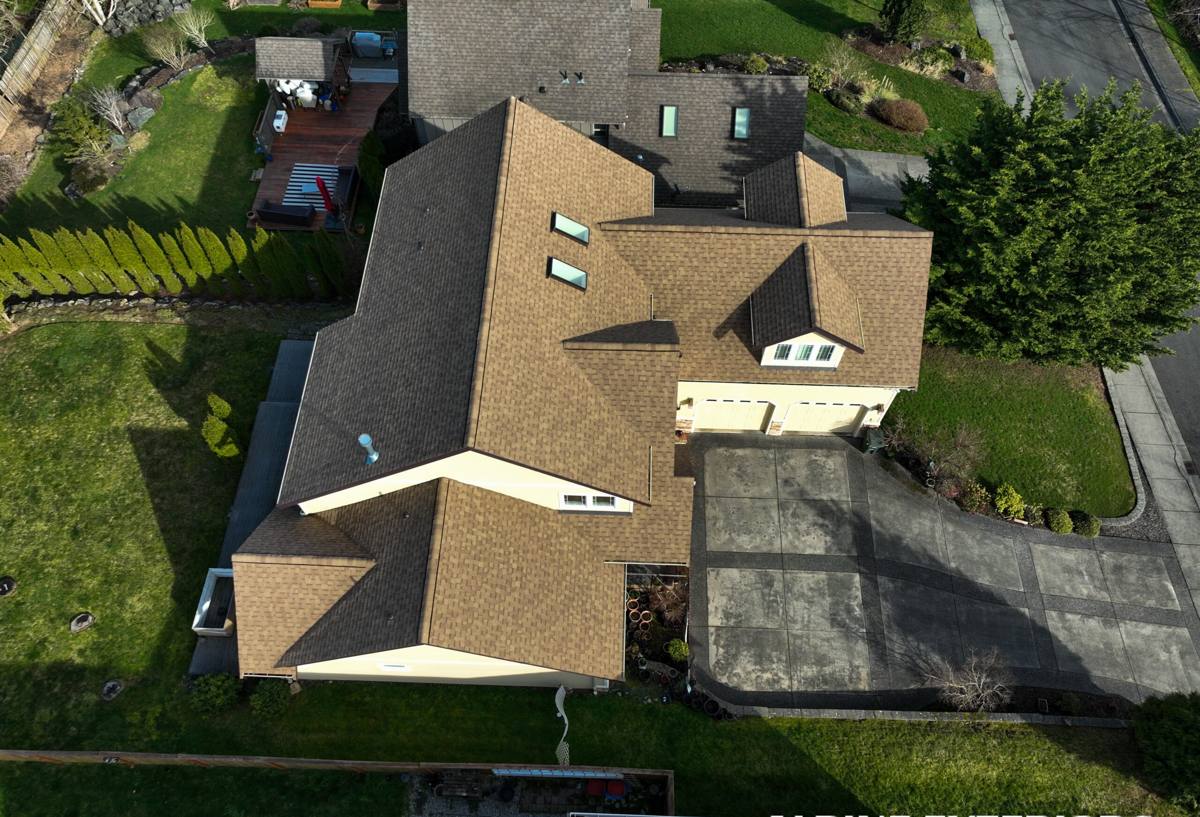
What Local Weather Does to Windows Over Time
Whatcom County's climate isn't dramatic in any single event — it's the steady accumulation of moisture, wind, and shade that wears windows down.
Moisture Intrusion
Rain here doesn't just fall straight down. Wind off the water pushes it sideways against west- and south-facing walls, forcing it into any gap in the flashing, trim, or sealant around a window opening. Over years, even a small gap lets water track behind the siding and into the framing, where it can rot sheathing and studs long before it stains drywall on the inside.
Moss and Organic Growth
The long wet season and heavy tree cover common around Custer's rural lots create ideal conditions for moss and algae to take hold on sills, trim, and anywhere water sits instead of draining. Beyond the cosmetic issue, moss holds moisture against wood and vinyl surfaces far longer than open air would, accelerating rot and finish breakdown.
Wind and Pressure Cycling
Storms off the Strait bring wind-driven rain and pressure changes that test window seals repeatedly over a home's life. A properly installed window is built to handle that cycling; an improperly sealed one loosens gradually, which is why leaks often show up years after installation rather than immediately.
Signs a Custer Home Needs New Windows
- Visible fogging or moisture between the panes of a double-pane window (a failed seal, not fixable by cleaning)
- Soft, spongy, or discolored wood trim or sill around the window frame
- Drafts you can feel near the frame even when the window is fully latched
- Windows that are difficult to open, close, or lock, especially in wood or older vinyl frames
- Visible daylight or gaps between the sash and frame
- Noticeably higher heating bills without another clear cause
- Paint or finish that's peeling or bubbling specifically around window openings
- Persistent moss or dark staining on the sill or lower trim that keeps returning after cleaning
What a Correct Window Installation Actually Involves
Window installation is often treated as a simple swap — old unit out, new unit in. In a climate like this one, that shortcut is exactly what leads to callbacks a few years later. A correct installation is really about water management first and appearance second.
Flashing and Water Management
Every opening needs a flashing system that directs water down and out, never letting it pool or wick sideways into the wall assembly. This includes sill pan flashing beneath the window, properly lapped house wrap or building paper around the sides and top, and sealant placed only where it's supposed to be — not as a substitute for correct flashing sequence.
Air Sealing and Insulation
The gap between the window frame and the rough opening needs to be filled with an appropriate low-expansion foam or insulation, then sealed on the interior and exterior with the right sealant for the surface. Skipping this step is one of the most common causes of drafts and condensation complaints after a "successful" installation.
Fit, Level, and Structural Integrity
A window that isn't shimmed level and square will operate poorly and stress its own seals over time, which shortens its service life regardless of how good the unit itself is. This is where installation experience matters more than the brand name on the window.
Choosing the Right Window Materials for This Climate
There's no single "best" window material — the right choice depends on the home, the budget, and how much upkeep the owner wants to take on. Here's how the common options compare for a Whatcom County home:
| Material | Moisture Behavior | Maintenance | Typical Trade-Off |
|---|---|---|---|
| Vinyl | Won't rot; handles damp climates well | Low — occasional cleaning | Best value; frame can flex on very large sizes |
| Fiberglass | Excellent — dimensionally stable, won't warp with moisture | Low | Higher upfront cost than vinyl |
| Wood-clad | Good if maintained; clad exterior protects the wood core | Higher — interior wood needs periodic attention | Traditional look, more ongoing care |
| Aluminum | Conducts cold and can condense in this climate | Low | We generally don't recommend it for this region's temperature swings |
For most Custer homes, we steer people toward vinyl or fiberglass because they hold up to sustained damp weather with the least long-term maintenance. Wood-clad is a solid choice for owners who want that look and are willing to keep up with it. We're upfront about these trade-offs rather than pushing whatever's easiest to install — a window that fights the local climate is a problem you'll be dealing with for the next twenty years, not us.
Our Installation Process
- On-site assessment: We look at existing windows, framing condition, and any signs of past water intrusion before quoting anything.
- Measurement and product selection: Exact openings get measured, and we talk through material, glass, and performance options that fit the home and budget.
- Removal: Old windows come out carefully, and we inspect the rough opening and sheathing for hidden rot or damage while it's exposed.
- Repair as needed: Any soft or damaged framing gets addressed before a new window ever goes in — installing a good window into a bad opening just hides the problem.
- Flashing and installation: Sill pan, house wrap integration, shimming, insulation, and sealant are done in the correct sequence, not shortcuts.
- Interior and exterior finish: Trim, caulking, and finish work are completed and checked for a clean, weathertight result.
- Final walkthrough: We test operation, check seals, and walk the homeowner through anything they should know about the new windows.
Cost Factors for Window Installation in Custer
Every home is different, but the factors that move a quote up or down are consistent. Rather than quote a flat number that won't fit most homes, here's what actually drives the cost:
| Factor | Why It Matters |
|---|---|
| Number and size of windows | More openings and larger units mean more material and labor |
| Material choice | Vinyl, fiberglass, and wood-clad carry different unit costs |
| Condition of the existing opening | Rot or framing repair adds time before installation can begin |
| Window style | Simple sliders cost less than large picture windows or custom shapes |
| Access and site conditions | Second-story or hard-to-reach openings take more labor and equipment |
| Glass package | Double vs. triple pane, and any added coatings, affect price and performance |
We walk through these factors on-site so a quote reflects your actual home, not a generic per-window average.
Why Hire a Crew That Already Works in Custer
Window installation looks similar on paper everywhere, but the details that actually matter — how much flashing overlap a given wall assembly needs, how much shimming allowance to leave for a home that's settled over decades, how a rural Whatcom County lot's tree cover and drainage affect a specific opening — come from doing this work in this area, not from a general contractor's checklist. A crew that regularly installs windows around Blaine and Custer has already seen how local homes age under this climate, and builds the installation to account for it rather than treating every job the same.
There's also a practical side to hiring local: shorter response times if a warranty issue comes up, and a crew that isn't learning the region's quirks on your project.
Get a Free, No-Pressure Estimate
If you're weighing a repair against replacement, or just want an honest look at what your windows need, we're glad to come take a look. There's no pressure and no obligation — just a straightforward assessment of your home and what it would take to get it right. Use the form below to request a free estimate for your Custer property.