 Blaine Window
 Custom Windows Built for Custer's Weather
Custer sits in the rural stretch of Whatcom County between Blaine and Ferndale, close enough to the water and the open farmland that homes here take a different kind of beating than houses tucked into a sheltered subdivision. Salt-laden air drifts in off the coast, driving rain comes in sideways during the fall and winter storm cycles, and the long damp stretch from October through April keeps everything from siding to window sills wet enough, long enough, for moss and algae to take hold. Standard off-the-shelf window replacement doesn't always account for that. Custom windows do — because they're sized, sealed, and specified for the actual opening and the actual exposure, not a generic stock size.
When we talk about "custom" windows for a Custer property, we mean windows built to the precise dimensions of your existing openings (common on older farmhouses and homes built before standardized sizing), or windows chosen and configured specifically for a wall's sun, wind, and rain exposure. That might mean a different frame material on the weather side of the house than on the sheltered side, or a taller sill detail on a wall that catches wind-driven rain. It's a different mindset than "grab the closest stock size and caulk around the gaps."
What Makes Custer Properties Different
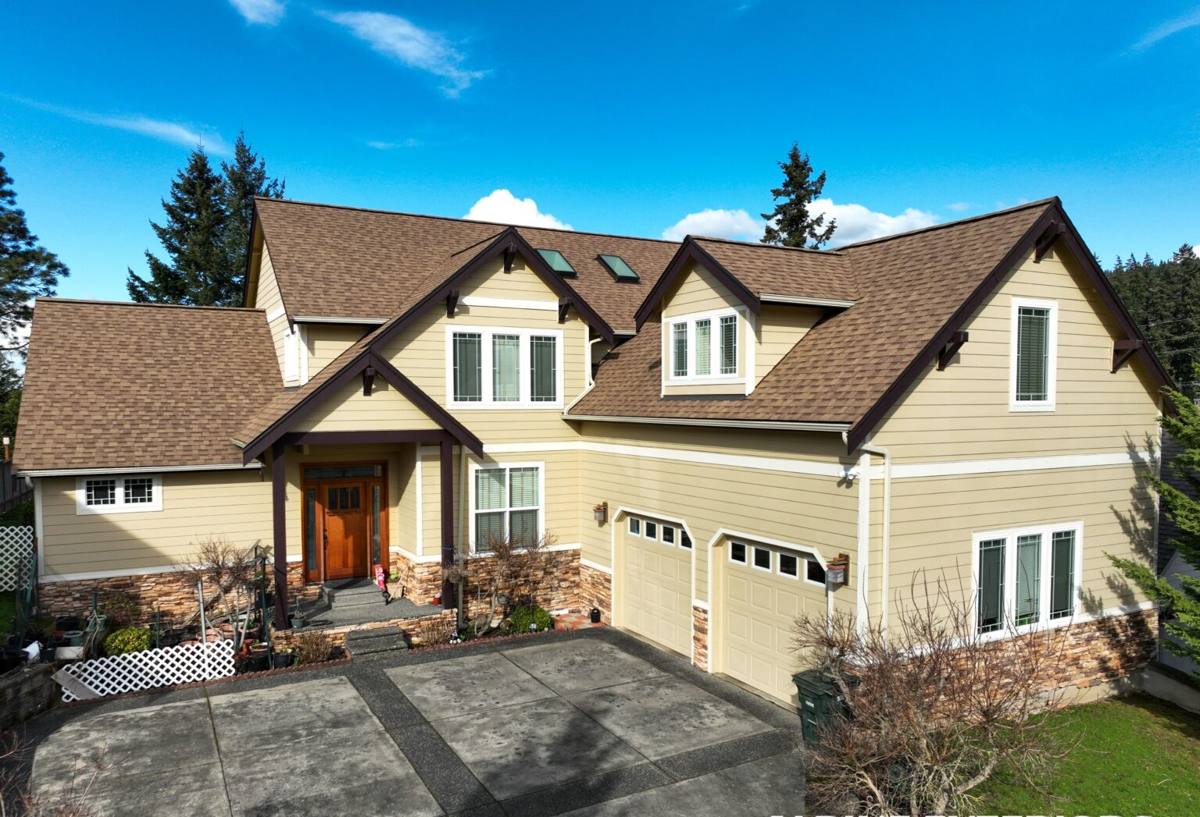
Custer isn't dense residential streets — it's a mix of acreage, farmhouses, newer builds on larger lots, and homes that have been added onto or updated over decades. That mix matters for window work in a few ways:
- Older homes often have odd or non-standard rough openings, which is exactly where custom sizing earns its keep over forcing a stock window to fit.
- Larger, more exposed lots mean more direct wind and rain contact on at least one side of the house, with less wind-break from neighboring structures or dense tree cover.
- Outbuildings, shops, and additions built at different times mean window styles and ages can vary widely across a single property.
- Agricultural surroundings mean more dust and organic debris in the air, which settles into track hardware and weep holes if a window's drainage isn't designed well.
None of that is a knock on the area — it's just the reality we plan around before we ever measure an opening.
The Moss and Moisture Problem, Specifically
Whatcom County's moss season isn't just a roof and siding issue. Moisture that sits against a window frame or sill for weeks at a time is exactly what lets moss, algae, and eventually rot get a foothold — especially on the north- and west-facing walls that stay shaded and damp longest. A window that's improperly flashed or sealed will trap that moisture right at the frame, and by the time you see staining or soft wood on the interior sill, the damage has usually been building for a season or two already.
This is why we pay close attention to three details on every Custer job: the flashing detail above the window (so water sheds out and away rather than behind the frame), the sill pan underneath (so any water that does get past the seal drains back out instead of pooling), and the sealant used around the perimeter (rated for the temperature swings and constant damp we get here, not a general-purpose caulk that hardens and cracks within a couple of seasons).
What a Correct Window Job Actually Involves
A window installation is only as good as the parts nobody sees once it's done. Skipping steps here is the single biggest reason a window that looked fine on install day starts leaking, fogging, or sticking within a few years.
Frame Material Options
| Material | How it handles salt air & rain | Maintenance |
|---|---|---|
| Vinyl | Doesn't corrode or rot; good baseline performance for the price | Low — occasional cleaning |
| Fiberglass | Very stable in temperature swings, resists moisture absorption well | Low |
| Wood-clad | Good insulating properties but the exterior clad layer needs to be fully sealed at every joint | Moderate — watch seams and corners |
| Aluminum | Strong but conducts cold and can corrode faster near salt air without a quality finish | Moderate to high |
We don't push one material as universally "best" — the right call depends on the wall's exposure, your budget, and how the window fits the rest of the house. What we won't do is install a frame material on a heavily exposed wall that we know will need more upkeep than a homeowner signed up for. We'll tell you that trade-off up front.
Glass and Sealing
Double-pane, low-E glass is the standard for this climate — it cuts down on heat loss in winter and keeps interiors more comfortable without over-relying on heating and cooling. For walls that take the brunt of driving rain, we also look at upgraded weatherstripping and multi-point locking hardware, which pulls the sash tighter against the frame and reduces the air and water infiltration that single-point locks can miss over time.
Our Process for Custer Window Projects
- On-site assessment. We look at each opening individually — sun exposure, wind direction, existing frame condition, and any signs of past moisture intrusion.
- Measurement and specification. For custom sizing, we measure the actual rough opening rather than assuming a stock size will work.
- Material and glass selection. We walk through frame and glass options against your budget and each wall's real-world exposure.
- Removal and inspection. Old windows come out carefully so we can check the framing underneath for rot or prior water damage before anything new goes in.
- Flashing, sill pan, and sealing. This is the step that determines whether the window performs in year one or year ten.
- Installation and hardware setup. Windows are set, shimmed level and plumb, and locking hardware is adjusted so it seals tight.
- Final walkthrough. We check operation, seal lines, and interior trim before calling the job done.
Cost Factors for Custom Windows
There's no single price that applies to every home, but the main variables are consistent from job to job:
| Factor | Why it moves the price |
|---|---|
| Custom vs. stock sizing | Non-standard openings require made-to-measure units, which cost more than stock sizes |
| Frame material | Vinyl is typically the most budget-friendly; fiberglass and wood-clad run higher |
| Number and size of openings | Larger picture windows or multi-panel units cost more than standard double-hungs |
| Condition of existing framing | Rot or water damage found during removal adds repair work before the new window goes in |
| Access and site conditions | Upper-story or hard-to-access openings take more time and equipment |
As a broad range, homeowners in this area typically see per-window costs from the low thousands into the mid-thousands depending on size, material, and site conditions — we'll give you an exact number for your specific home, not a generic estimate pulled from a national average.
Signs Your Windows Need Attention
- Visible moss, algae, or dark staining building up on the sill or frame
- Difficulty opening, closing, or locking a window that used to move freely
- Condensation or fogging between the glass panes (a sign the seal has failed)
- Drafts or cold spots near the window frame even when it's fully closed
- Soft, spongy, or discolored wood on the interior sill or trim
- Visible daylight or gaps around the frame from outside
Any one of these on its own might just need a repair. Several together, especially on an older home, usually means the window itself has reached the end of its useful life.
Why Hire a Crew That Already Works in Custer
Window performance here isn't just about the product — it's about installing it correctly for this specific climate. A crew that regularly works Whatcom County homes already knows which walls in this area tend to take the worst of the driving rain, how much of a role moss and standing moisture play in frame failure, and what flashing and sealing details actually hold up through a full wet season rather than just looking fine on install day. That local pattern recognition is hard to replace with a crew passing through from outside the region for a single job.
We also know that Custer properties vary a lot — from older farmhouses with original openings to newer builds — so we don't come in with a one-size-fits-all install method. Each home gets assessed on its own conditions.
If you're weighing whether it's time to replace, repair, or custom-fit windows on a Custer property, we're happy to take a look and give you a straightforward assessment. Reach out for a free, no-pressure estimate using the form below.