 Blaine Window
 Why Roofs on Cherry Point Wear Faster Than You'd Expect
Cherry Point sits right up against the Strait of Georgia, and that waterfront exposure changes the math on how long a roof actually lasts. A roofing system that holds up fine twenty minutes inland can start showing real trouble here five to ten years sooner, simply because it's dealing with three things at once: salt-laden air, wind-driven rain, and a moss season that runs longer than most homeowners realize. None of these are dramatic on their own. It's the combination, applied year after year, that shortens a roof's working life.
This page is about one job, done right, in one place: full roof replacement for homes in and around Cherry Point. Not a general overview of roofing — the specific decisions that matter when your house sits in this particular stretch of Whatcom County.
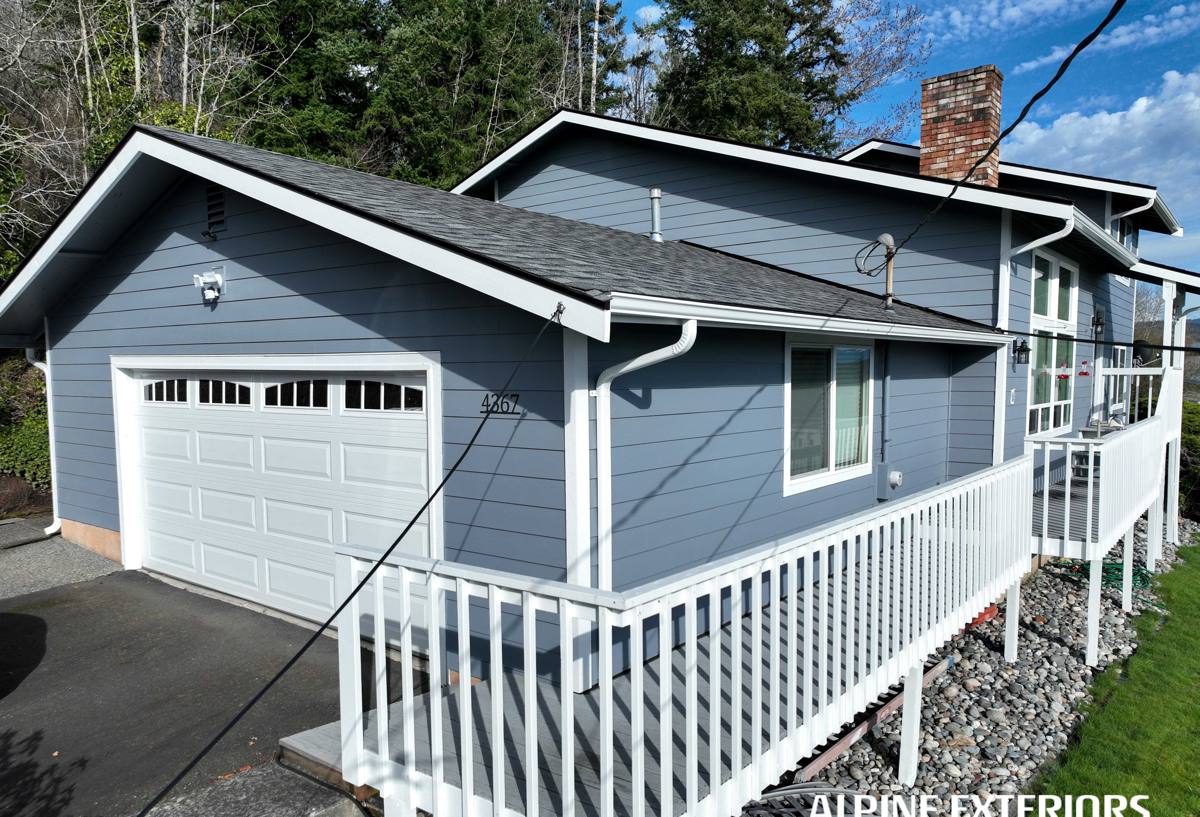
What Salt Air, Wind-Driven Rain, and Moss Actually Do to a Roof
Salt Air and Metal Components
Salt in the air accelerates corrosion on anything metal — flashing, fasteners, vents, gutters, even the metal in some shingle products. Standard galvanized fasteners and lower-grade flashing can start rusting years ahead of schedule this close to the water. It's a slow process, so it's easy to miss until a rusted nail head or a corroded flashing seam finally lets water in.
Wind-Driven Rain and Water Intrusion
Rain that comes in sideways off the water behaves differently than rain falling straight down. It gets pushed up under shingle edges, into vent flashing, and around chimney and skylight penetrations that would stay dry in calmer weather. A roof built for average conditions — with standard underlayment coverage and minimal flashing detail — is more likely to develop small leaks at these vulnerable points over time.
Moss, Shade, and Trapped Moisture
Whatcom County's wet season is long, and Cherry Point's tree cover and marine humidity stretch it further. Moss doesn't just look bad — it holds moisture directly against the roofing material, lifts shingle edges as it grows, and keeps the surface damp long after a dry patch of weather would have let a sunnier roof fully dry out. That constant dampness is what actually shortens shingle life, more than any single storm.
Signs a Cherry Point Roof Is Ready for Replacement, Not Another Repair
Repairs make sense when a roof has isolated damage and years of life left. Replacement makes sense when the wear is spread across the whole roof, or when repairs have become a recurring cost without solving the underlying problem. Here's what we look for:
- Granule loss heavy enough that you can see bald patches or find granules collecting in gutters
- Shingles that are cupping, curling, or cracking across multiple sections of the roof, not just one spot
- Moss or algae growth that keeps coming back within a season or two of cleaning
- Soft or spongy decking felt underfoot during an inspection, especially near valleys and edges
- Rusted or failing flashing around chimneys, vents, and skylights
- Daylight visible through the roof deck from inside the attic
- A roof that's near or past its expected service life and has had two or more repairs in the last few years
- Rising energy bills tied to poor attic ventilation or insulation gaps at the roof line
If your roof shows two or more of these, it's worth a real inspection before spending more money on patch repairs that won't hold.
Choosing a Roofing System for This Climate
There's no single "best" roofing material — the right choice depends on your budget, your home's structure, and how much long-term maintenance you're willing to take on. For a property exposed to salt air and heavy moss pressure, the trade-offs below matter more than they would somewhere drier.
| Material | Moisture & Moss Resistance | Salt Air Durability | Maintenance | Typical Lifespan |
|---|---|---|---|---|
| Architectural asphalt shingle | Good with proper ventilation; moss-resistant granule options available | Solid when paired with corrosion-resistant flashing and fasteners | Periodic moss treatment and gutter clearing | 25–30 years |
| Standing seam metal | Excellent — sheds water and dries fast, minimal surface for moss to grip | Requires marine-grade coatings and fasteners near the water | Low; occasional coating check | 40–50+ years |
| Synthetic/composite shingle | Very good; resists moisture absorption better than standard asphalt | Good, especially with stainless or coated fasteners | Low to moderate | 30–50 years |
| 3-tab asphalt shingle | Fair; less resistant to prolonged dampness than architectural grades | Weaker without upgraded flashing package | More frequent moss and wear monitoring | 15–20 years |
We don't push every homeowner toward the most expensive option. What we do is explain honestly which materials are going to fight the local conditions for you, and which will need more upkeep to hit their expected lifespan on a waterfront property.
What a Correct Roof Replacement Actually Involves
Full Tear-Off and Deck Inspection
We don't install new roofing over old layers. A full tear-off lets us actually see the deck — checking for soft spots, water staining, and any structural issues that need to be addressed before new material goes down. Skipping this step is how hidden rot gets sealed under a new roof instead of fixed.
Ice-and-Water Shield and Underlayment
Given how much wind-driven rain this area sees, we pay close attention to underlayment coverage in the areas most exposed to water intrusion — eaves, valleys, and around every penetration. A quality synthetic underlayment, combined with self-adhering membrane in the highest-risk zones, gives the roof a real second line of defense if wind ever pushes water past the shingle surface.
Flashing That's Built for Salt Exposure
Flashing is where most roof leaks actually start, not in the open field of shingles. For homes this close to the water, we use corrosion-resistant flashing and fasteners at chimneys, skylights, vent stacks, and roof-to-wall transitions, rather than standard-grade materials that corrode faster in salt air.
Moss-Conscious Detailing
Where it fits the material and the homeowner's preference, we'll discuss options like zinc or copper strips near the ridge, which help suppress moss regrowth over time, along with proper shingle selection and attic airflow that keeps the roof surface drying out faster between rain events.
Ventilation: The Detail That Determines How Long Your Roof Lasts Here
Ventilation doesn't get much attention from homeowners, but in a climate this wet, it's one of the biggest factors in how long a new roof actually performs. A properly balanced intake-and-exhaust system keeps air moving through the attic, which does two things: it lets moisture that works its way into the attic escape instead of condensing on the underside of the deck, and it keeps the roof surface itself closer to outdoor temperature, which reduces the damp, shaded conditions moss needs to establish. On a replacement, this is the point where we correct any ventilation shortfalls from the original build rather than just repeating them.
Our Process, From First Look to Final Walkthrough
Inspection and Honest Estimate
We start with a full roof and attic inspection, not a quick look from the ground. You get a clear explanation of what we found, what your material options are, and a written estimate — no pressure to sign on the spot.
Install Day
Tear-off, deck repair as needed, underlayment, flashing, and material installation are handled by a crew that works this specific climate regularly. Property protection — landscaping, gutters, siding — is part of the plan before the first shingle comes off.
Cleanup and Final Inspection
We do a magnetic sweep for stray nails, haul away all debris, and walk the finished roof with you so you know exactly what was done and what to expect from it going forward.
Why Local Experience in Cherry Point and Whatcom County Matters
A roofing crew that mostly works drier inland areas can still do competent work, but they're not necessarily thinking about salt-resistant fasteners, wind-driven rain detailing, or moss suppression as default decisions — those are things you learn from doing this work repeatedly in this exact environment. Blaine Window Co works roofs up and down this coastline regularly, which means the material choices, flashing details, and ventilation corrections described above aren't upsells — they're standard practice for how we build a roof out here.
If you're weighing repair versus replacement, or just want a straight answer on what your roof needs, we're glad to take a look. Reach out for a free, no-pressure estimate using the form below — we'll walk the roof, explain what we see, and give you honest options for your home in Cherry Point.