 Blaine Window
 Roofs in Cherry Point Work Harder Than Most
Cherry Point sits close enough to the water that salt-laden air is a constant companion, and that changes how a roof ages. Fasteners corrode faster. Metal flashing pits and weakens years before it would inland. Asphalt granules loosen a little quicker under the combination of salt exposure and near-constant moisture. If you own a home out here, your roof isn't dealing with the same slow, predictable wear a roof in a dry inland climate sees — it's dealing with a steady grind of salt, wind-driven rain, and shade-grown moss that never really lets up.
That's the backdrop for every roof repair call we take in this part of Whatcom County. A patch that would hold for a decade somewhere drier might only buy you three or four years here if it's not done with the right materials and the right technique. This page is about what actually goes into a correct roof repair for a Cherry Point home — not a generic rundown of roofing basics.
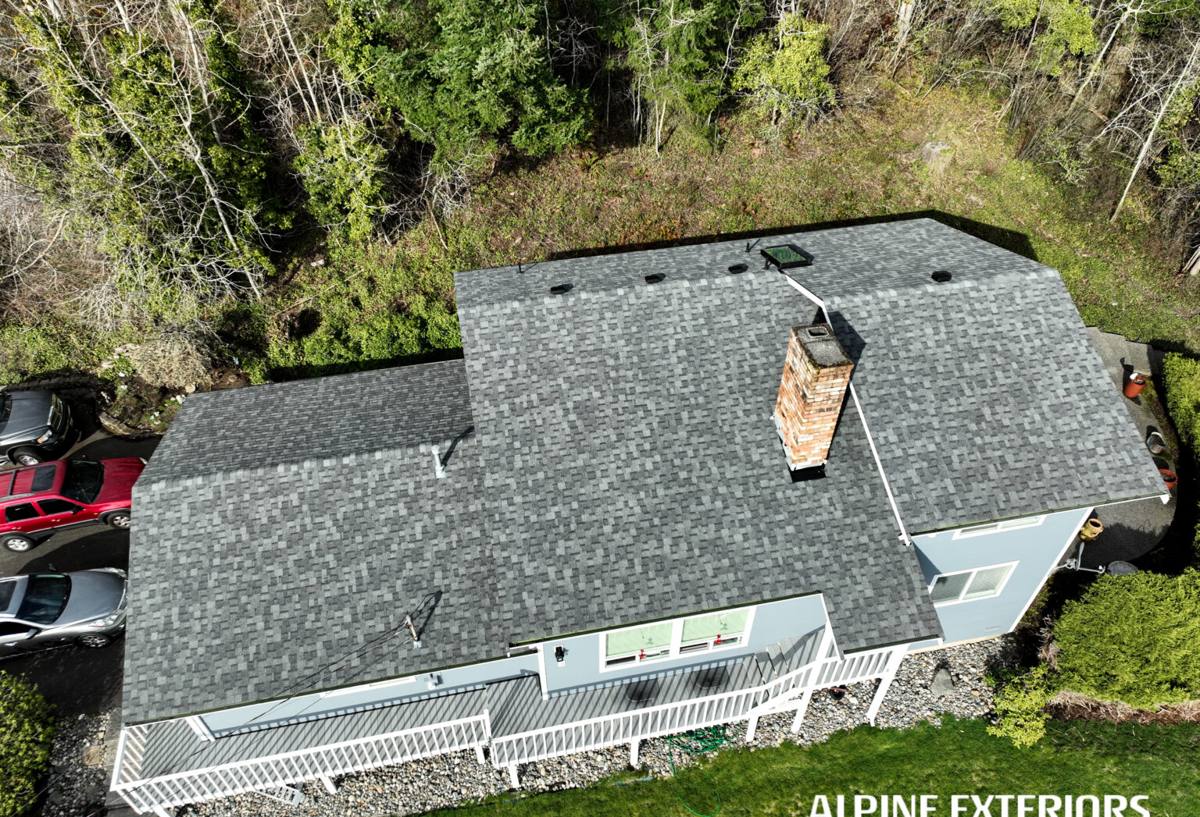
What Driving Rain and Salt Air Actually Do to a Roof
Wind-Driven Rain Finds the Weak Points
Straight-down rain is forgiving. Wind-driven rain, which is common here given how exposed Cherry Point is to weather coming off the water, is not. It gets pushed sideways and even slightly upward under shingle edges, around vent boots, and behind flashing that's just a little loose or under-lapped. A roof that looks fine from the ground can still be taking on water at a dozen small entry points during a hard blow. Repairs that don't account for wind-driven rain — meaning they rely on gravity alone instead of proper lapping, sealing, and flashing geometry — tend to fail again within a season or two.
Salt Air Attacks Metal First
Nails, screws, drip edge, step flashing, valley metal, and vent flashing are usually the first parts of a roof system to show salt-related corrosion. Once flashing starts to rust and pit, it stops shedding water cleanly and starts wicking it instead. A repair that reuses corroded flashing, or patches over it, is a short-term fix at best. We look at metal condition as closely as we look at the shingles or underlayment themselves.
Moss Isn't Just Cosmetic
Cherry Point's tree cover and long damp season give moss everything it needs: shade, moisture, and time. Moss holds water against the roof surface far longer than the surface would otherwise stay wet, and as it grows it can lift shingle edges and work into nail lines. A roof with heavy moss buildup is often losing its watertight seal well before any leak shows up inside the house.
Signs a Cherry Point Roof Needs Repair, Not a Full Replacement
Most roofs don't fail all at once — they show localized problems first. Catching these early is usually the difference between a repair bill and a replacement bill.
- Water stains on ceilings or in the attic that appear only during wind-driven storms, not steady rain
- Granules collecting in gutters or at downspout outlets, especially after a windy stretch
- Visible moss or dark streaking concentrated on north-facing or shaded slopes
- Flashing around chimneys, skylights, or vent pipes that looks rusted, lifted, or gapped
- Shingles that are curling, cracked, or missing near roof edges and valleys
- Soft or spongy spots when walking the roof, which usually mean decking underneath has taken on moisture
- Daylight visible through the roof deck from inside an unfinished attic
If what you're seeing is limited to one or two of these, in one area of the roof, a targeted repair is often the right call. If it's showing up in multiple places at once, or the roof is already well past its expected lifespan, replacement may actually be the more honest recommendation — and we'll tell you that instead of selling a repair we don't think will hold.
What a Correct Roof Repair Actually Involves
Finding the Real Source of the Leak
Water travels before it shows up as a stain, sometimes several feet from where it actually entered. A repair that just patches the spot above the stain without tracing the water's actual path is guesswork. We check the roof surface, flashing, and attic together so the repair addresses where water is getting in, not just where it's showing up.
Matching Materials, Not Just Covering the Spot
A patch that doesn't match the existing shingle profile, granule color, or flashing type creates a new weak seam right at the repair boundary — and in a climate with this much wind-driven rain, seams are exactly where problems start. We match materials as closely as the existing roof allows so the repair blends into the roof's existing water-shedding path instead of interrupting it.
Flashing and Underlayment Come First
Shingles get the attention, but flashing and underlayment are what actually keep a roof dry in this climate. Any repair around a chimney, wall intersection, valley, or vent gets new flashing if the old flashing shows any corrosion or gapping — reusing salt-compromised metal defeats the purpose of the repair. Underlayment gets checked and replaced in the repair zone as well, since it's the last line of defense if wind pushes water past the shingle layer.
Ventilation Gets Checked Too
Poor attic ventilation traps moisture underneath the roof deck, which accelerates rot and can mimic or worsen leak symptoms. When we're already up on a roof for a repair, we take a look at ventilation, since fixing a leak without addressing trapped moisture underneath is only half the job.
Common Roof Repair Issues We See Around Cherry Point
| Issue | Typical Cause Here | What the Repair Involves |
|---|---|---|
| Leak near chimney or wall flashing | Salt-corroded or under-lapped flashing | Remove and replace flashing, re-integrate with underlayment and siding |
| Leak in a valley | Wind-driven rain overwhelming an undersized or worn valley metal | Replace valley metal, extend proper laps, reset adjacent shingles |
| Soft or discolored decking | Long-term moss retention or a slow flashing leak | Cut back damaged decking, replace, then repair the roofing layer above it |
| Granule loss and thinning shingles | Age combined with salt and wind exposure | Localized shingle replacement, or a broader assessment if widespread |
| Vent boot cracking | UV and moisture cycling on rubber boot collars | Boot replacement with corrosion-resistant flashing collar |
Moss and the Long Wet Season
Moss removal is part of most repair visits out here, not a separate service tacked on. If moss is contributing to the problem, we clear it from the repair area and the surrounding roof plane so the new work isn't immediately undermined by the same growth that caused the original issue. We don't pressure-wash shingle roofs, since high-pressure washing strips granules and shortens shingle life — moss gets removed by hand and with roof-safe treatment instead.
For homeowners who want to stay ahead of moss between repairs, a light annual check of shaded, north-facing slopes goes a long way. Catching moss while it's still thin and green is far less work than dealing with it once it's built up into thick mats that hold water against the roof for months at a time.
Repair vs. Replacement: What Actually Drives the Decision
| Factor | Favors Repair | Favors Replacement |
|---|---|---|
| Roof age | Well within expected lifespan | At or beyond expected lifespan for the material |
| Damage extent | Localized to one or two areas | Spread across multiple slopes |
| Decking condition | Sound, dry decking under the damaged area | Widespread soft or rotted decking |
| Flashing condition | Flashing elsewhere on the roof is still sound | Flashing throughout is corroded or failing |
| Underlying cause | A single identifiable failure point | Systemic wear from age and long-term salt/moisture exposure |
Rough cost for a straightforward, localized repair is generally a small fraction of what a full re-roof runs — but the range depends heavily on how much decking or flashing needs replacing, roof pitch and access, and how much of the existing roofing has to come up to do the repair correctly. We give a firm number after we've actually looked at the roof, not before.
Our Process for a Cherry Point Repair
- On-site inspection of the roof surface, flashing, and attic to trace the actual source of the problem
- A written explanation of what's causing the issue and what a proper repair involves — including whether repair or replacement makes more sense
- A clear estimate before any work starts, with no vague allowances
- Repair work using matched materials and corrosion-resistant flashing suited to a salt-air environment
- A final check of the repair area and surrounding roof plane, including moss clearing where relevant
We work the roof in front of us, not a generic checklist. A repair on a shaded, moss-prone slope gets handled differently than a repair on a wind-exposed valley, even on the same house.
Why Local Experience Matters for This Kind of Work
A roof repair crew that mostly works inland conditions can miss things that are obvious to a crew that works Whatcom County's coastal edge regularly — how far wind-driven rain actually travels under an eave, which flashing metals hold up against salt air and which corrode fast, and how aggressively moss grows on shaded slopes here compared to drier parts of the state. Repairs done without that context tend to address the visible symptom and miss the underlying cause, which is why the same leak sometimes comes back a year or two later. Working this area regularly means we're not guessing at how Cherry Point's climate affects a roof — we're accounting for it in every repair.
If you're dealing with a leak, missing shingles, or a roof that's showing its age faster than it should, we're happy to take a look and give you a straight assessment. Fill out the form below for a free, no-pressure estimate — we'll tell you honestly whether you're looking at a repair or something bigger.