 Blaine Window
 Roofing Built for Cherry Point's Coastal Conditions
Cherry Point sits close enough to the water that homes here take a different kind of weathering than roofs just a few miles inland. Salt-laden air moves through constantly, driving rain comes in sideways off Georgia Strait during winter storms, and the shoulder seasons stay damp long enough to grow a healthy crop of moss on anything that isn't shedding water well. An asphalt shingle roof that would coast along fine in a drier part of Whatcom County can start showing problems here years ahead of schedule if it wasn't installed with this specific exposure in mind.
This page is about one thing: asphalt shingle roofing for homes in and around Cherry Point. Not a general overview of every roofing material we touch, and not a page written for a different climate and copied over. What follows is how we think about shingle roofs on this stretch of coastline, what a correct installation actually requires here, and what we do differently because of it.
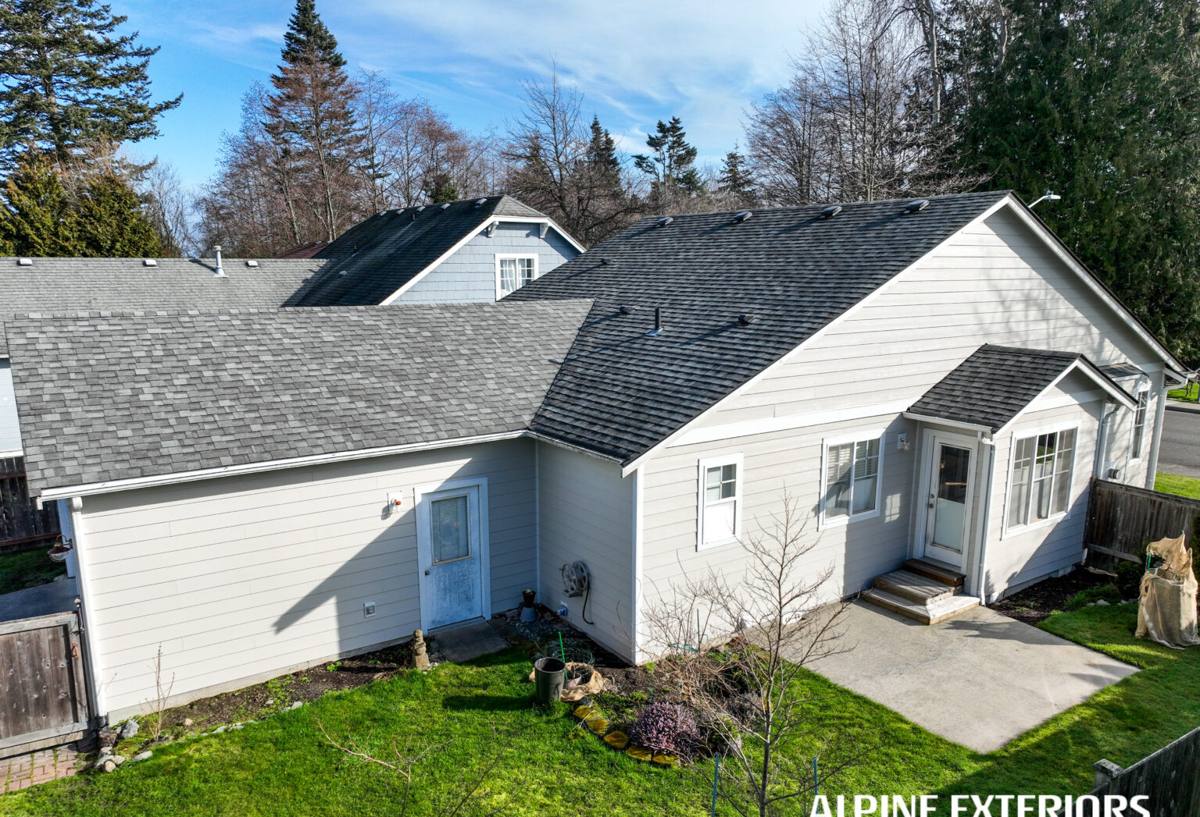
What Salt Air and Driving Rain Actually Do to a Shingle Roof
Two separate mechanisms are at work on a Cherry Point roof, and they don't get enough attention in generic roofing advice.
Salt Exposure
Airborne salt doesn't just sit on shingle granules — it works its way into every exposed metal component on the roof: nails, flashing, vent stacks, and drip edge. Standard galvanized fasteners and thin-gauge flashing corrode faster near the water than they would ten or fifteen miles inland. Once a fastener or flashing seam starts to corrode, it stops doing its job long before it looks obviously bad from the ground.
Driving Rain
Wind-driven rain doesn't behave like rain falling straight down. It gets pushed up under shingle tabs, into open valleys, and around any flashing detail that's the least bit undersized or loosely lapped. A roof that would shed a normal rain event fine can still leak during a Cherry Point winter blow if the underlayment, valley work, and flashing overlaps weren't built with that sideways push in mind. This is a big part of why we don't treat flashing and underlayment as an afterthought on jobs out here — they're doing more work than the shingles themselves during a real storm.
Moss and the Long Wet Season
Whatcom County's wet season runs long, and Cherry Point's proximity to the water keeps roofs damp even on days when it isn't actively raining. That moisture, combined with shade from mature trees on many lots, is exactly what moss wants. Left alone, moss does more than look bad:
- It holds moisture against the shingle surface far longer than open air would, accelerating granule loss and mat breakdown underneath.
- It lifts shingle edges as it grows, creating small gaps where wind-driven rain can get a foothold.
- It clogs valleys and gutters, backing water up under shingles instead of letting it run off.
- Scraping it off aggressively (or letting it be scraped by whoever cleans your gutters) can strip granules and shorten the roof's life faster than the moss itself would have.
A shingle roof built for this area needs a real moss strategy from day one — not a once-a-year scrape-and-hope routine.
What a Correct Asphalt Shingle Installation Involves Here
A shingle roof is a layered system, and every layer matters more in a coastal, high-moss environment than it would somewhere drier.
Underlayment
We use synthetic underlayment as a baseline on Cherry Point homes rather than older felt products, because it holds up better to the extended damp periods between when the underlayment goes down and when shingles cover it — and it performs better long-term under a roof that stays humid for months at a stretch.
Ice and Water Shield at Vulnerable Points
Even though Cherry Point doesn't see heavy ice buildup like colder inland areas, we still install self-adhering ice and water membrane at eaves, valleys, and around penetrations. Here, its job isn't ice — it's backup protection against wind-driven rain finding its way past the primary shingle layer at exactly the spots most likely to fail first.
Flashing
Step flashing at walls, properly lapped valley flashing, and correctly sized drip edge all matter more here because of the salt-and-wind combination described above. We spec corrosion-resistant flashing material rather than the thinnest standard-grade option, and we don't reuse old flashing on a reroof just to save a step — flashing that's already been through several wet seasons near the water is usually closer to the end of its life than it looks.
Ventilation
Balanced intake and exhaust ventilation keeps the underside of the roof deck dry and keeps shingles from cooking from below in the summer months. Poor ventilation is a quiet cause of premature shingle failure — moisture gets trapped in the attic, migrates into the deck, and shortens the life of everything above it, including a roof that was otherwise installed correctly.
Nailing Pattern
Wind exposure this close to the water means we don't cut corners on fastener count or placement. Manufacturer-specified nailing patterns exist for a reason, and skipping nails or placing them high on the shingle is one of the most common causes of blow-off failures we see on roofs that weren't installed with local wind conditions in mind.
Choosing the Right Shingle for a Coastal Whatcom County Home
Not every asphalt shingle product is a good fit for this exposure. Here's how the main options compare for a Cherry Point home:
| Shingle Type | Typical Lifespan Here | Notes for This Climate |
|---|---|---|
| 3-Tab Shingles | Shorter end of the range | Lower upfront cost, but thinner profile and lower wind ratings make them a weaker match for driving rain and coastal gusts. |
| Architectural (Laminated) Shingles | Longer, with proper install | Heavier, higher wind ratings, and better performance in wind-driven rain — our standard recommendation for most Cherry Point homes. |
| Algae-Resistant (AR) Shingles | Same base lifespan as the underlying product | Copper- or zinc-infused granules resist the dark streaking and moss-friendly buildup that's common in this damp, shaded climate. |
| Impact-Rated Shingles | Longer, with proper install | Worth discussing if your lot sees falling debris from mature trees, which is common on wooded Cherry Point properties. |
For most homes out here, we lean toward a mid-to-upper-tier architectural shingle with algae-resistant granules — it's the combination that best answers moss pressure and wind-driven rain at once, without pushing a homeowner into premium pricing they don't need.
Repair or Replace? What Actually Drives That Decision
Not every roof problem near the water means a full reroof. We look at a handful of factors before recommending one path over the other:
| Factor | Leans Toward Repair | Leans Toward Replacement |
|---|---|---|
| Age of the roof | Under roughly half its expected life | Near or past expected lifespan for the product |
| Extent of damage | Isolated — one flashing area, a section of blown-off shingles | Spread across multiple slopes or recurring in the same spots |
| Granule loss | Minimal, localized | Widespread, exposing the mat underneath |
| Deck condition | Solid, no soft spots | Soft decking or signs of moisture intrusion underneath |
| History of leaks | First occurrence, clear cause | Repeated leaks in different locations |
We'll tell you honestly which side of that table your roof falls on. A well-timed repair on a roof with plenty of life left is the right call more often than not — we don't push replacement just because a roof is on the coast.
Our Process, Start to Finish
Inspection and Estimate
We get on the roof, check the deck where accessible, look at flashing and ventilation, and note moss coverage and drainage patterns specific to your lot. You get a written estimate that explains what we found and why we're recommending what we're recommending.
Material Selection
We walk through shingle options with your specific exposure in mind — sun, shade, tree cover, and how close you sit to the water — rather than handing you a generic product list.
Tear-Off and Deck Check
On a full replacement, we tear off down to the deck and inspect it before anything new goes down. Damaged decking gets replaced before underlayment goes on — covering a compromised deck just hides the problem.
Underlayment, Flashing, and Shingle Installation
Built in the layered order described above, with attention to the details that matter most in this exposure: valley work, wall flashing, penetration sealing, and full nailing patterns.
Cleanup and Walkthrough
Magnetic sweep for stray fasteners, debris hauled off, and a walkthrough where we point out anything you should keep an eye on going forward.
Maintenance That Actually Matters in Cherry Point
A shingle roof out here needs a bit more routine attention than the same roof would need somewhere drier and less shaded. This is the short list we tell homeowners to actually follow:
- Have moss growth addressed before it spreads across a full slope — early, gentle removal is far cheaper than dealing with lifted shingles later.
- Keep gutters and valleys clear, especially heading into the wet season, so water has a clear path off the roof.
- Trim back overhanging branches where reasonable — less shade means faster drying and slower moss growth.
- Have flashing and fastener condition checked periodically, particularly if your home has been in place through several wet seasons near the water.
- Address small leaks or missing shingles promptly rather than waiting — a small, cheap fix now avoids deck damage later.
Why Local Experience in Cherry Point Matters
A roofing crew that mostly works drier, inland areas of Whatcom County will still build a technically sound roof — but they may not default to corrosion-resistant fasteners, algae-resistant shingles, or the extra flashing attention that Cherry Point's exposure calls for, simply because it isn't second nature to them. Crews that work this coastline regularly build those decisions into every estimate without needing to be asked, because they've seen what happens when they're skipped. That's the difference we bring to a Cherry Point roof: not a different product line, but a different set of defaults shaped by what actually holds up out here.
If you'd like a straight, no-pressure look at your roof — repair, replacement, or just a maintenance check — we're glad to come take a look and give you an honest estimate. Use the form below to get started.