 Blaine Window
 Asphalt Shingle Roofing Built for California Creek's Climate
California Creek sits in a stretch of Whatcom County where a roof earns its keep the hard way. Many properties out here are wooded or semi-rural, with mature fir and cedar hanging over at least part of the roofline, which means shade, needle drop, and standing moisture are part of daily life for the shingles above your head. Add in the fact that Blaine is close enough to the water that salt-tinged air is a real, ongoing factor on exposed metal, and you've got a combination of stresses that a roof installed for a drier inland climate simply wasn't built to handle. Rain here doesn't always fall straight down, either — it gets pushed sideways during the region's windier stretches and forced up under shingle edges in ways a lot of homeowners never think about until it's already caused a problem.
None of that makes asphalt shingles the wrong material for a California Creek home. It's still the most practical, proven option for the large majority of roofs in this area. What it does mean is that the install has to account for these conditions specifically, rather than treating the job like it would be treated anywhere else. This page covers what a correct asphalt shingle roof looks like for a home in this part of Whatcom County — what local conditions demand, how we build the job layer by layer, and why working with a crew that already knows this stretch of the county matters.
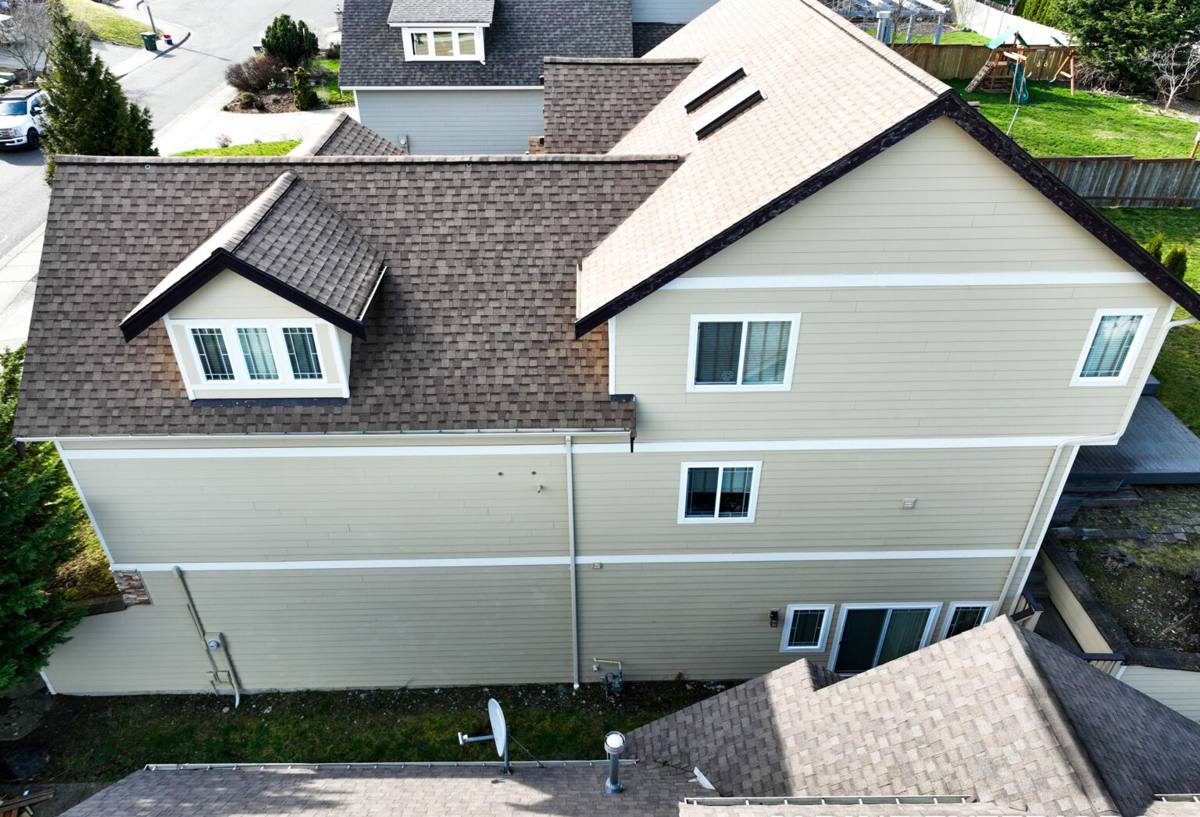
Why Asphalt Shingles Still Make Sense in California Creek
For most homes here, asphalt shingles remain the right call. They cost less than metal or tile roofing, they come in a wide range of colors and profiles, and if a section gets damaged down the road, it can usually be repaired without tearing off the whole roof. The material itself isn't usually the weak link on a shingle roof — the weak link is almost always what happens beneath and around it. A well-installed mid-grade shingle roof will typically outlast a premium shingle roof that was rushed through installation, because the layers underneath the visible surface are doing most of the actual work.
What Local Conditions Actually Demand
- Corrosion-resistant fasteners and flashing metal: Salt-influenced coastal air accelerates rust on lower-grade metal over time, and corroded flashing is one of the most common sources of leaks that don't show up until years after a roof goes on.
- Underlayment built for wind-driven rain: Standard felt underlayment offers less protection than synthetic or self-adhered underlayment when rain is being driven sideways and forced upward rather than just running off the surface.
- Algae-resistant shingle granules: Roof planes shaded by tree cover hold moisture longer, and untreated shingles in those spots can show dark streaking and moss within just a few years.
- Real intake-and-exhaust ventilation: Trapped attic moisture rots the deck from underneath at the same time weather is working on the roof from above, and it's often the least visible problem on an aging roof.
- Debris management at valleys and gutters: Needle and leaf litter from surrounding tree cover collects fastest in valleys and behind chimneys, holding moisture against the roof longer than open, unshaded areas.
What a Correct Asphalt Shingle Install Involves
A roof replacement is a system, not a single product. Done right, it's a series of layers built from the deck up, and each one has a specific job to do — skip or shortcut one, and the whole system is weaker for it, even if the shingles on top look fine.
Tear-Off and Deck Inspection
Stripping the roof down to bare decking is the only reliable way to catch rot, soft spots, or moisture damage that's been building quietly for years, often invisible from inside the attic. Installing new shingles directly over an old layer skips that inspection entirely and just seals whatever's already wrong underneath a fresh-looking surface.
Underlayment and Water Barrier
Synthetic or self-adhered underlayment gives the deck a genuine second line of defense, which matters directly here, where wind-driven rain routinely gets pushed under shingle edges instead of simply sheeting off. Ice-and-water shield membrane at eaves, valleys, and other vulnerable transitions adds extra protection at exactly the spots most likely to leak first.
Flashing at Valleys, Chimneys, and Wall Intersections
Most roof leaks in this area don't start out in the open field of shingles — they start at flashing. Valleys, chimney and skylight penetrations, and the points where a roofline meets a wall all need flashing that's properly integrated with the underlayment and lapped correctly, not caulked as an afterthought once the shingles are already installed.
Fastening and Layout
Nail count, placement, and pattern need to follow manufacturer specification, full stop. That discipline is what keeps a roof's wind rating meaningful rather than theoretical, which matters more on the more open, exposed lots around California Creek that catch wind off nearby farmland than it does on a tightly tree-sheltered property.
Ventilation
Balanced intake and exhaust ventilation keeps the underside of the deck dry through the wet months, extending shingle life and starving the moisture that feeds moss growth from below. A roof can look perfectly fine from the driveway and still be shortening its own life because of attic airflow nobody's checked in years.
Comparing Shingle Options
| Shingle Type | Typical Lifespan | Fit for California Creek |
|---|---|---|
| 3-Tab Shingles | 15-20 years | Lowest upfront cost, but a thinner profile and lower wind rating make them a weaker fit for exposed, open lots |
| Architectural (Laminated) Shingles | 25-30 years | Heavier construction and stronger wind resistance; the most common practical choice for this area |
| Premium/Designer Shingles | 30+ years | Better algae resistance and a heavier build, worth considering on shaded, tree-covered slopes |
For most California Creek homes, architectural shingles with algae-resistant granules strike the right balance between upfront cost and long-term performance given the local mix of wind exposure and tree-shaded moss risk. Whether it's worth stepping up to a premium tier usually comes down to how much of the roof sits under tree cover and how long you're planning to stay in the home.
Cost Factors Worth Understanding
Two bids on the same roof can land thousands of dollars apart, and that gap is almost always a difference in real scope rather than one contractor simply padding the number. Understanding what drives cost makes it much easier to compare estimates that otherwise look nothing alike on paper.
| Factor | What It Affects |
|---|---|
| Tear-off vs. layover | Whether hidden deck damage gets found and repaired before new shingles go on |
| Underlayment grade | How well the roof resists wind-driven rain working under shingle edges |
| Shingle grade and wind rating | Expected lifespan and how the roof holds up on exposed lots |
| Flashing scope | How thoroughly valleys, chimneys, and wall intersections are addressed |
| Ventilation upgrades | Long-term moisture control and real shingle lifespan |
| Tree cover and access | Debris protection needs, staging, and cleanup time on wooded lots |
A written estimate that breaks these items out separately tells you far more than a single lump-sum number. It's worth asking any contractor to walk through exactly what's included, line by line, before setting two bids side by side.
A Practical Checklist Before You Choose a Roofer
- Do they perform a full tear-off with deck inspection, not just a layover?
- Does the estimate name the specific underlayment type and shingle product, not just "new shingles"?
- Is flashing work at valleys, chimneys, and walls written into the bid explicitly?
- Do they carry current WA contractor licensing, liability insurance, and workers' compensation?
- Can they point to recent, real work in or near California Creek and Blaine?
- Does the bid separate the manufacturer's material warranty from the contractor's own workmanship warranty?
How Our Process Works
A roof is one of the largest single investments in a home, so we keep the process straightforward and communicate clearly at every stage instead of leaving you guessing.
- In-person inspection: We walk the roof and attic ourselves rather than pricing off a photo, and document what we actually find.
- Written estimate: You get an itemized bid covering tear-off, underlayment, flashing, ventilation, material selection, and cleanup — not one vague line item.
- Scheduling around weather: We build reasonable flexibility into the timeline, since wet-season delays are a normal part of working in this region, not an excuse we reach for later.
- Tear-off and deck repair: Old roofing comes off completely, and any deck damage we find gets fixed before anything new goes on.
- Underlayment, flashing, and shingle installation: Each layer goes on to manufacturer specification, with extra care at valleys, penetrations, and wall transitions.
- Final walkthrough and cleanup: We review the finished roof with you in person and run a full site and magnetic nail sweep before we call the job done.
Why Hiring a Crew That Already Works California Creek Matters
A crew that regularly works roofs around California Creek has already seen how coastal air corrodes underspecified fasteners, how wind-driven rain finds gaps in poorly lapped underlayment, and which roof orientations under tree cover hold moss longest through the wet months. That's practical, earned knowledge that shapes dozens of small decisions over the course of a job — decisions a crew unfamiliar with this specific part of Whatcom County might never think to make.
It also matters after the job wraps up. A workmanship warranty is only as good as the company standing behind it years down the road, and a contractor with an established, ongoing local presence is one you can actually reach if a question comes up later, rather than a name that's since moved on to a different market.
Signs Your California Creek Roof May Need Attention
Asphalt shingle roofs rarely fail all at once — they give warning signs first, often well before a leak shows up inside the house, and catching those signs early is frequently the difference between a repair and a full replacement.
- Granules collecting in the gutters, signaling shingles wearing thinner than they should be at this stage
- Curling, cracking, or lifted shingle edges, especially on wind-exposed slopes
- Dark streaking or visible moss buildup on tree-shaded or north-facing roof planes
- Water staining on interior ceilings or in the attic, particularly near valleys or roof penetrations
- Debris buildup packed into valleys or behind chimneys that never fully dries out between rains
- Visible sagging along the roofline, which can point to deck-level moisture damage underneath
If any of that sounds familiar, it's worth having the roof looked at before the next stretch of heavy weather rather than waiting for a leak to force the decision.
If you'd like an honest, no-pressure look at your California Creek roof and a written estimate you can compare against anything else you've received, we're glad to come take a look. Use the form below to request a free estimate.