 Blaine Window
 Roofing on the Water at Blaine Harbor
Homes around Blaine Harbor sit closer to salt water and open wind than almost anywhere else in Whatcom County. That location is part of what makes the area worth living in, but it's also what shortens the working life of a roof. Salt-laden air, wind-driven rain off Semiahmoo Bay and Drayton Harbor, and a moss season that can run most of the year all put steady, compounding stress on roofing materials that were never built with this exposure in mind. A roof replacement here isn't just about swapping old shingles for new ones — it's about matching the assembly to conditions that inland Whatcom County roofs simply don't deal with.
This page covers what roof replacement actually involves for a Blaine Harbor home: what the climate does to a roof over time, what a correct tear-off and re-roof looks like, how to think about material choice, and what to expect from our process if you decide to move forward.
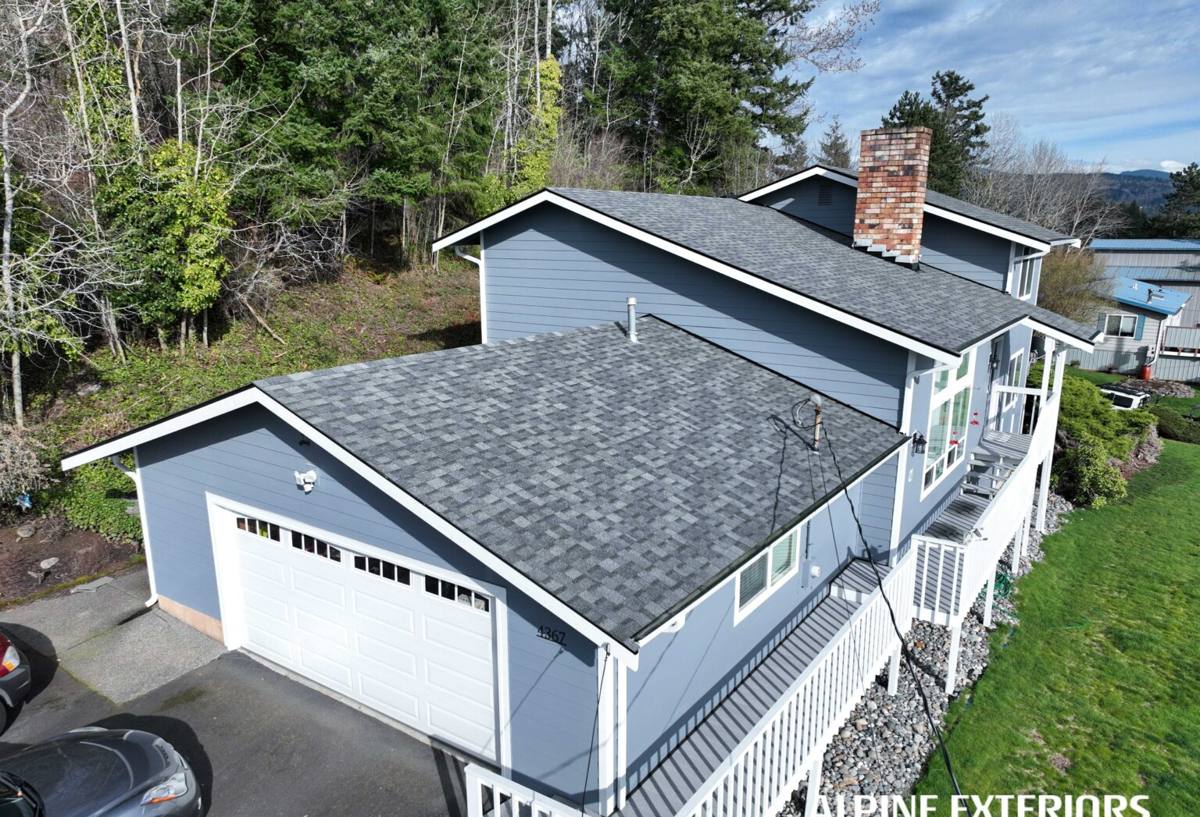
What the Blaine Harbor Climate Does to a Roof
Three conditions do most of the damage here, and they work together rather than separately.
Salt Air and Corrosion
Airborne salt from the bay settles on every exposed surface, including roofing. Over years, it accelerates corrosion on unprotected metal fasteners, flashing, and vent stacks. A nail or screw that would last decades a few miles inland can start rusting noticeably sooner this close to the water. Once a fastener corrodes, it loses grip and can back out or leak, which is why fastener and flashing material matters more here than on a typical Whatcom County job.
Driving Rain
Wind off the water doesn't just bring rain straight down — it pushes it sideways and up under laps, edges, and flashing that would stay dry in a calmer setting. Roofs near Blaine Harbor need underlayment, flashing, and edge details that assume water will be pushed somewhere it normally wouldn't go, not just details that handle vertical rainfall.
Moss and Algae
Cool, damp air and shaded rooflines near the water keep moss and algae active for most of the year rather than just a few winter months. Moss holds moisture against the roofing surface, works into laps and granules, and can lift shingle edges over time. Left unaddressed, it shortens the life of an otherwise sound roof.
Signs a Blaine Harbor Roof Needs Replacing, Not Patching
Not every issue calls for a full replacement. But a few signs, especially combined, usually mean the roof has reached the point where patching is a short-term fix at best:
- Granule loss heavy enough to see bare, shiny patches on asphalt shingles
- Moss established in thick mats rather than light surface growth, especially on north-facing slopes
- Corroded, streaking, or loose flashing around chimneys, vents, and valleys
- Curling, cracking, or cupping shingles, particularly on slopes that face the water and wind directly
- Interior staining, soft spots, or daylight visible through the roof deck from the attic
- A roof already past or near the end of its rated service life, especially if it's never had ventilation or flashing upgrades
- Repeated leak repairs in different spots each year instead of one recurring, fixable location
If you're only seeing one or two of these and the roof deck is still sound, a repair may buy you real time. We'll tell you that plainly during an inspection — a replacement isn't the right call for every roof that has a problem.
What a Correct Roof Replacement Involves Here
Tear-Off and Deck Inspection
A proper replacement starts with a full tear-off down to the deck, not an overlay. Overlaying traps moisture and hides the condition of the sheathing underneath — a real risk on a home that's had years of moss and wind-driven rain working at it. Once the old roofing is off, we inspect the deck for soft spots, rot, or delamination and replace any damaged sheathing before anything new goes down. Skipping this step is the single most common shortcut that leads to early failure.
Underlayment and Water Protection
Given how much wind-driven rain this area sees, underlayment choice matters. Self-adhered ice-and-water membrane belongs at eaves, valleys, and around every penetration — the spots where wind-pushed water is most likely to find a way in. The rest of the deck gets a synthetic underlayment rated for the added exposure, not the thinnest felt available.
Flashing and Fasteners
All flashing — step, valley, chimney, and vent — should be corrosion-resistant metal, properly lapped so every course sheds water into the one below it rather than depending on sealant to do the work. Fasteners matter just as much: near-water installations hold up better with corrosion-resistant nails and screws rather than standard-grade hardware that can start rusting within a few years of salt exposure.
Ventilation
A roof that can't breathe traps moisture underneath it, which speeds up deck rot and, indirectly, moss growth from the inside out. Balanced intake and exhaust ventilation — soffit vents paired with ridge or roof vents — keeps the attic and deck dry and extends the life of whatever roofing material sits above it.
Choosing a Roofing Material for Salt Air and Moss
There's no single "best" roofing material for every Blaine Harbor home — it depends on your roof's exposure, your budget, and how much long-term maintenance you want to take on. Here's how the common options compare for this specific climate:
| Material | Salt Air / Corrosion Resistance | Moss Resistance | Typical Lifespan | Maintenance |
|---|---|---|---|---|
| Architectural asphalt shingle | Good, with corrosion-resistant fasteners and flashing | Moderate — benefits from zinc/copper strips at the ridge | 20–30 years | Periodic moss treatment recommended |
| Standing seam metal | Very good with a coastal-rated coating and stainless fasteners | High — sheds moss more effectively due to smooth, sloped surface | 40–60 years | Low, occasional rinse and inspection |
| Synthetic/composite shingle | Good, doesn't corrode but check fastener spec | Moderate to high depending on product | 30–50 years | Low to moderate |
For homes with heavy shade and constant dampness — common on tree-lined lots near the harbor — we'll often recommend metal or a moss-resistant composite even if the upfront cost is higher, because the reduced maintenance and moss resistance pay off over the life of the roof. For homes with better sun exposure and airflow, a well-installed architectural asphalt shingle with the right fasteners and flashing is still a solid, cost-effective choice.
Moss Isn't Just a Roofing Decision — It's an Ongoing Plan
No roofing material is completely moss-proof in this climate; some just resist it longer and shed it more easily. Zinc or copper control strips installed near the ridge release trace metal ions with every rain, which suppresses new moss growth on the slopes below. This isn't a one-time fix — it's a passive system that works for as long as the strips are in place, and we install them as standard practice on replacements where moss has been a recurring issue. Beyond that, keeping nearby branches trimmed back to improve sun and airflow, and having the roof rinsed (never pressure-washed, which strips granules) every year or two, does more for long-term roof health here than almost anything else a homeowner can control.
Our Roof Replacement Process
- Inspection and estimate. We walk the roof, check the deck where accessible, look at ventilation and flashing condition, and give you a clear, honest assessment — replacement, repair, or somewhere in between.
- Material and detail selection. We go over material options suited to your roof's specific exposure, not a one-size answer, and explain the trade-offs in plain terms.
- Scheduling around the weather. Roof replacement needs a dry work window. We plan around forecasts rather than rushing a tear-off ahead of incoming weather off the water.
- Tear-off and deck repair. Full removal of the old roofing, deck inspection, and repair of any damaged sheathing before anything new is installed.
- Installation. Underlayment, flashing, ventilation, and the roofing material itself, installed to the manufacturer's specifications plus the added detailing this climate calls for.
- Cleanup and walkthrough. Full site cleanup, including magnetic sweep for stray fasteners, followed by a walkthrough so you know exactly what was done and what maintenance, if any, to expect going forward.
What Roof Replacement Cost Depends On
We don't quote prices without seeing the roof, but the main factors that move the number are consistent from job to job:
| Factor | Why It Matters |
|---|---|
| Roof size and number of slopes/valleys | More cuts, flashing, and seams mean more labor and material |
| Deck condition | Rotted or soft sheathing needs replacement before new roofing goes down |
| Material choice | Asphalt, synthetic, and metal carry different material and labor costs |
| Pitch and access | Steep or hard-to-access roofs take longer and require more safety setup |
| Existing layers | Removing multiple old roofing layers adds tear-off time |
| Ventilation and flashing upgrades | Bringing older systems up to current standards adds scope but reduces future problems |
Why a Crew That Already Works Blaine Harbor Matters
A roofing crew that mostly works inland doesn't run into corroded fasteners, aggressive moss growth, or wind-driven rain patterns often enough to build habits around them. A crew that regularly works this stretch of Whatcom County treats coastal-grade fasteners, extra underlayment at exposed edges, and moss control strips as standard practice, not an upsell. We also know how to work around the area's weather windows and permitting requirements without adding delays. That familiarity shows up less in what you can see and more in what you don't have to deal with three, five, or ten years down the road.
If your roof is showing its age or you just want an honest read on how much life it has left, we're glad to take a look. Fill out the form below for a free, no-pressure estimate — we'll tell you straight whether you need a full replacement, a repair, or nothing at all right now.