 Blaine Window
 Why Blaine Harbor Homes Wear Out Siding Faster Than Most
Homes close to Blaine Harbor deal with a combination of conditions that most siding products were never really designed to handle over the long run. Salt-laden air off the water works its way into seams, fastener heads, and any gap in a finish coat. Wind-driven rain hits walls sideways instead of falling straight down, forcing water into joints and laps that would stay dry on a home a few miles inland. And the shade, humidity, and tree cover common throughout Whatcom County keep north- and west-facing walls damp long enough for moss and algae to take hold and stay there for months at a stretch, not weeks.
None of this is dramatic on its own. It's cumulative. A siding material that performs fine in a dry, sheltered location can still fail early here simply because it never gets a real chance to dry out between storms. The tell-tale signs show up in predictable places: soft or swollen bottom courses where water collects, streaking and staining just below joints and trim, paint that chalks or peels years ahead of schedule, and moss creeping across shaded elevations within a couple of seasons instead of a couple of decades. If any of that already sounds familiar, the siding is telling you it's losing the fight with the local climate, not just aging normally.
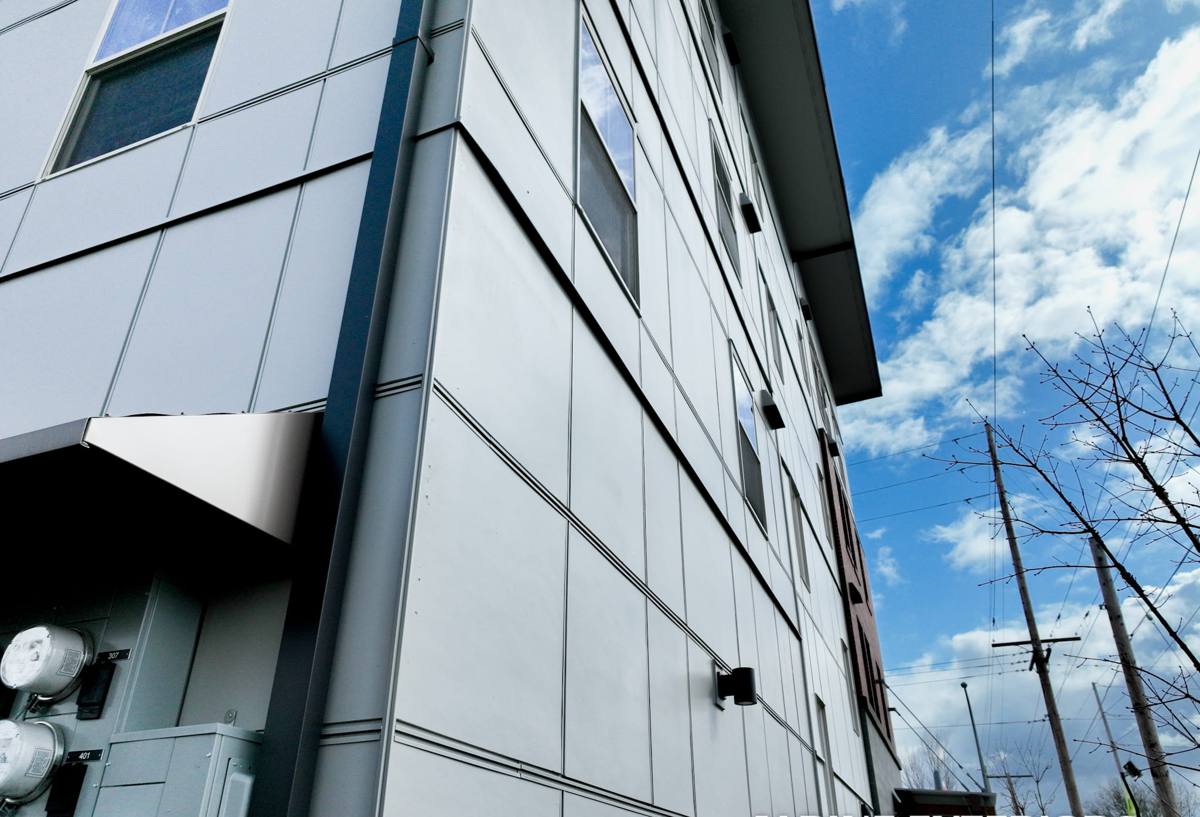
What Correct Siding Has to Do in This Climate
A siding system near the harbor has three jobs, and all three have to work together or the whole wall assembly suffers:
- Shed water fast. Laps, flashing, and trim need to move water off the wall before wind pressure can drive it backward into the sheathing.
- Dry out between wet spells. A drainage gap behind the siding lets air circulate and moisture escape instead of sitting against the house wrap indefinitely.
- Resist the surface effects of salt and moisture. That means a finish that doesn't chalk, peel, or invite mold and moss growth simply because it stays damp longer than siding on a drier street inland.
Get any one of these wrong and the rest of the system is fighting an uphill battle. A perfectly good siding product installed without a drainage plane, or with flashing details that assume a drier climate, will still fail early on a home this close to open water.
Why We Install Only James Hardie Fiber Cement
We get asked fairly often why we don't offer vinyl, LP SmartSide, cedar, or other fiber cement brands alongside Hardie. The honest answer is that we standardized on one product so we can guarantee the work behind it. When a crew installs five different siding systems, each with its own moisture behavior, expansion rate, and manufacturer spec sheet, something eventually gets installed slightly wrong. James Hardie fiber cement is non-combustible, dimensionally stable through wet-dry cycling, and factory-finished with ColorPlus so the color coat isn't something we're relying on field-applied paint to hold up against salt air and constant moisture.
That's not a knock on every other product on the market. Vinyl is inexpensive and low-maintenance in the right setting. Cedar has real visual appeal if an owner is committed to the upkeep it demands. Engineered wood products have improved over the years and have their place. But each comes with a trade-off that matters more here than in a drier inland climate: vinyl panels can warp and their seams can open up under sustained wind-driven rain and temperature swings; wood-based products depend heavily on caulking and repainting schedules to keep moisture from reaching the core; and mixing brands or product lines on one crew means mixing installation standards. We'd rather do one product exceptionally well, to one spec, every time, than several adequately.
Where Hardie's Climate Engineering Fits Blaine Harbor
James Hardie builds its siding in different formulations for different climate zones, and the HZ5 product line is engineered for the wetter, cooler regions that include the Pacific Northwest. It's formulated to resist moisture damage and hold its factory finish through repeated wet-dry cycling — exactly the pattern a harbor-adjacent home goes through most of the year. The ColorPlus finish is baked on in a controlled factory environment rather than sprayed on site, which matters because field-applied paint is usually the first thing to fail when a wall stays damp for extended stretches.
Our Installation Process for Blaine Harbor Homes
The material only performs as well as the installation behind it. Our process on harbor-area homes follows the same sequence every time:
- Inspect and document existing damage. We check sheathing, trim, and window flashing for rot or moisture intrusion before anything comes down, since old siding often hides problems that need fixing first.
- Remove old siding and repair the substrate. Any soft or water-damaged sheathing gets replaced. This is the point where past water damage either gets fixed for good or gets covered up — we don't cover it up.
- Install a weather-resistant barrier and drainage plane. A ventilated gap behind the siding gives incidental moisture somewhere to go instead of sitting against the wall assembly.
- Flash every penetration. Windows, doors, hose bibs, and vents all get proper flashing and sealant details before siding goes up, not caulk added afterward as a patch.
- Install Hardie panels or lap siding to spec. Correct fastener placement, gapping, and clearance from grade and roof lines follow James Hardie's published installation instructions, which is also what keeps the manufacturer warranty valid.
- Finish trim, caulking, and touch-up. Factory-finished ColorPlus product needs very little field paint, which is one less place for a maintenance gap to open up later.
How Siding Options Compare in a Salt Air, High-Moss Climate
| Material | Moisture Behavior | Moss & Algae Resistance | Maintenance Near the Harbor |
|---|---|---|---|
| James Hardie Fiber Cement (HZ5) | Dimensionally stable; factory finish resists moisture cycling | Smooth ColorPlus finish sheds spores better than porous surfaces | Occasional wash; no repainting under normal conditions |
| Vinyl | Can warp or buckle under sustained wind-driven rain and temperature swings | Seams and laps trap grime where moss can establish | Low effort, but damaged panels aren't repairable — full sections replace |
| Cedar | Absorbs and releases moisture; prone to cupping if the finish fails | Organic surface is a natural host for moss and algae | Regular refinishing and moss treatment required |
| LP SmartSide / engineered wood | Wood-strand core is vulnerable if the outer coating is breached | Moderate; depends heavily on coating integrity | Field-painted; edges need ongoing sealant attention |
What Drives the Cost of a Siding Project Here
Every bid should account for the same handful of variables, and understanding them helps you compare quotes honestly:
- Condition of the substrate. Sheathing repair from past water intrusion is common on older harbor-area homes and should be a visible line item, not a surprise.
- Wall complexity. Dormers, multiple gables, and lots of trim take more labor per square foot than a simple rectangular elevation.
- Product line and profile. Lap siding, panel systems, and shingle-style Hardie products carry different material and labor costs.
- Drainage plane details. A properly installed rainscreen gap adds a modest amount to labor but is not optional for durability this close to open water.
- Access and site conditions. Waterfront lots with limited staging area or steep grades can affect scheduling and labor time.
Maintenance and Warranty Once It's Installed
Correctly installed Hardie siding on a Blaine Harbor home isn't maintenance-free, but it's low-maintenance in the ways that matter most here. An occasional rinse to knock off salt residue and organic buildup on shaded walls is normal upkeep, not a sign of a problem. What you shouldn't see is paint peeling off the siding itself, since the ColorPlus finish is baked on at the factory rather than applied on site. James Hardie backs its products with a substantial, transferable limited warranty, which matters to owners in this area who may sell within a decade or two — a warranty that follows the house adds real, verifiable value at resale, not just curb appeal.
Hiring the Right Contractor for This Stretch of Coast
Not every contractor who lists "siding" as a service has real experience with the specific problems harbor-adjacent homes create. Before you hire, it's worth confirming:
- They can explain how they'll handle the drainage plane and flashing details, not just the siding panels themselves
- They install to the manufacturer's published spec, since that's what keeps the warranty valid if something goes wrong later
- They've worked on homes around Blaine Harbor or similarly exposed sites, not just inland or new-construction jobs
- They'll show you how existing moisture damage will be repaired, not just covered over
- Their bid clearly separates material, labor, and any substrate repair costs so you're not surprised mid-project
Why Local Experience Matters
A crew that's worked houses around Blaine Harbor already knows which elevations take the worst of the wind-driven rain, where moss tends to establish first, and how a rainscreen gap needs to be sized for this specific exposure. That's a different level of judgment than a general contractor who handles a few siding jobs a year alongside roofing and gutters. It's the difference between a job that looks right for the first season and one that's still performing correctly after a decade of Whatcom County winters.
If you're weighing a siding replacement on a home near Blaine Harbor, we're glad to walk the exterior with you, point out what we see, and put together a free, no-pressure estimate — no obligation either way.