 Blaine Window
 Windows Built for Where Birch Point Actually Sits
Birch Point isn't a typical inland neighborhood, and its windows shouldn't be treated like they're installed on one. Homes here sit close to open water, exposed to wind coming straight off the Strait, salt-laden air, and a wet season that runs long even by Pacific Northwest standards. That combination is hard on windows in ways that don't show up right away — corrosion creeping into hardware, moisture finding its way behind trim, moss and algae holding damp against wood sills for months at a time. A window that would last twenty problem-free years a few miles inland can start failing in half that time out here if it wasn't installed with this specific environment in mind.
We install windows throughout Blaine and the rest of Whatcom County, and Birch Point gets its own approach. This page covers what that actually means: what the climate does to windows here, what a correct installation involves, and how we handle the job from estimate to cleanup.
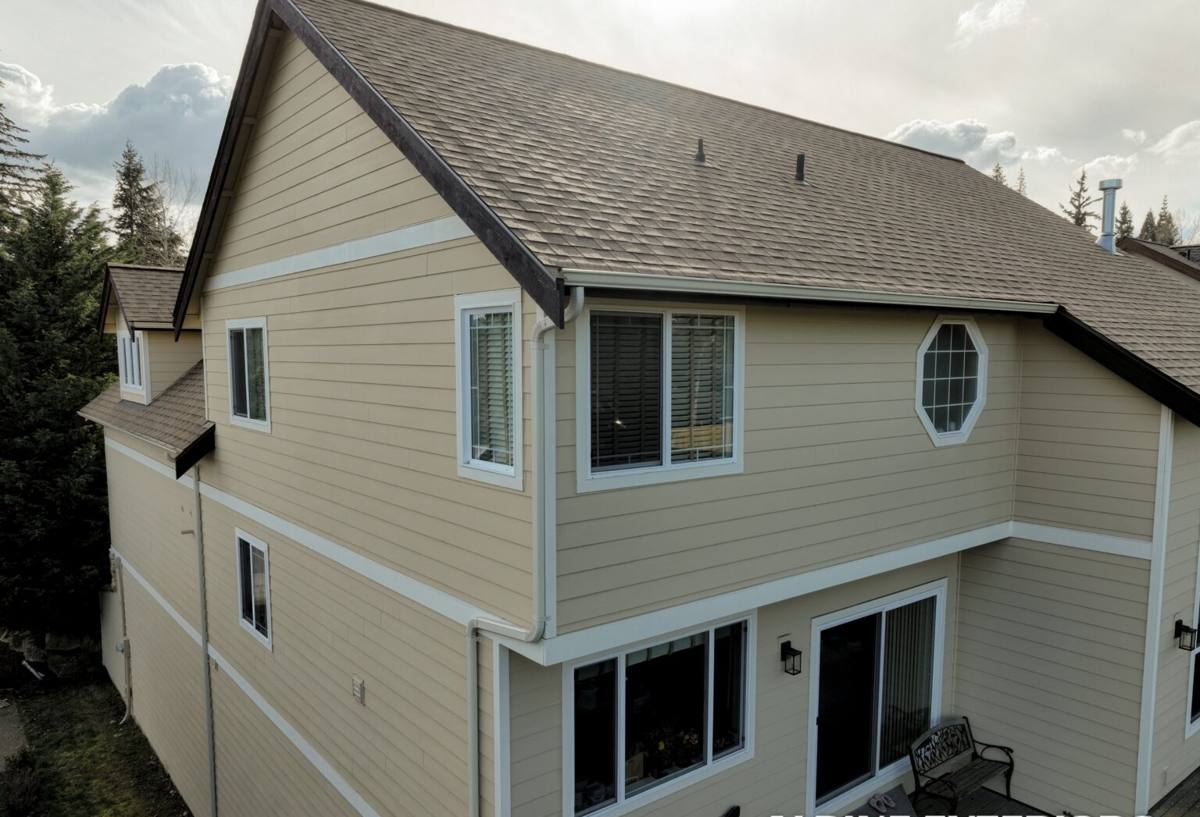
What Salt Air, Driving Rain, and Moss Season Do to Windows
Salt Air and Hardware
Salt in the air settles on everything, including window hardware. Cheaper hinges, locks, and cranks corrode faster near the water, and once corrosion starts inside a mechanism, the window gets harder to open, harder to lock, and eventually stops sealing properly. Aluminum components without adequate coatings are especially vulnerable. This is a material and hardware selection issue as much as an installation issue — we factor it in from the start.
Driving Rain and Water Intrusion
Wind-driven rain doesn't just fall on a window, it pushes into every gap and seam it can find. A window can be the right product and still leak if the flashing, house wrap integration, and sealant details weren't done correctly around it. Most of the leaks we get called out to inspect on older Birch Point homes trace back to installation gaps, not the window unit itself.
Moss Season
Whatcom County's long wet stretch gives moss and algae plenty of time to establish on north-facing trim, sills, and anywhere water sits instead of draining. Wood components that stay damp for weeks at a time are at real risk of rot if they aren't properly primed, sealed, and detailed to shed water. This is one of the biggest reasons material choice matters as much as workmanship here.
What a Correct Window Installation Involves
A window installation done right isn't just "remove old window, set new window." In a coastal, high-moisture area like Birch Point, the details around the window matter as much as the window itself.
- Removing the old unit without damaging the surrounding framing, and inspecting that framing for hidden rot or water damage before anything new goes in
- Repairing or replacing any compromised sheathing or framing found during removal — installing over a soft or damaged rough opening just locks the problem in
- Installing proper flashing (sill pan, side flashing, and head flashing) integrated correctly with the house wrap so water is directed out, not trapped in
- Using sealants and backer rod appropriate for the material and exposure, not just whatever's on the truck
- Setting the window level, plumb, and square, with correct shimming so it operates smoothly and seals evenly for years, not just on installation day
- Insulating the gap between the frame and rough opening properly — too little insulation leaves drafts, too much (or the wrong type) can bow the frame
- Finishing interior and exterior trim so it sheds water and doesn't create a moss trap
Skip or rush any of those steps and the window itself becomes almost irrelevant — water and air will find the gap.
Choosing Materials for This Climate
There's no single "best" window material for every home, but some hold up better than others in salt air and constant moisture. We walk through the trade-offs with every Birch Point homeowner rather than pushing one answer.
| Material | How It Handles Salt Air & Moisture | Maintenance |
|---|---|---|
| Vinyl | Doesn't corrode or rot; performs well in coastal exposure | Low — occasional cleaning of tracks and weep holes |
| Fiberglass | Very stable, resists warping and doesn't corrode | Low — durable finish, minimal upkeep |
| Wood | Needs consistent sealing and maintenance to resist rot and moss in this climate | High — repainting/resealing on a regular cycle |
| Aluminum | Can corrode over time near salt water unless properly coated; conducts cold, which increases condensation risk | Moderate to high depending on coating quality |
Hardware matters just as much as frame material. We look for corrosion-resistant hardware on every installation near the water, since that's often the first thing to fail even when the frame itself is holding up fine.
Glass and Condensation
The marine humidity around Birch Point makes glass performance worth a real conversation, not an afterthought. Dual-pane glass with a quality low-E coating and appropriate gas fill cuts down on both heat loss and interior condensation on cold, damp mornings — a common complaint in older single-pane homes out here. We'll talk through glass packages based on your home's orientation and exposure rather than defaulting to one option for everyone.
Full-Frame Replacement vs. Insert Replacement
Whether a full-frame replacement or an insert (pocket) replacement is the right call depends on the condition of the existing frame — and around Birch Point, that condition is often the deciding factor, not preference.
| Factor | Insert Replacement | Full-Frame Replacement |
|---|---|---|
| Existing frame condition | Requires a sound, undamaged frame | Needed if frame has rot, damage, or corrosion |
| Best for | Homes with healthy frames wanting updated glass/efficiency | Homes with water damage or older, failing frames |
| Access to structure | Limited — existing frame stays in place | Full access to inspect and repair framing/flashing |
| Typical timeline | Faster per window | Longer, but addresses root causes |
We won't recommend an insert replacement over a frame that's already showing signs of moisture damage just because it's the quicker job. If we find rot or corrosion during inspection, we'll tell you plainly and explain why full-frame is the honest call.
Our Process, Start to Finish
- On-site assessment — we look at your existing windows, frames, and any signs of water intrusion or rot before recommending anything
- Honest recommendation — material, glass package, and insert vs. full-frame, explained in plain terms with reasoning tied to your home and its exposure
- Written estimate — clear scope and pricing, no surprise add-ons sprung on install day
- Installation — proper removal, framing repair if needed, flashing, sealing, and finish work done to the standard above
- Walkthrough — we check operation, sealing, and finish with you before we consider the job done
- Cleanup — job site left clean, old windows and debris hauled off
Signs Your Windows Need Attention Now
Coastal exposure tends to make window problems progress faster than homeowners expect. Worth checking for:
- Fogging or moisture between panes of a dual-pane window (seal failure)
- Difficulty opening, closing, or locking — often the first sign of hardware corrosion
- Soft or discolored wood trim around the frame, or visible moss/algae holding moisture against it
- Drafts or a noticeable temperature difference near the window on windy days
- Peeling paint or bubbling on interior sills, which can point to water getting in behind the frame
- Visible daylight or gaps around the frame from outside
Any one of these on its own isn't necessarily urgent, but in this climate they tend to compound quickly if left alone.
Why It Matters That We Already Work in Birch Point
A crew that only occasionally works this close to the water will size a job the same way they would anywhere else in Whatcom County — and that's where problems start. We know to expect corroded hardware on homes with older aluminum or steel windows near the shoreline, to check framing more carefully on the wind-exposed sides of a house, and to detail flashing for driving rain rather than just standard coverage. That's not a marketing line, it's the difference between an installation that holds up here and one that needs revisiting in a few years.
We also understand that a lot of homes around Birch Point are seasonal, part-time, or recently converted from cabin use to full-time residences — which changes what "correct" looks like. A window package chosen for a weekend getaway with minimal heating needs is different from one chosen for a home lived in year-round through a Blaine winter. We ask about how the home is actually used before recommending anything.
Maintenance That Extends the Life of a New Installation
Good installation gets you most of the way, but a little upkeep goes a long way in this climate:
- Rinse salt residue off frames and glass periodically, especially after storms with onshore wind
- Keep weep holes clear so water can drain out of the frame instead of pooling
- Check and lubricate hardware on a regular schedule if it's exposed to salt air
- Clear moss and debris from sills and trim before it has a chance to hold moisture
- Repaint or reseal wood trim on the manufacturer's recommended cycle — don't stretch it out here
If your Birch Point home has windows that are drafty, fogging, hard to operate, or original to a house that's been converted from a seasonal cabin, we're glad to take a look and give you a straight answer on what it needs. Reach out for a free, no-pressure estimate — we'll walk the property, explain what we find, and lay out your options without any pressure to decide on the spot.